




China launches fresh demolition drive at Larung Gar Buddhist Academy
- In Reports
- 06:42 PM, Jul 20, 2026
- Myind Staff
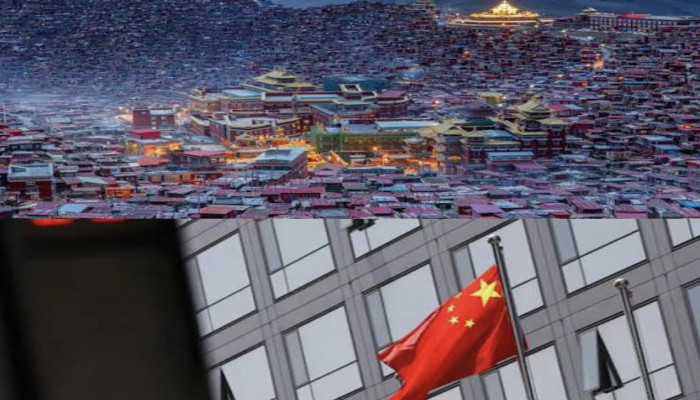
Chinese authorities have reportedly started a fresh demolition drive at the Larung Gar Buddhist Academy in eastern Tibet. The International Campaign for Tibet (ICT) said officials have marked at least 1,060 residences of monks and nuns for demolition. The organisation said the latest action raises fresh concerns over restrictions on religious freedom and the preservation of Tibetan culture.
According to the International Campaign for Tibet, the demolition work began around July 13 in Serthar, located in the Kardze Tibetan Autonomous Prefecture of Sichuan province. The organisation cited a source familiar with the developments. The source said workers have been carrying out the demolitions during night hours. The move is believed to prevent public documentation, media reporting and satellite surveillance. The source, who requested anonymity due to security concerns, told ICT that six residences had already been demolished by July 15.
The International Campaign for Tibet said the latest campaign demonstrates a further tightening of restrictions on religious practice in Tibet. The organisation linked the development to China's broader coercive assimilation policies. It said the demolition drive comes after the country's new Ethnic Unity and Progress Law came into effect on July 1.
ICT said authorities have marked at least 1,060 residences for demolition. However, the exact reason behind the latest action remains unclear due to strict controls on information coming from the region. The organisation said access to reliable details remains limited.
The organisation also referred to observations made by a traveller who visited Serthar earlier this year. According to ICT, the traveller described heavy restrictions on movement, visitor access and activities in the area. The traveller also observed that authorities had increased control over the region, making it more difficult for outsiders to gather information.
Larung Gar Buddhist Academy was founded in 1980 by the late Tibetan Buddhist master Khenpo Jigme Phuntsok. Over the years, it developed into one of the world's largest centres for Tibetan Buddhist education. The academy became known for its teachings in Buddhist philosophy, meditation, Tibetan language and culture. It attracted thousands of Tibetan monks, nuns and lay practitioners. It also welcomed Chinese Buddhist followers and gained international recognition as an important centre of Buddhist learning.
The International Campaign for Tibet said Chinese authorities have repeatedly targeted Larung Gar over the past two decades. In 2001, officials reportedly demolished large parts of the academy. The operation forced thousands of monks and nuns to leave the site. The organisation said the academy has faced repeated government action since then.
ICT also recalled another major demolition campaign that took place in 2016 and 2017. During that period, authorities reportedly destroyed nearly 5,000 residences. Around 5,000 monks and nuns were also evicted from the academy. The organisation said the action significantly reduced the number of people living and studying at Larung Gar.
The International Campaign for Tibet further noted that the events at Larung Gar garnered international attention in the past. It recalled that in 2017, six United Nations human rights experts expressed concern over the demolitions and evictions. According to ICT, the experts said the actions violated international human rights law. They also described the measures as serious attacks on Tibet's cultural and religious heritage.
The latest demolition campaign has once again placed Larung Gar at the centre of international concern. ICT said the academy remains an important symbol of Tibetan Buddhism and cultural identity. The organisation warned that continued demolitions and restrictions could further affect religious practice and the preservation of Tibetan traditions.
The International Campaign for Tibet continues to monitor developments in the region. It said strict controls on information make it difficult to independently verify the events. The organisation added that the limited access to the area has increased concerns over transparency and accountability regarding the latest demolition campaign.



 Loading...please wait
Comments