




China halts helium exports after fresh military tensions in the Middle East
- In Reports
- 02:13 PM, Jul 11, 2026
- Myind Staff
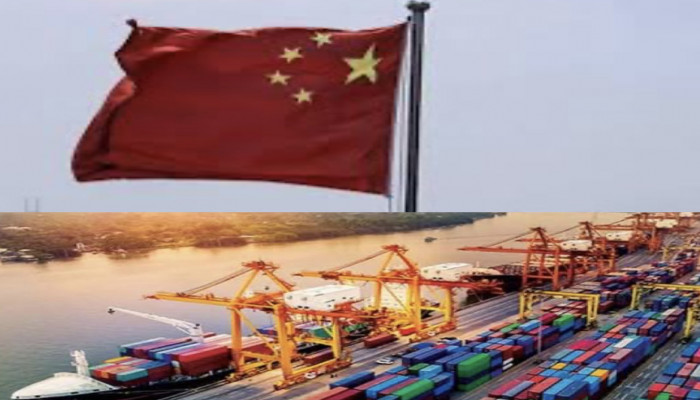
China has temporarily stopped helium exports with immediate effect after fresh military tensions between the United States and Iran increased concerns over global helium supplies. The move aims to protect domestic availability as the conflict in the Middle East threatens to disrupt the supply of a gas that plays a key role in semiconductor manufacturing.
The latest decision follows earlier disruptions this year when the U.S.-Israeli conflict with Iran affected helium supplies across several countries. The shortage created challenges for businesses around the world, including companies in China. The country's growing artificial intelligence industry depends on domestic chip production to train and run AI models. Helium remains essential in the chip manufacturing process as it helps manage heat during production.
"The helium export ban is a clear effort to protect domestic supply after the Iran conflict reignited," said Cory Combs, head of supply chain and critical minerals research at policy research firm Trivium China.
He also said, "The good news is that I'm not aware of any country particularly dependent on imports of helium from China. The export ban may have impacts at the margins, but it should not drive shortages or major price shocks."
China still depends heavily on imported helium despite its latest export restrictions. According to Trivium China, imported helium meets nearly 85 per cent of the country's total demand. This dependence has made stable global supplies increasingly important for China's industrial sector.
Qatar has remained China's biggest helium supplier in recent years. It has provided more than half of China's helium imports and contributes nearly one-third of the world's helium supply. Cory Combs said previous Iranian attacks had already disrupted exports from Qatar. Renewed conflict in the region has again increased uncertainty over future supplies.
The export restriction reflects a wider policy adopted by Beijing to secure important raw materials during periods of global uncertainty. China has introduced similar export controls on products such as fuel, fertilisers and sulphuric acid. These measures focus on protecting domestic markets from supply shortages and sharp price increases.
Chinese companies have regularly exported surplus helium to other Asian markets after meeting domestic demand, Combs said. The new restrictions seek to stop companies from selling excess supplies overseas while prices remain high. Officials want to prevent local shortages and reduce pressure on domestic prices during a period of uncertain global supply.
Helium remains a valuable industrial gas with limited sources. It comes from natural gas fields that contain unusually high concentrations of helium. Industries cannot quickly produce it through other manufacturing processes, which makes any supply disruption more significant.
The semiconductor industry relies on helium at several stages of chip production. Manufacturers use it for wafer cooling, plasma etching, chemical vapour deposition, atomic layer deposition, lithography support and leak detection. Any disruption in helium supplies can affect production and increase pressure on companies involved in semiconductor manufacturing.
China's temporary export ban highlights growing concerns over critical material supplies as geopolitical tensions continue to affect global trade. The move reflects Beijing's effort to secure helium for domestic industries while uncertainty remains in the Middle East.



 Loading...please wait
Comments