




China hails Maersk’s new India-China ocean freight service
- In Reports
- 02:07 PM, May 29, 2026
- Myind Staff
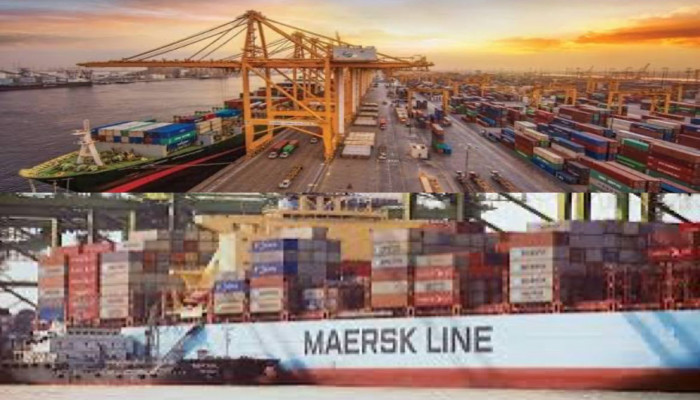
Global shipping company Maersk has announced a new ocean freight service connecting major Chinese ports with India’s western coast, highlighting the steady rise in trade between the two countries despite ongoing geopolitical tensions. The development has drawn attention from Chinese officials, who see it as another sign that economic ties between India and China continue to grow stronger even amid political differences.
Yu Jing, spokesperson of the Chinese Embassy in India, spoke about the new development in a post on X, formerly Twitter. Referring to Maersk’s newly launched FI2 feeder service and the opening of a fresh trade corridor through Gujarat’s Pipavav port, she said, “When the world’s largest container line bets on a trade lane, it’s not politics. It’s cargo math.”
The announcement comes at a time when bilateral trade between India and China has reached a record high of $155.6 billion in 2025. The figures underline the deep economic connection between the two Asian economies, even as strategic rivalry and diplomatic tensions continue to influence public discussions.
China continues to be one of India’s largest trading partners. India imports several key industrial products from China, including machinery, electronic goods, active pharmaceutical ingredients (APIs), and manufacturing components. At the same time, India exports raw materials and commodities such as iron ore to China. In this backdrop, Maersk’s decision to strengthen shipping connectivity between the two countries is being seen as a major commercial endorsement of the growing trade corridor.
According to the company, the first westbound sailing under the FI2 service will leave Shanghai on June 4, 2026. The weekly shipping service has been introduced to meet the rising demand for additional cargo capacity between Far East Asia and the Indian subcontinent.
The route will connect the Chinese ports of Shanghai, Ningbo, and Nansha with India’s Nhava Sheva and Pipavav ports. From there, it will extend to Port Qasim in Pakistan through the transshipment hub at Tanjung Pelepas in Malaysia. The service will operate with six vessels, each carrying a nominal capacity of 4,500 TEU or twenty-foot equivalent units. This reflects the growing scale of cargo movement through the region.
One of the biggest advantages of the FI2 service is its integration with India’s Dedicated Freight Corridor (DFC) rail network through Pipavav port in Gujarat. The combination of sea freight and high-speed rail logistics is expected to improve cargo movement into major industrial and consumption centres in northern India, including Delhi-NCR, Gurugram, and Noida.
Industry experts believe the multimodal logistics setup could especially help sectors that rely on high-value and time-sensitive shipments. These include automotive components, chemicals, retail goods, and technology products. Faster inland transportation is also expected to improve supply-chain reliability at a time when global logistics networks continue to face disruptions and increasing costs.
Thomas Theeuwes, Managing Director for Maersk South Asia, said the FI2 service has been launched in response to customer demand for better “capacity, consistency, and connectivity” on the China-India route.
"By combining the weekly ocean service with our rail solution via the DFC, we are going a step further and giving our customers the true integrated logistics experience," he said.
The FI2 route will work alongside Maersk’s existing FI3 service. Together, the two direct Far East-India routes are expected to offer better shipping frequency and more routing flexibility for businesses. The expanded network is also likely to strengthen supply-chain resilience as companies continue adjusting to changing global trade conditions.
The timing of Maersk’s expansion is significant. Shipping companies across the world are redesigning trade routes in response to geopolitical shifts, supply-chain diversification, and changes in global manufacturing patterns.
Several multinational companies have been exploring a “China plus one” strategy, where India is positioned as an alternative manufacturing hub alongside China. However, the latest expansion by Maersk suggests that commercial trade between India and China is continuing to grow instead of slowing down. The new shipping corridor reflects how both economies remain closely connected through trade and logistics despite political and strategic differences.



 Loading...please wait
Comments