




China ends 2025 with record $1.2 trillion trade surplus despite Trump tariff shock
- In Reports
- 06:38 PM, Jan 14, 2026
- Myind Staff
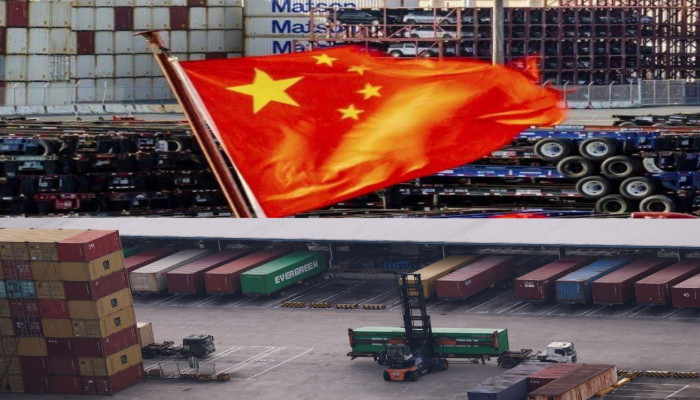
China closed 2025 with a record trade surplus of nearly $1.2 trillion, driven by strong exports to markets outside the United States, even as U.S. tariffs under President Donald Trump continued to pressure bilateral trade. The data, released in Beijing on January 14, highlights how China has reshaped its global trade strategy to reduce dependence on the world’s largest consumer market.
According to Chinese customs data, the world’s second-largest economy posted a full-year trade surplus of $1.189 trillion, breaking the trillion-dollar mark for the first time in November. The figure is comparable to the annual economic output of a top-20 global economy such as Saudi Arabia. The surplus underlines China’s continued strength as a manufacturing powerhouse despite geopolitical tensions and slowing domestic demand.
Chinese policymakers have actively encouraged exporters to diversify beyond the U.S., focusing more on Southeast Asia, Africa, Latin America, and Europe. This strategy helped cushion the impact of U.S. tariffs and ongoing trade, technology, and geopolitical frictions since Trump returned to the White House last year.
“China's economy remains extraordinarily competitive,” said Fred Neumann, chief Asia economist at HSBC. He added, “While this reflects gains in productivity and the rising technological sophistication of Chinese manufacturers, it is also due to weak domestic demand and attendant excess capacity.”
Exports remained strong toward the end of the year. In December 2025, outbound shipments rose 6.6% year-on-year in value terms, accelerating from a 5.9% increase in November. This growth significantly exceeded economists’ expectations of a 3.0% rise, according to a Reuters poll. Imports also surprised on the upside, increasing 5.7% in December, compared with a 1.9% rise in November, beating forecasts of a modest 0.9% increase.
“Strong export growth helps to mitigate the weak domestic demand,” said Zhiwei Zhang, chief economist at Pinpoint Asset Management. He further noted, “Combined with the booming stock market and stable U.S.-China relations, the government is likely to keep the macro policy stance unchanged at least in Q1.”
Financial markets reacted positively to the data. The Chinese yuan held steady, while equity investors welcomed the stronger-than-expected numbers. The Shanghai Composite Index and the CSI300 blue-chip index both rose more than 1% in morning trade.
China’s monthly trade surplus exceeded $100 billion seven times in 2025, compared with just once in 2024. A weaker yuan helped support exports, and the figures showed that U.S. tariffs have had a limited impact on China’s overall global trade, even though shipments to the United States fell sharply.
Exports to the U.S. slumped 20% in dollar terms in 2025, while imports from the U.S. dropped 14.6%. In contrast, Chinese exporters gained ground elsewhere. Shipments to Africa jumped 25.8%, exports to the ASEAN bloc rose 13.4%, and exports to the European Union increased 8.4%.
“With more diversified trading partners, (China's) ability to withstand risks has been significantly enhanced,” said Wang Jun, a vice minister at China’s customs administration, speaking at a press briefing following the data release.
China’s exports of rare earth elements also reached their highest level since at least 2014, even though Beijing began restricting shipments of several medium and heavy elements from April. Analysts viewed this move as a way to highlight China’s leverage over Washington during negotiations involving soybean purchases, a potential Boeing aircraft deal, and the future of TikTok’s U.S. operations.
On the import side, China, the world’s largest agricultural importer, bought a record volume of soybeans in 2025, mainly from South America. Chinese buyers largely avoided U.S. soybeans during much of the year as trade tensions persisted.
Looking ahead to 2026, economists expect China to continue gaining global market share. This trend is supported by Chinese firms setting up overseas production hubs to gain lower-tariff access to the U.S. and EU, and by strong global demand for electronics such as lower-grade chips.
However, challenges remain. China faces growing concerns from global capitals over its trade practices, industrial overcapacity, and heavy reliance on Chinese goods. Policymakers in Beijing have shown some awareness of these concerns. Last week, China scrapped export tax rebates for its solar industry, a long-standing source of friction with European countries.
The “Trump factor” continues to loom large. Although the U.S. Supreme Court could rule against Trump’s tariff hikes, tensions remain high. On Tuesday, Trump said he believes China can open its markets further to American goods. A day earlier, he threatened to impose a 25% tariff on countries trading with Iran, a move that could reopen old wounds with Beijing, Iran’s largest trading partner.
“Trump's threat to impose a 25% tariff on countries doing business with Iran underscores the potential for renewed trade tensions between the U.S. and China,” said Zichun Huang, China economist at Capital Economics.
As China enters 2026, a key question remain- how long can the $19 trillion economy rely on exports to offset a property downturn and weak domestic demand without triggering a stronger global backlash.



 Loading...please wait
Comments