




China blocks Nvidia’s H200 AI chips at customs amid growing US-China tech tensions
- In Reports
- 06:01 PM, Jan 14, 2026
- Myind Staff
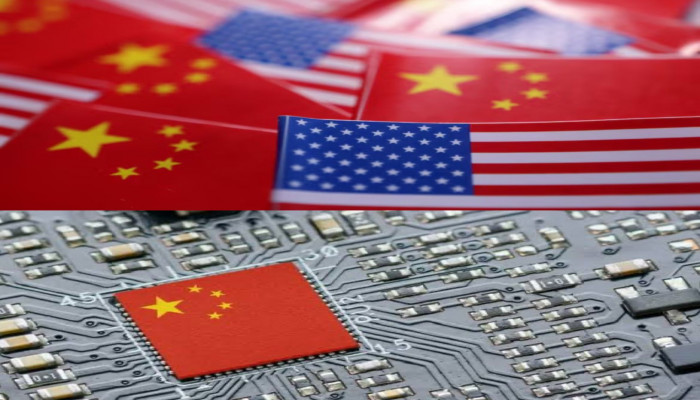
Chinese customs authorities have told customs agents that Nvidia’s H200 artificial intelligence chips are not permitted to enter China, according to three people briefed on the matter. The instructions were issued earlier this week, signalling a sharp move that could significantly affect China’s access to one of the world’s most powerful AI chips.
At the same time, Chinese government officials summoned domestic technology companies to meetings on Tuesday. During these meetings, companies were explicitly instructed not to purchase the H200 chips unless it was absolutely necessary. Two of the people familiar with the meetings, along with a third source, confirmed this development.
One of the sources described the tone of the instructions as extremely strict. “The wording from the officials is so severe that it is basically a ban for now, though this might change in the future should things evolve,” the person said. However, Chinese authorities did not clarify whether this decision represents a formal ban or a temporary restriction.
The motives behind Beijing’s actions remain unclear. The H200 chip, Nvidia’s second most powerful AI processor, has become a major point of tension in the ongoing US-China technology rivalry. While there is strong demand for the chip from Chinese companies, it is uncertain whether China wants to block it entirely to encourage the growth of domestic chipmakers, or whether the move is part of a broader strategy linked to negotiations with the United States.
The chip was formally approved this week by the Trump administration for export to China, although the approval came with certain conditions. In the United States, the H200 is also a controversial issue. Many policymakers concerned about China argue that such advanced chips could strengthen China’s military capabilities and weaken the U.S. lead in artificial intelligence.
According to sources, Chinese authorities did not provide any explanation for their directives. They also did not indicate whether the restrictions would apply to existing orders or only to new purchases. Reuters was unable to immediately determine the scope of the measures.
China’s General Administration of Customs, the Ministry of Industry and Information Technology, and the National Development and Reform Commission did not respond to requests for comment at the time of publication. Nvidia also did not reply to queries from Reuters.
Earlier this week, The Information reported that the Chinese government had informed some technology companies that approvals for H200 purchases would only be granted under special conditions. These include cases such as research and development projects conducted in partnership with universities. One of the sources confirmed that exemptions are being discussed for research and development purposes and for universities.
The United States has been imposing restrictions on the export of high-end chips to China since 2022, aiming to slow China’s progress in advanced technology and artificial intelligence. Last year, the Trump administration first banned and then allowed exports of a much weaker chip, the H20. However, Beijing later effectively blocked those sales from around August. This led Nvidia Chief Executive Jensen Huang to say that the company’s share of the AI chip market in China had fallen to zero.
The H200 chip offers significantly higher performance, delivering roughly six times the capability of the H20. This makes it highly attractive to Chinese companies, especially for large-scale training of advanced AI models. Although Chinese chipmakers have developed alternatives, such as Huawei’s Ascend 910C, the H200 is still considered far more efficient.
Sources said Chinese technology firms have placed orders for more than two million H200 chips, each priced at around $27,000. This demand far exceeds Nvidia’s available inventory of about 700,000 chips. Under U.S. export conditions, China is also limited to receiving no more than 50% of the total H200 chips sold to U.S. customers.



 Loading...please wait
Comments