



Chabahar project on track, Iran open to talks but firm on nuclear rights: Envoy
- In Reports
- 08:04 PM, Apr 30, 2026
- Myind Staff
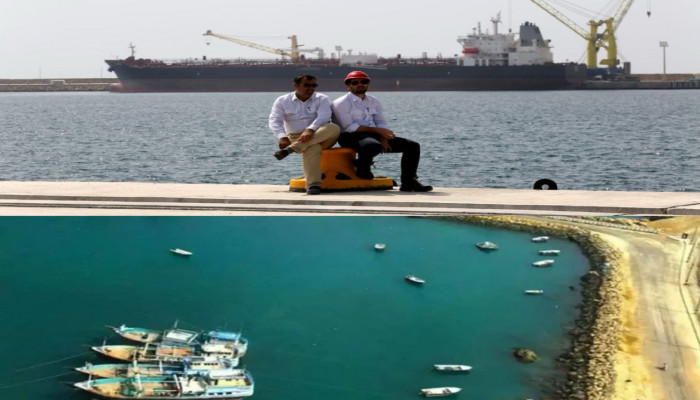
Iran’s Ambassador to India, Mohammad Fathali, has said that the strategically important Chabahar Port project is moving ahead steadily despite sanctions. He dismissed media reports that suggested disruptions, calling them speculative and not based on facts. In an interview with CNN-News18, the envoy made it clear that the project remains active and continues to progress without interruption.
Fathali also spoke about Iran’s position on dialogue with the United States. He said Tehran remains open to discussions, but there are no confirmed details about any new proposal. “What has appeared in the media is merely speculation,” he said. He stressed that Iran prefers stability and wants to avoid repeated cycles of conflict. According to him, lasting peace is necessary to resolve larger issues. “We believe that ending the war and establishing lasting peace can create conditions necessary to resolve other issues. We do not want to be trapped in the vicious cycle of war, ceasefire, negotiations, and then war again,” he said. He added that Iran is “prepared both for war and for peace” and is open to dialogue that leads to “durable and lasting peace.”
On the issue of nuclear negotiations, Fathali reiterated that Iran’s core position remains unchanged. He said the country will not give up its right to peaceful nuclear energy, which it considers legitimate under the Treaty on the Non-Proliferation of nuclear weapons. He also highlighted that lifting sanctions is a key condition for any future talks. “What is non-negotiable for us is the legitimate right of the Iranian people to benefit from peaceful nuclear energy… Naturally, the lifting of all unjust sanctions imposed on the Iranian people is one of our most important preconditions for any negotiations,” he said.
The envoy criticised long-standing sanctions led by the United States. He pointed out that these measures have affected several sectors in Iran, including aviation and healthcare. He also mentioned issues such as frozen assets and ongoing military pressure in the region, which he said continue to impact the country.
Speaking about maritime security, Fathali said Iran remains committed to maintaining safe passage through the Strait of Hormuz, following international rules. He clarified that vessels from countries not involved in recent tensions with Iran can continue to pass without restrictions. “We have stated that vessels belonging to countries that have not participated in the US-Israeli aggression against Iran may continue to pass through the Strait of Hormuz,” he said. He also assured that “friendly countries, including India, face no restrictions.” He added that several Indian ships have already passed safely, while Iran continues to cooperate fully, with some navigation rules in place.
Fathali underlined the importance of the Chabahar Port project for regional connectivity. He said the port is crucial for India’s access to Central Asia and Afghanistan and remains a priority for Iran despite geopolitical challenges. “The Chabahar project has never been halted and continues to move forward steadily,” he said. He further explained that the Chabahar–Zahedan railway link is close to completion, with about 90 per cent of the work already done. Rail-laying is expected to finish soon, which will connect the port directly to Iran’s national rail network. He also mentioned that infrastructure development is ongoing, including the construction of a hospital and hotels, which are expected to be completed by late 2026.
The envoy also spoke about the safety of Indian citizens living in Iran. He said there are around 10,000 Indians in the country, including members of the Sikh community. Iran, he said, is committed to ensuring their safety and equal treatment. “From our point of view, there is no difference between Indian citizens in Iran and Iranian citizens. We are making every effort to ensure their safety,” he said. He also noted that religious communities continue to practise their faith freely, including at places like the Tehran Gurudwara.
Responding to comments made by Donald Trump, who suggested that Iran is nearing collapse, Fathali rejected the claim. He described such statements as unrealistic and not supported by facts. “Experience has shown that references to ‘a few days’ or ‘a few weeks’ in the rhetoric of the US President are unrealistic… not only did regime change not take place, but this war has made our nation more resilient and united,” he said. He added that Iran is prepared to handle a prolonged period of instability and has already taken steps to deal with different scenarios.
On mediation efforts, including those offered by Pakistan, Fathali said Iran welcomes any initiative that helps reduce tensions. However, he made it clear that negotiations will be based on Iran’s national interests. “It does not matter which country hosts the talks; what matters is that we will negotiate based on our national interests and to secure the legitimate rights of the Iranian people,” he said. He also reiterated that Iran sees the United States as its main negotiating counterpart.
Addressing rumours about the health of Iran’s Supreme Leader, Mojtaba Khamenei, the envoy dismissed them as misinformation. He said the leader is in good health and is actively handling the situation. “The Supreme Leader of the Islamic Republic of Iran… is in complete health and is closely managing the situation,” he said. He added that such rumours are often spread to weaken public confidence.
Overall, Fathali emphasised that Iran remains open to diplomatic solutions but will firmly protect its national interests. He indicated that while the country is willing to engage in dialogue, it is equally prepared to respond to challenges amid ongoing regional tensions.



 Loading...please wait
Comments