



Centre tells Supreme Court Sonam Wangchuk’s speeches incite youth, defends preventive detention
- In Reports
- 06:55 PM, Feb 02, 2026
- Myind Staff
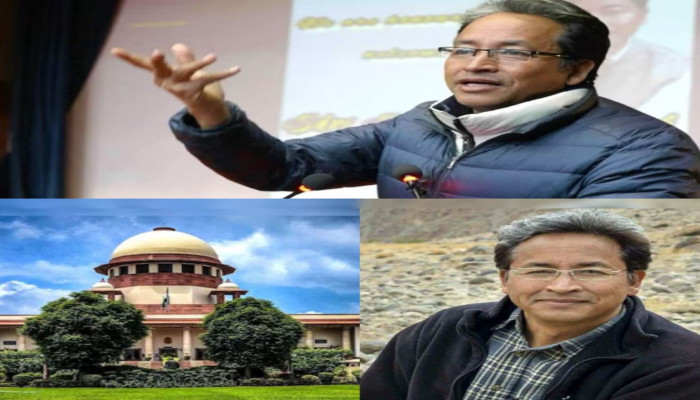
The Union government on Monday defended before the Supreme Court the preventive detention of Ladakh-based social activist Sonam Wangchuk, stating that his public speeches had the potential to incite unrest among the youth and posed a threat to national security in a sensitive border region.
Appearing for the Centre, Solicitor General Tushar Mehta told the court that Wangchuk’s speeches sought to provoke Ladakh’s younger population and push the region towards a situation similar to Nepal, Bangladesh and Sri Lanka. He referred to these countries as examples of violent uprisings and political instability, arguing that such comparisons could mislead and inflame the youth.
The matter was heard by a Bench comprising Justice Aravind Kumar and Justice Prasanna Varale. The Bench was considering a petition filed by Wangchuk’s wife, Geetanjali, who challenged his detention. At the outset, the judges observed that under Article 32 of the Constitution, the Supreme Court does not act as an appellate authority over detention orders. The key issue, the Bench said, was whether the reasons, grounds and material relied upon for the detention had a clear connection with national security.
Responding to this, Mehta submitted that the court’s role was not to substitute its own satisfaction for that of the authorities, but only to examine whether the District Magistrate (DM) was justified in being satisfied that Wangchuk’s actions could disrupt public order. He said the detention order was based on material that showed a real possibility of disturbance to peace.
According to the detention order, the District Magistrate concluded that Wangchuk’s speeches had the potential to incite harmful activities and disturb public peace in Ladakh. Mehta told the court that the detention order was passed after following due process and that it was issued within four hours.
He further informed the Bench that a Deputy Inspector General (DIG) of police had met Wangchuk and shown him video clips of his speeches. Mehta said Wangchuk had agreed that the video clips shown to him were authentic.
Reading out portions of Wangchuk’s speeches in court, the Solicitor General argued that the activist had deliberately separated inflammatory remarks from references to non-violence and Mahatma Gandhi. According to Mehta, these references were used as a shield to protect otherwise provocative statements.
“The district magistrate must see the speech in its entirety. You cannot pick one line, one word, or one sentence and say, ‘I was only saying what Gandhiji said,’” Mehta told the court. He also remarked that “Gen Z has its own dictionary,” suggesting that the younger generation may interpret such speeches differently and in a more radical way.
Mehta specifically cited Wangchuk as saying that a sudden influx of young protesters had emerged “like a flood.” He said Wangchuk had claimed he did not know where they had come from, but had added that “they were expecting a Nepal-like riot situation” and could take inspiration from Nepal.
According to the Solicitor General, Wangchuk was misleading the youth into believing that they should follow the path taken by Nepal. He argued that invoking Mahatma Gandhi and non-violence was “merely a device to shield an otherwise provocative speech.”
The Centre maintained that Ladakh is a strategically important border region, and any attempt to incite unrest there has serious implications for national security. On these grounds, the government defended the preventive detention, stating that it was necessary to maintain public order and prevent potential instability.
The Supreme Court heard the submissions to examine whether the detention had a proper nexus with national security, as required under the law. The matter continues to be considered by the Bench.



 Loading...please wait
Comments