




Centre clears RBI’s ₹10 and ₹20 polymer note trials, says paper currency will continue
- In Reports
- 07:04 PM, Jul 28, 2026
- Myind Staff
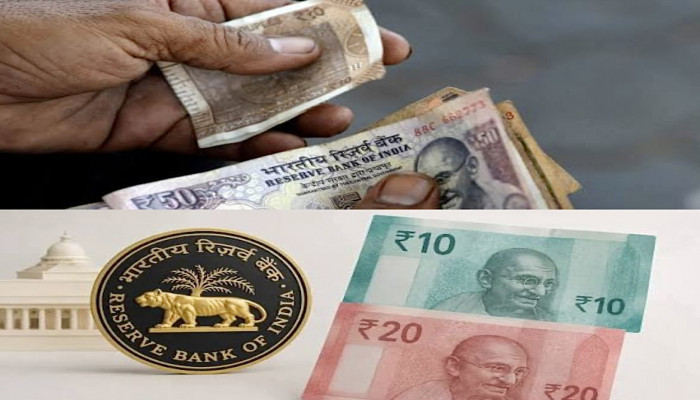
The Central government has approved the Reserve Bank of India's proposal to introduce polymer banknotes in the ₹10 and ₹20 denominations for field trials. At the same time, it has made it clear that there is no plan to replace the existing paper currency with polymer notes. The clarification came in Parliament on Monday during a discussion in the Lok Sabha.
Replying to a question in the Lok Sabha, Minister of State for Finance Pankaj Chaudhary informed the House that the RBI had submitted the proposal after receiving a recommendation from its Central Board. He said the central bank plans to print one billion polymer banknotes each in the ₹10 and ₹20 denominations for field trials. He added that regular circulation of these notes will begin only if the trials are completed successfully. The government has already approved the proposal.
The announcement follows weeks of preparations by the RBI's currency-printing subsidiary. Bharatiya Reserve Bank Note Mudran Private Limited (BRBNMPL) has started the initial process required for the field trials. The organisation has taken steps to arrange the materials needed for printing the new polymer notes.
On July 17, BRBNMPL issued a Global Expression of Interest (EOI), inviting manufacturers from around the world to supply opacified polymer substrate sheets with built-in security features. These sheets will be used for printing Indian polymer banknotes. The development was reported by news agency ANI.
According to the ANI report, the EOI invited suppliers to provide an indicative quantity of 68,000 reams of Biaxially Oriented Polypropylene (BOPP)-based polymer substrate. The total quantity has been divided equally between the two denominations, with 34,000 reams allocated for ₹10 notes and another 34,000 reams for ₹20 notes. Each ream will contain 500 sheets.
The polymer substrate must include several advanced security features. These include a clear window carrying a portrait, a metallic numeral, a magnetic pseudo thread, a shadow image and an iridescent pattern. The material must also be suitable for printing at the presses operated by BRBNMPL and Security Printing and Minting Corporation of India Limited (SPMCIL).
The EOI also outlines strict national security conditions for companies interested in participating in the process. According to the ANI report, bidders must ensure that any operations they have in China or Pakistan remain completely separated from work related to India. They must not procure raw materials from either of these countries. They must also ensure that they do not employ personnel who have worked in China or Pakistan in any capacity.
The eligibility conditions include additional requirements for companies from countries that share a land border with India. Such entities must obtain registration from the Department for Promotion of Industry and Internal Trade (DPIIT) Registration Committee before they can take part in the bidding process.
BRBNMPL also clarified that the current tender is only meant to meet the immediate requirement for field trials. According to the ANI report, the organisation may begin a much larger procurement process covering multiple denominations if the field trials deliver successful results. This indicates that the current exercise is part of a phased approach to assess the performance of polymer banknotes before any wider rollout.
The tender document also sets experience-based eligibility criteria for suppliers. Companies participating in the bidding process must have at least three years of experience in supplying polymer substrate with security features to a central bank or a banknote-printing organisation. This requirement aims to ensure that only experienced manufacturers take part in the project.
In addition, bidders must be capable of supplying a minimum of 20,400 reams of polymer substrate to qualify for consideration. The requirement is intended to ensure that selected suppliers have the production capacity needed to support the field trials.
The government's approval marks an important step in the RBI's plan to test polymer banknotes in India. However, the Centre has clarified that these trials should not be viewed as a decision to replace existing paper currency. The proposed field trials will help the RBI evaluate the performance, durability and practicality of polymer banknotes before taking any future decision on their wider circulation. Until then, the country's existing paper currency system will continue without any change.



 Loading...please wait
Comments