




Centre clears 5,000 rural homes for Manipur violence victims under PMAY-G
- In Reports
- 04:17 PM, Feb 24, 2026
- Myind Staff
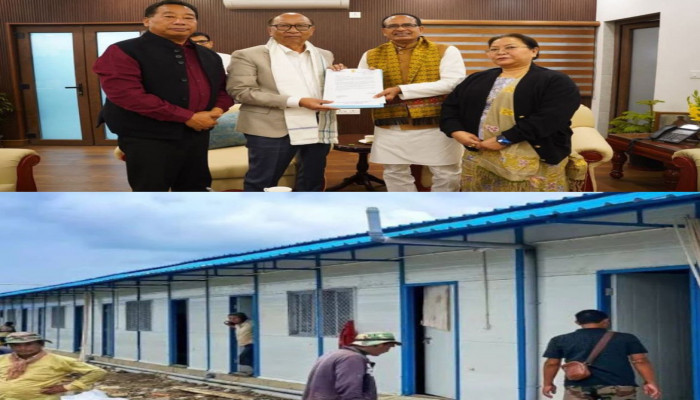
The Central government has approved the construction of 5,000 houses under the Pradhan Mantri Awaas Yojana – Gramin (PMAY-G) for people displaced by ethnic violence in Manipur. The houses are meant for internally displaced persons (IDPs) who lost their homes during the unrest that began on May 3, 2023.
The violence, which started on May 3, 2023, has so far claimed the lives of over 260 people. Around 60,000 people were forced to leave their homes. Even now, a large number of them continue to stay in relief camps across the state.
The approval came after Manipur Chief Minister Yumnam Khemchand Singh met Union Agriculture and Rural Development Minister Shivraj Singh Chouhan in New Delhi on Monday. Deputy Chief Ministers Nemcha Kipgen and Losii Dikho were also present at the meeting.
In a statement, the Manipur Chief Minister’s Office (CMO) said that Chouhan warmly received the three Manipuri leaders and assured them all help in their efforts to restore peace and normal life in the state.
Earlier this month, the Manipur government had sent a proposal to the Centre seeking a special project under PMAY-G. The proposal requested approval for building 5,000 houses for those affected by the ethnic violence. After reviewing the proposal, the Ministry of Rural Development approved a special window under the Awaas+ 2024 household survey. This window will help record details of all eligible families affected by the violence.
The Centre has allowed the state government to continue registering eligible beneficiaries under this special PMAY-G project. However, the Union ministry has clearly stated that beneficiaries must be selected strictly according to PMAY-G guidelines. It also directed that details of eligible households must be identified and uploaded through the Awaas+ 2024 mobile application.
The houses will be built following the rules laid down in the Framework for Implementation (FFI) of PMAY-G. This ensures that construction meets the standards set under the rural housing scheme.
In addition, the Centre has permitted the state government to sanction houses under the special project for those beneficiaries who had earlier received one or more instalments under PMAY-G but whose homes were destroyed during the ethnic violence. This move is expected to provide relief to families who had already started building houses but lost them in the conflict.
The decision to construct these 5,000 houses is aimed at supporting displaced families and helping them rebuild their lives. With thousands still living in relief camps, the project is seen as an important step toward rehabilitation and restoring stability in Manipur.



 Loading...please wait
Comments