




Centre approves Rs 10,000 crore aviation fuel price stabilisation fund
- In Reports
- 04:50 PM, Jun 03, 2026
- Myind Staff
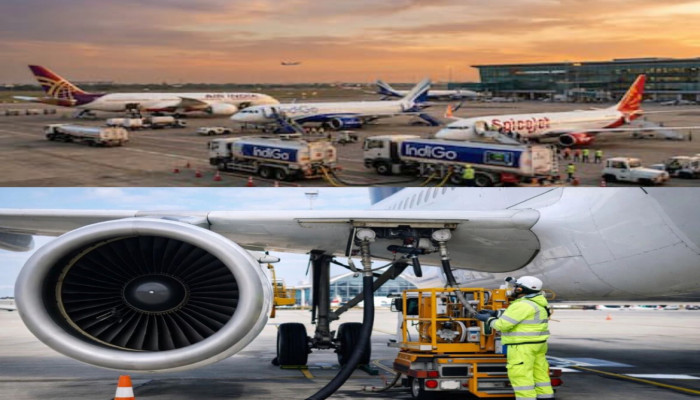
The Union Cabinet has approved a Rs 10,000-crore aviation fuel price stabilisation fund to help airlines cope with the sharp rise in aviation turbine fuel (ATF) prices triggered by the ongoing conflict in West Asia. Announcing the decision, Information and Broadcasting Minister Ashwini Vaishnaw said the move is aimed at ensuring stable airline operations and protecting passengers from higher airfares caused by the global fuel price surge.
According to the government, ATF prices have witnessed an unprecedented increase over the past few months. Vaishnaw stated that the conflict in the Middle East has caused aviation turbine fuel prices to rise nearly 2.5 times, from Rs 60.5 per litre in March 2026 to Rs 142 per litre in May 2026. In response, the Centre has capped ATF prices for domestic airline operations at Rs 75.6 per litre.
The government noted that fuel is one of the biggest expenses for airlines and accounts for nearly 40 per cent of their operating costs. The steep increase in fuel prices has put significant financial pressure on both airlines and oil marketing companies (OMCs). The newly approved fund is expected to provide relief to the aviation sector during this period of extreme volatility in global fuel markets.
Highlighting the impact of the decision, Vaishnaw said, “The fund will help stabilise ATF prices for scheduled Indian carriers and will prevent disruption of airline operations. It will also shield air passengers from fare spikes driven by the global price surge.”
He further said, “It will protect 77 lakh jobs dependent on the aviation ecosystem and safeguard substantial public investment in airport infrastructure by keeping airline operations viable. The fund will maintain regional and international connectivity to Europe, North America and Central Asia, given the Pakistan airspace closure.”
As per the Cabinet's decision, the ATF price stabilisation support will remain in force for a period of 36 months. The arrangement will be reviewed annually and may also conclude earlier if the entire support amount is recovered and settled before the completion of the three years.
An official statement issued after the Cabinet meeting said that the support is being provided to OMCs to ensure stable ATF pricing for airlines during the current period of exceptional fuel price volatility linked to the West Asia crisis. The government believes the measure will help maintain continuity in airline services while reducing the burden of fluctuating international fuel prices.
According to the Cabinet note, “A one-time budgetary support of up to Rs 10,000 crore shall be provided as an interest-free advance to OMCs to support ATF price stabilisation for Scheduled Indian Airlines. The corpus shall compensate OMCs for losses arising from elevated international ATF prices whenever the prevailing Import Parity Price exceeds the benchmark price determined under the approved mechanism.”
Under the approved framework, oil marketing companies will receive compensation from the fund whenever international ATF prices rise above the benchmark level fixed by the government. This mechanism is intended to prevent sudden increases in fuel costs from being passed on directly to airlines and passengers.
The government has also built a recovery mechanism into the scheme. When international fuel prices decline and market conditions improve, the differential amount will be recovered from OMCs. The recovered funds will then be transferred back to the Consolidated Fund of India.
Officials said the arrangement is temporary and designed specifically to address the current crisis in global energy markets. The support will continue until the entire amount provided by the government is fully recovered and settled. Through this initiative, the Centre aims to provide stability to the aviation sector, protect employment linked to the industry, maintain domestic and international air connectivity, and ensure that travellers are not burdened by sudden increases in ticket prices resulting from the global fuel price shock.



 Loading...please wait
Comments