



Centre approves 22 projects under electronics components manufacturing PLI scheme
- In Reports
- 06:33 PM, Jan 02, 2026
- Myind Staff
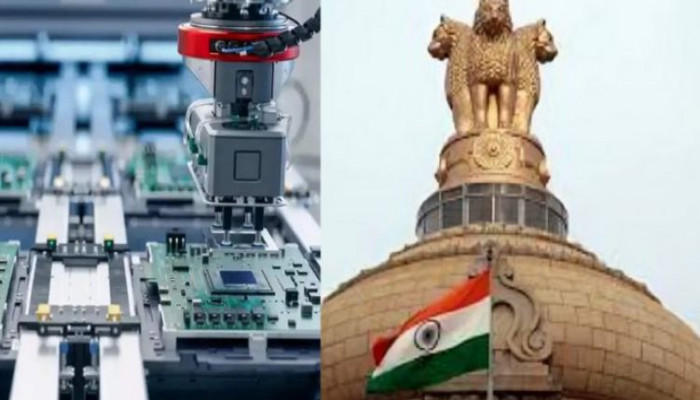
The Centre has approved 22 new projects under the Electronics Components Manufacturing Scheme (ECMS), strengthening India’s push to build a strong domestic electronics manufacturing ecosystem. The Ministry of Electronics and Information Technology (MeitY) said the approved proposals are expected to attract investments worth Rs 41,863 crore and generate an estimated production of Rs 2.58 lakh crore.
In an official statement, the ministry said, “Together, the projects are expected to generate 33,791 direct jobs.” The approvals mark an important step under the government’s Production Linked Incentive (PLI) framework for electronics components.
The newly cleared proposals include applications from major companies such as Dixon, Samsung Display Noida Pvt Ltd, Foxconn’s Yuzhan Technology India Pvt Ltd, Hindalco Industries, Tata Electronics, Amara Raja-ATL, Motherson and Vital Electronics, among others. These firms are expected to play a key role in expanding India’s electronics components manufacturing capacity.
The latest approvals are part of the third tranche under the scheme and come in addition to projects approved earlier. The ministry said that 24 applications involving investments of Rs 12,704 crore had been approved in the first phase. This was followed by the second tranche in November, under which 17 projects with investments of Rs 7,172 crore were cleared. Union Minister for Electronics and Information Technology Ashwini Vaishnaw handed over the approval letters to the companies on Friday.
According to a background note issued by MeitY, the third tranche of approvals spans manufacturing across 11 target product segments. These segments include mobile phones, telecom equipment, consumer electronics, strategic electronics, automotive electronics and IT hardware. The ministry said the focus is on building a complete and reliable supply chain for electronics manufacturing in the country.
The approved components under the ECMS include printed circuit boards (PCBs), lithium-ion cells, connectors, camera modules, display modules, aluminium extrusions and mobile phone sub-assemblies. These components are considered essential for increasing domestic value addition and reducing India’s dependence on imported electronic parts.
The ministry said the projects will be set up across eight states — Andhra Pradesh, Haryana, Karnataka, Madhya Pradesh, Maharashtra, Tamil Nadu, Uttar Pradesh and Rajasthan. It also noted that “some projects are expected to generate employment in Telangana,” even if the manufacturing facilities are located in other states.
Among the key projects, Motherson will set up a facility in Tamil Nadu that is expected to generate 5,741 jobs. Amara Raja-ATL will establish advanced component manufacturing operations in Haryana, with an estimated employment of 3,550 people. Tata Electronics will undertake mobile phone manufacturing activities in Tamil Nadu, creating around 1,500 jobs.
Vital Electronics will establish a multi-layer PCB manufacturing facility in Maharashtra, which is expected to generate 110 jobs. Ascent-K Circuits has received approval to set up an advanced PCB manufacturing plant at the Yamuna Expressway Industrial Development Authority (YEIDA) area under the EMS 2.0 cluster, creating 1,540 jobs. Shogini, a subsidiary of IL JIN Electronics, has also been approved to expand its PCB manufacturing operations under the ECMS.
Samsung will establish a display module sub-assembly unit as part of the approved proposals. Foxconn’s Yuzhan Technology India Pvt Ltd will manufacture enclosures for mobile devices. Amphenol High Speed Interconnect India will produce connectors in Karnataka, employing 186 people, while CIPSA Tech will set up a multilayer PCB facility in Andhra Pradesh, creating 100 jobs.
The Union Cabinet had approved the Electronics Components Manufacturing Scheme in March 2025 with a total outlay of Rs 22,919 crore. The ministry said the scheme is part of the government’s broader effort to make India self-reliant in electronics manufacturing and achieve $500 billion in electronics production by 2030–31.



 Loading...please wait
Comments