



Capital Shapes Culture
- In Current Affairs
- 09:36 AM, Apr 25, 2026
- Gargi Joshi
This is the simplest way to understand what is happening in India today.
Whoever controls capital slowly shapes culture.
If money comes from a Dharmic ecosystem, business begins to reflect Dharma. If money comes from foreign funds, global compliance systems, and transnational rating frameworks, business slowly begins to reflect those values instead.
That is why this is not just about one company, one policy, or one HR circular. It is about the deeper question: who funds our economy, and what values come attached to that funding?
Old Bharat understood something modern India has forgotten.
Temples were not only places of worship. They were also anchors of social trust, local legitimacy, charity, knowledge, and economic life. Dattopant Thengadi’s Third Way argues that India must think beyond both capitalism and communism, and build an indigenous order rooted in Dharma and national selfhood. In one of the formulations reproduced in the book, the Bharatiya order is described as one in which economic life is “governed by Dharma,” unlike capitalism where surplus is accountable to employers and communism where it is accountable to the party.
Take the example of Somnath.
What we can say with confidence from historical material is this: Somnath was not an isolated shrine in the middle of nowhere. It stood near the coast and near an important port zone. Al-Biruni described Somnath as a harbour for seafaring people and a station for those travelling between East Africa and China. That means Somnath was connected to a living world of merchants, sailors, exchange, and movement.
So, when people say Somnath represents an older temple-centred economy, the core point is valid. Temple, trade, and trust were not separate worlds. They strengthened each other. Not at all secular, like we treat the administration and economic part of temples today. The deity was not just a symbol. The deity was the moral centre. That matters.
Why?
Because when capital is presided over by something sacred, it cannot behave as morally ownerless. It is expected to serve society. It automatically carries restraint. It automatically respects the sacred order that gives it legitimacy.
That is why trust became real currency in Bharat.
A trader did not operate only for private profit. A guild had a reputation to maintain, a deity to serve. A temple had sanctity to preserve. Society, economy, and culture were tied together. That is one reason India could sustain long commercial networks without losing its civilizational core.
Today that link is broken.
Now we mostly think in only two ways: capitalist or communist. Either private capital rules everything, or the state controls everything. But the Dharmic third way has become weak. Thengadi explicitly presents this “third way” as an alternative after the failures of communism and the limits of capitalism, and he ties it to Swadeshi and a civilisationally rooted economic model.
Why did this third way weaken?
Partly because temple institutions no longer function as strong, autonomous economic anchors. In many places, they are badly managed, even after being free and not state-controlled like in many parts of the country. In many places, they are tightly regulated by the state. In Tamil Nadu, the HR&CE-linked systems cover more than 44,300 temples according to the state’s own temple-management portal; other public references put the number even higher depending on what is counted. In Kerala, state-supervised devaswom structures also oversee very large temple networks: the official Travancore Devaswom Board alone administers 1,248 temples, while the Malabar and Cochin systems add many more.
The Governments there have made their “anti-Sanatana” stance abundantly clear. Temple autonomy in these states is heavily limited by state-linked control structures. They have actively tried to erase the Temple culture and the documented history on the temple walls in various ways. And the situation in Kerala also shows another problem: even within these systems, many temples are financially weak. The Travancore Devaswom Board president said recently that fewer than 50 temples under that board are financially self-sufficient.
So, one side of the problem is this: the older Dharmic capital ecosystem is either not strong enough or not allowed to shape modern business anymore.
The other side is this: outside capital has stepped in.
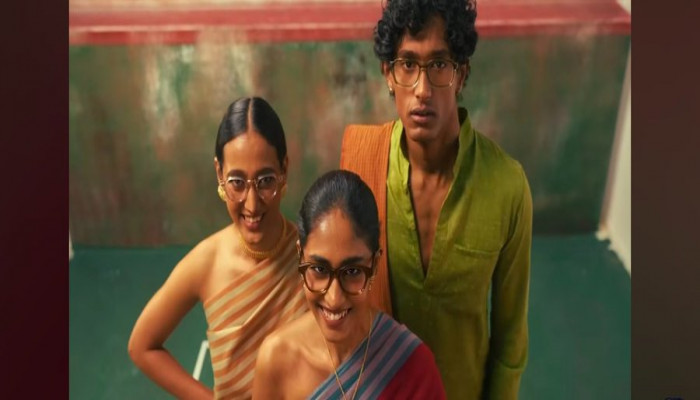
That is where Lenskart becomes a useful example.
Lenskart presents itself as a Bharat success story, and in many ways, it is a major Indian company. But its own IPO disclosures show a more complex picture. The company states that it operates a manufacturing facility in China through a joint venture, and that direct imports from the PRC were 42.21% of total purchases in FY2025. (Citi) Reuters also reported that Lenskart raised $200 million from Temasek and Fidelity in 2024, and noted that SoftBank and ADIA are among its investors. (Reuters)
Now the point is not that foreign investment is automatically evil.
The point is that capital shapes culture.
A company dependent on global investors does not ask only, “What is natural to Bharat?” It also has to ask, “What will global investors approve? What will fit global compliance language? What will not create reputational risk?” That is how values slowly get outsourced.
This is where ESG and DEI enter the picture.
On the factual side, ESG is now deeply connected to UN-linked responsible investment and sustainability frameworks. The UN Global Compact describes itself as driving environmental, social, and governance practices, and the Principles for Responsible Investment were launched by UNEP Finance Initiative and the UN Global Compact as a framework for incorporating ESG into investment practice.
Now comes the dangerous part.
It is fair to argue that many of these frameworks are shaped by a Neo-Marxist habit of reading society through group conflict. Classical Marxism focused on class conflict. Later ideological frameworks increasingly shifted attention to culture, identity, and power. In practice, many DEI-style models sort people into moral categories such as privileged and marginalised, dominant and excluded, majority and minority. Whether one calls that fully “Neo-Marxist” is a matter of understanding, obviously, not an official UN description. But it is a serious and widely made critique of how these systems work. What is factual is that the UN system and UN-linked institutions actively promote gender equality, inclusion, and responsible business frameworks across member states and partner institutions. While this language used in these policies sounds perfectly acceptable, even favourable, manipulation lies in the execution details. The oppressor-oppressed model can be clearly observed in the way the policies are drafted.
The problem for India is simple.
These categories were born from Western history. They come from Western conflicts. They do not automatically understand a civilisation like Bharat.
So, when this capital enters Indian business, it also imports a way of seeing society. A bindi is no longer seen first, as sacred. A tilak is no longer seen first as civilisational. A kalawa is no longer seen first as part of lived Dharma. Instead, everything risks being filtered through borrowed categories or oppressor-oppressed classes, with different classes getting different priorities. Minorities over the majority women – even if women are the victims, the minority protection takes precedence.
That is why this issue is bigger than Lenskart or Nashik TCS.
If temple-linked Dharmic capital weakens, and foreign ideological capital grows, then Indian business will increasingly speak in someone else’s moral language.
That is the real warning.
Bharat does not merely need more startups. Bharat needs civilisationally rooted capital. It needs stronger domestic investors, stronger community institutions, and modern economic structures that are profitable but still governed by Dharma.
Otherwise, we will remain trapped between capitalism and communism, while forgetting that Bharat once knew a third way.
And unless we rebuild that third way, our companies may be Indian in address, Indian in branding, and Indian in customer base, but not fully Indian in the values that shape them.
Disclaimer: The opinions expressed within this article are the personal opinions of the author. MyIndMakers is not responsible for the accuracy, completeness, suitability, or validity of any information on this article. All information is provided on an as-is basis. The information, facts or opinions appearing in the article do not reflect the views of MyindMakers and it does not assume any responsibility or liability for the same.


 Loading...please wait
Comments