




Canadian PM vows to stop sending 70 per cent of military budget to US
- In Reports
- 05:18 PM, Apr 13, 2026
- Myind Staff
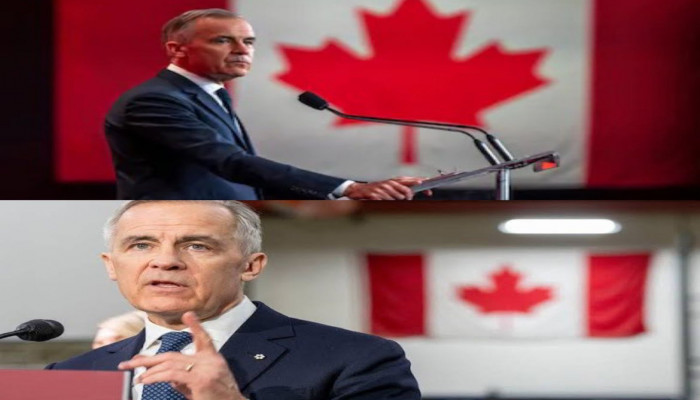
Canadian Prime Minister Mark Carney has announced a significant change in the country’s defence spending approach, saying Canada will move away from its long-standing dependence on the United States. Speaking at the Liberal Party of Canada national convention in Montreal on Saturday, Carney made it clear that the government intends to strengthen domestic capabilities and reduce reliance on foreign suppliers.
Addressing party delegates, Carney said, “The days of our military sending 70 cents of every dollar to the United States are over," a statement that received a standing ovation. He used the moment to highlight the need for Canada to become more self-reliant in defence production and to support its own economy through local manufacturing and job creation.
Carney emphasised that the government’s focus will be on boosting domestic industries by prioritising Canadian resources and workers. He stated, “We are going to build Canada strong with Canadian steel, Canadian aluminium, Canadian lumber, Canadian workers." This approach reflects a broader push toward economic sovereignty and aims to strengthen national unity in a changing global environment.
The Prime Minister also referred to growing trade tensions with the United States, particularly those linked to tariffs introduced under Donald Trump. While he described these tariffs as an immediate concern, Carney noted that Canada’s bigger challenge lies in maintaining unity and safeguarding the “common good” over the long term. His remarks suggest that the government is looking beyond short-term disputes and focusing on building a more stable and independent economic framework.
A key part of this strategy is the “Buy Canadian” policy, which Carney said will help strengthen local communities and reduce dependence on foreign markets. By encouraging domestic procurement, the government hopes to keep more economic benefits within the country and support local businesses involved in defence production.
Recent data supports Carney’s concerns about reliance on the United States. According to a report by Reuters last month, nearly 70 per cent of Canada’s military capital spending currently goes to US suppliers. This heavy dependence has raised questions about long-term sustainability and national security, prompting the government to rethink its approach.
In response, Canada has outlined a new defence strategy aimed at restructuring how it spends and invests in its military sector. The plan focuses on increasing domestic procurement and building stronger local supply chains. By doing so, the government hopes to create a more resilient defence industry that can operate with less reliance on external partners.
The strategy also includes ambitious long-term goals. These include increasing defence industry revenues by more than 240 per cent and boosting defence exports by 50 per cent. The government aims to create up to 125,000 jobs through these efforts, which would provide a major boost to the national economy. In addition, Canada plans to increase investment in defence research and development by 85 per cent, signalling a strong push toward innovation and technological advancement in the sector.
Alongside these reforms, Canada has reaffirmed its commitment to the NATO alliance. The country has pledged to meet NATO’s target of spending 2 per cent of its GDP on defence in the 2025–26 fiscal year, earlier than previously scheduled. This move indicates that while Canada is looking to reduce dependence on the United States, it still intends to remain a strong and active partner within global defence frameworks.
Overall, Carney’s announcement marks a major shift in Canada’s defence and economic strategy. By focusing on domestic production, job creation, and reduced reliance on foreign suppliers, the government is aiming to build a more self-sufficient and resilient defence sector. At the same time, it seeks to balance this independence with continued cooperation in international alliances.



 Loading...please wait
Comments