




Canadian intelligence report flags Khalistani extremists as continuing security concern
- In Reports
- 01:51 PM, May 02, 2026
- Myind Staff
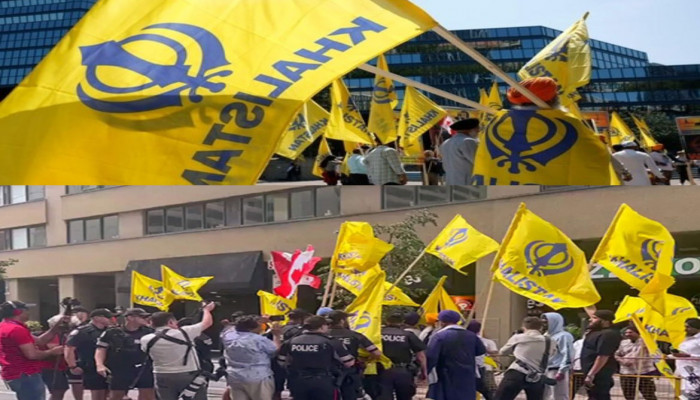
Canada’s intelligence agency, the Canadian Security Intelligence Service, has stated in its latest annual report that Canada-based Khalistani extremists, referred to as CBKEs, continue to pose a national security threat. The 2025 report, released on Friday, highlights concerns over the ongoing involvement of some individuals in extremist activities linked to violence.
According to the report, “Ongoing involvement in violent extremist activities by CBKEs continues to pose a national security threat to Canada and to Canadian interests.” The agency has pointed out that while the number of such individuals may be limited, their activities remain a matter of concern for national security agencies.
The report further explains that some of these individuals are well-connected within Canadian society. It states that certain CBKEs are “well connected to Canadian citizens who leverage Canadian institutions to promote their violent extremist agenda and collect funds from unsuspecting community members that are then diverted toward violent activities.” This raises concerns about the misuse of community networks and institutions for activities linked to extremism.
At the same time, the report makes an important distinction between extremist actions and lawful political expression. It notes that there were no CBKE-related attacks reported in Canada in 2025. It also clarifies that some Canadians are involved in peaceful and legitimate campaigning in support of the Khalistan movement. The report states, “Only a small group of individuals who use Canada as a base to promote, fundraise, or plan violence primarily in India are considered Khalistani extremists.”
The report also refers to a significant historical event to underline the seriousness of the issue. It mentions the 40th anniversary of the bombing of Air India Flight 182 bombing, also known as the Kanishka tragedy. The suspects in that case were linked to pro-Khalistan extremism. The report states, “It remains to this day the deadliest terrorist attack in Canadian history, with 329 people killed, most of them Canadians.”
The concerns raised in the 2025 report are similar to those mentioned in the 2024 report. That earlier report came after Mark Carney took office as Prime Minister. References to pro-Khalistan extremism had been absent from such reports after 2018, during the tenure of former Prime Minister Justin Trudeau.
In the report, CBKEs have been placed under the category of politically motivated violent extremism, or PMVE. The agency defines PMVE as a form of extremism that “encourages the use of violence to establish new political systems, or new structures or norms within existing systems.” This classification highlights the ideological nature of such threats and their potential impact on democratic systems.
The report also touches on the broader issue of foreign interference and espionage. It continues to list India among the main countries involved in such activities targeting Canada, along with China, Russia, Iran, and Pakistan. However, it adds that in 2025, multiple states and their intelligence services were involved in such actions, without naming them specifically.
In its section on India, the report notes that “India acts to counter perceived threats to its domestic stability, including Khalistan separatism. In Canada, advocacy for Khalistan separatism is lawful political activity.” This reflects the difference in how the issue is viewed in the two countries.
India has consistently rejected the allegations made by Canada regarding interference. These accusations had become more intense during the time when Justin Trudeau was in office. However, tensions appear to have eased since his departure.
Recent statements by Canadian officials suggest a shift in tone regarding India’s alleged involvement. Ahead of Prime Minister Mark Carney’s visit to India earlier this year, a senior official said during a background briefing that authorities no longer believed India was interfering in Canada’s democratic processes or involved in targeted violence.
During a technical briefing held in late February, an unnamed official stated, “I really don’t think we’d be taking this trip if we thought these kinds of activities were continuing.” This remark indicates a more cautious and moderated stance on the issue.
In March, David Eby, the Premier of British Columbia, also commented on the matter. He said his government had “no information” linking India to violence related to an extortion crisis in the province. This statement further reflects the absence of concrete evidence in recent investigations.
Similarly, Royal Canadian Mounted Police (RCMP) Commissioner Mike Duheme stated that there are currently no links between the Indian government and transnational repression or foreign interference. His comments were made in response to ongoing concerns about foreign involvement.
In an interview with CTV News, Duheme addressed questions about possible actions by Indian agents. He said, “In the files that we have that involve transnational repression, we’re not seeing any connection right now with any foreign entity, based on the criminal information, the investigations that we have presently.” This statement reinforces the position that current investigations have not established such links.
Overall, the report presents a mixed picture. While it identifies a continued threat from a small group of extremist individuals, it also recognises that most political advocacy related to Khalistan in Canada remains lawful. At the same time, recent statements by officials suggest a shift towards a more measured view on foreign interference, particularly in relation to India.



 Loading...please wait
Comments