




Canada launches counter-tariffs on US imports worth CAD 27.6 billion
- In Reports
- 03:31 PM, Sep 08, 2026
- Myind Staff
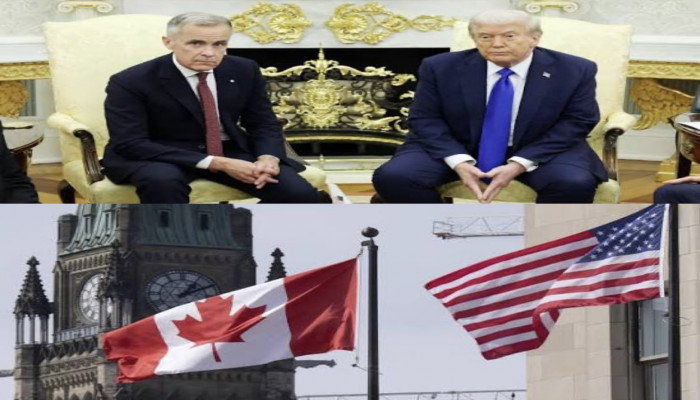
Canada has launched a fresh counterattack against the United States, imposing tariffs of 15%, 25% and 50% on a wide range of American goods. The move has opened a new front in the trade dispute between the two neighbours. It comes as the US heads towards November’s midterm elections, adding a political dimension to the growing economic tensions.
The new Canadian tariffs came into effect on Tuesday and cover US imports worth CAD 27.6 billion, according to the Canadian government. Ottawa is targeting several sectors, including steel, dairy, appliances, agricultural equipment, pulp and paper, electronics, furniture and machinery. Some products now face tariffs as high as 50%.
Canada has levied tariffs on American products and industries already affected by US protectionist policies. Ottawa is also targeting sectors where American exporters have strong access to the Canadian market to put pressure on US businesses while protecting Canadian industries from the impact of American tariffs.
Steel and aluminium are among the products facing some of the highest duties. Several items have moved from the earlier 25% tariff to 50%. The list includes semi-finished products, flat-rolled steel, stainless steel bars and rods and other metal products.
Canada has also imposed a 50% tariff on milk, cream and whey products. Cheese and curd will face a 25% duty. Paper products, including toilet paper and facial tissue, will face tariffs ranging from 25% to 50%.
A wide range of household appliances will also become more expensive for American exporters selling in Canada. Stoves, refrigerators, dishwashers, washing machines, radiators, air conditioners and water heaters will face tariffs between 15% and 25%. Furniture, carpets and lighting products are also included, with some facing duties of up to 50%.
The measures extend to farm equipment and industrial machinery. Lawn mowers, chainsaws, tower cranes and industrial robots are among the products targeted. Motorcycles face a 50% tariff, while rail locomotives and trailers face a 25% duty. Copper wire and wood charcoal are among the other products that will face a 50% tariff.
Ottawa says its counter-tariffs focus on goods covered by US Section 338 and Section 232 tariffs. Canadian tariff rates have been designed to match the corresponding US measures. The government says the move is intended to respond to the damage caused by US protectionist policies and support Canadian industries affected by them.
Canada has also announced a CAD 7.5 billion support package for businesses and workers hit by the trade dispute, which includes loans and changes to employment insurance. The government hopes these measures will help businesses manage higher costs and protect jobs as the trade conflict continues.
The timing of Canada’s action could increase pressure on the US administration. American lawmakers are preparing for November’s midterm elections. US exporters and businesses in states with strong trade links with Canada could face higher costs or weaker demand if Canadian buyers turn to suppliers from other countries.
Michigan and Ohio could be particularly exposed. Both states have major manufacturing sectors and face competitive political and congressional races. Any disruption to trade with Canada could therefore create economic and political pressure in these states.
By far, the US remains Canada’s biggest trading partner. Canadian exports of goods and services to the US were worth about CAD 683.3 billion in 2025. Canadian imports from the US stood at around CAD $604.1 billion, according to Canada’s Global Affairs department. US goods exports to Canada were about US$333.6 billion in 2025, while US goods imports from Canada reached US$381.9 billion, according to the US Trade Representative. Total US goods and services trade with Canada was estimated at US$872.3 billion last year.
The US accounted for 71.7% of Canada’s merchandise exports in 2025, down from 75.9% in 2024 as Canadian companies started looking for other markets. The US also supplied 58.8% of Canada’s merchandise imports. The two economies remain closely connected, with goods and components often crossing the border several times before reaching consumers.
For American exporters, Canada’s tariffs increase the cost of entering one of their most important overseas markets. US steel, dairy, appliance and machinery companies will have to decide whether to absorb the additional cost or pass it on to Canadian customers. Higher prices could push Canadian buyers towards alternative suppliers.
Canada has also been expanding its trade with markets outside the US. Its exports to non-US markets rose 11.1% in 2025 on a goods-and-services basis. However, the US economy is far larger than Canada’s. American exporters can also redirect some goods to other markets. This imbalance means the dispute carries risks for both sides, with Canada potentially facing greater economic pressure.
The conflict has also moved beyond tariffs. US President Donald Trump on Monday threatened to prevent Canadian aircraft maker Bombardier from selling jets in the US. He accused the company of living “off American Buyers.” Bombardier has more than 2,800 US-based suppliers, and its aircraft use components made across several US states. Its Global 7500, for instance, has wings made in Texas, avionics made in Iowa and motors made in Indiana. Any restrictions on Bombardier could therefore affect American suppliers as well as the Canadian company.
The latest escalation followed the breakdown of weeks of negotiations between Washington and Ottawa and appeared close to reducing trade tensions. Trump announced on August 18 that the countries had reached a preliminary deal and gave negotiators three days to finalise the details. The agreement failed to materialise.
In the next two weeks, both governments blamed each other for the collapse of the talks, with the Trump administration threatening further action against Canada, including additional tariffs and possible bans on some Canadian imports. There are currently no clear signs of an immediate breakthrough.
For Canadian Prime Minister Mark Carney, the situation requires a difficult balance. Ottawa wants to defend Canadian industries and show that it will respond to US pressure. At the same time, a prolonged trade war could hurt an economy that remains heavily dependent on the US market.
Trump also faces a political test. His administration has repeatedly warned that it will not accept retaliation. US officials currently identify Canada and China as the two countries that have used counter-tariffs in response to American measures.
The next step will depend on Washington’s response. The US could introduce another round of tariffs, or the pressure created by Canada’s measures could bring both sides back to negotiations. Ottawa is betting that a strong response will improve its position at the negotiating table. Washington, meanwhile, risks seeing pressure on Canadian businesses turn into higher costs and weaker demand for American exporters. With voters heading to the polls in November, the economic impact of the tariff fight could become an increasingly important political issue.



 Loading...please wait
Comments