



Canada, China reach initial trade agreement on EVs, Canola
- In Reports
- 06:33 PM, Jan 16, 2026
- Myind Staff
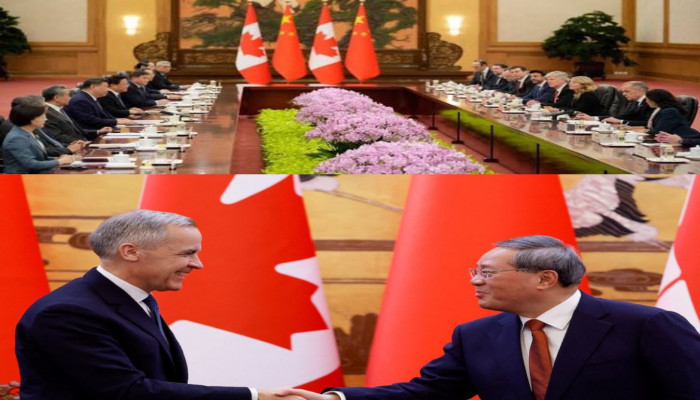
Canada and China have agreed on an initial trade deal that will cut tariffs on electric vehicles (EVs) and canola, Canadian Prime Minister Mark Carney said after meetings with Chinese leaders, including President Xi Jinping, in Beijing. The agreement is part of efforts by both countries to remove trade barriers and build new strategic economic ties.
Under the deal, Canada will at first allow up to 49,000 Chinese electric vehicles to enter the Canadian market with a tariff of 6.1% on most-favoured-nation terms, Carney told reporters. He did not specify how long this arrangement will last. This move represents a major reduction from the 100% tariff that Canada had imposed on Chinese EVs in 2024 under the previous government.
Carney said, “This is a return to levels prior to recent trade frictions, but under an agreement that promises much more for Canadians.” He explained that bringing in EVs at these terms could help Canada learn from innovative partners, access global supply chains, and increase local demand, which is important for building a competitive Canadian EV industry.
The initial tariff cut comes after months of diplomatic efforts by Carney, who is the first Canadian prime minister to visit China since 2017. He made the trade deal a central focus of his trip, aiming to re-establish stronger relations with Canada’s second-largest trading partner after the United States.
Carney also highlighted the importance of deeper cooperation with China in clean energy storage and production. He said he expects the EV deal to spur “considerable” Chinese investment into Canada’s auto sector, create good jobs, and help Canada on its path to a net-zero future.
The renewed trade pact also addresses a long-standing dispute over Canadian agricultural exports to China, especially canola. After Canada’s 2024 tariff on electric vehicles, China responded by imposing high tariffs on more than US$2.6 billion worth of Canadian agricultural products, such as canola oil and meal, and later on canola seed. That move contributed to a 10.4% drop in Canada’s exports to China in 2025.
As part of the new agreement, Carney said Canada expects China to lower tariffs on Canadian canola seed to about 15% by March 1. This is a sharp drop from the current combined tariff level of 84%, he noted. “This change represents a significant drop from current combined tariff levels of 84%,” Carney said, adding that China represents a US$4-billion canola seed market for Canada.
Carney also said that starting March 1, and at least through the end of the year, China is expected to remove anti-discrimination tariffs on Canadian canola meal, lobsters, crabs, and peas. He said these changes will help unlock almost US$3 billion in export orders for Canadian farmers, fish harvesters, and processors as they tap into the Chinese market.
Both countries see this agreement as a first step toward broader cooperation. At a time when Canada faces continued tariffs from the United States on some goods and political tensions with its largest trading partner, Carney emphasised the value of diversifying Canada’s trade relationships.
Responding to questions about whether China has become a more reliable partner than the United States, Carney said, “In terms of the way our relationship has progressed in recent months with China, it is more predictable, and you see results coming from that.”
The initial trade deal on EVs and canola marks an important step in Canada-China relations, even as the two governments work toward more comprehensive agreements. Both sides are seeking to deepen cooperation in areas like agriculture, clean energy, and manufacturing, and to expand two-way trade and investment opportunities.



 Loading...please wait
Comments