




Calcutta High Court refuses to stay Bengal’s cattle slaughter rules ahead of Bakrid
- In Reports
- 01:47 PM, May 22, 2026
- Myind Staff
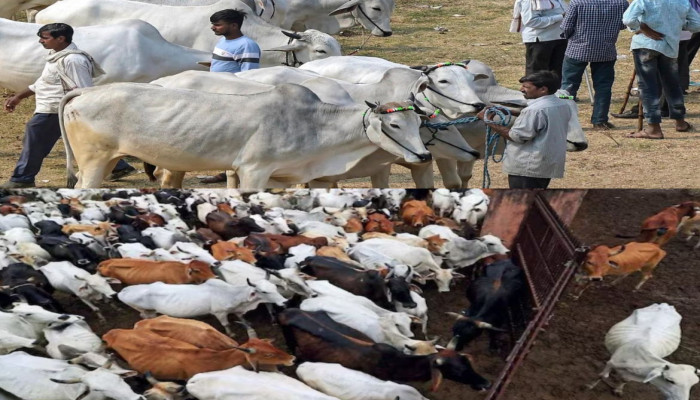
The Calcutta High Court on Thursday refused to stay the West Bengal government’s notification regulating cattle slaughter in the state ahead of Eid al-Adha, or Bakrid. At the same time, the court directed the newly formed BJP government in the state to take a decision within 24 hours on pleas seeking exemptions for religious rituals during the festival, which is scheduled to be observed next week.
A Division Bench comprising Chief Justice Sujoy Paul and Justice Partha Sarathi Sen was hearing multiple petitions challenging the state government’s May 13 notification. The notice laid down several rules for animal slaughter and made it mandatory to obtain a “fit certificate” from the authorities before slaughtering animals. The notification had also warned that violations of the rules would invite penal action.
During the hearing, the court also asked the state government to amend its May 13 notice by “expressly incorporating that slaughter of animals, including cows and buffaloes, in open public places is strictly prohibited”. The Bench further observed, “Sacrifice of a cow is not a part of the festival of Id-Uz-Zoha and is not a religious requirement under Islam,” referring to the Supreme Court judgment in Hanif Quershi vs State of Bihar.
One of the petitions before the court sought exemption under Section 12 of the Animal Slaughter Control Act, 1950, to allow religious practices during Bakrid. Senior advocate Bikash Ranjan Bhattacharya, appearing for one of the petitioners, argued that the law was framed in 1950 when agriculture depended heavily on domestic animals. He told the court that farming methods have changed significantly over the years and are now largely technology-driven.
Bhattacharya also pointed out that Section 12 of the Act provides relaxation for religious purposes. He further claimed that West Bengal has witnessed healthy growth in its cattle population over the years, suggesting that the present situation is different from the circumstances under which the law was originally framed.
Opposing the petitions, lawyers representing both the state government and the Centre argued that the notification was issued strictly in line with the provisions of the Animal Slaughter Control Act and previous directions passed by the Calcutta High Court in 2018. They maintained that the restrictions were necessary for the proper implementation of the law.
Another petitioner’s counsel, Debyani Sengupta, strongly argued in favour of a complete ban on cow slaughter during Bakrid. Addressing the Bench, she said, “Let there be a complete ban on cow slaughter during Bakrid. A monitoring committee should be constituted.”
After hearing all sides, the High Court declined to grant interim relief to the petitioners. The Bench noted that the state government’s notice was issued to implement an earlier order passed by the same High Court in 2018. It said there was no valid ground at this stage to stay or cancel the notification.
In its order, the Bench observed, “The Act of 1950 is a statute which is prevailing for 76 years. It is trite that there exists a presumption of constitutionality of a statutory provision unless it is specifically declared as unconstitutional. Thus, no case for the grant of interim relief is made out. The aspect of constitutionality will be considered after the exchange and completion of pleadings by the parties. The prayer for interim relief is declined.”
However, on the issue of exemptions sought by some petitioners for religious purposes, the court directed the state government to take a decision quickly. The Bench said, “…we are inclined to direct that the State shall take a decision… regarding exemption… Considering the fact that the festivals may take place on 27/28th of this month, the State shall take a decision in this regard within 24 hours from the date of communication of this order.”
The High Court also dealt with the plea seeking a complete ban on cow slaughter during Bakrid. While it did not pass any fresh direction on the matter, the Bench said the provisions of the 1950 Act were sufficient to address the concerns raised by the petitioner.
“In our opinion, the Act of 1950 takes care of the relief prayed for by the petitioner, and we have no doubt that the State will endeavour to implement the Act and Rules made thereunder in its true spirit,” the Bench observed.
Apart from the legal questions surrounding the notification, the High Court also raised concerns over the administrative mechanism for implementing the law across the state. The Bench directed the government to examine whether there is a proper system in place for issuing the required certificates under the Animal Slaughter Control Act and the Rules framed under it.
The court further asked the government to verify whether responsible officers have been appointed across the state for issuing such certificates and whether proper infrastructure exists at designated slaughter locations. The judges noted that implementation of the law would require an effective administrative setup and adequate facilities.
The Bench added that if any shortcomings are found during the review, the state government should take immediate steps to address them. The court stated that if any deficiency is noticed, “we hope and trust the same shall be cured at the earliest.”
The matter is expected to remain under judicial scrutiny as the court continues hearing challenges related to the constitutional validity and implementation of the Animal Slaughter Control Act, 1950, in West Bengal.



 Loading...please wait
Comments