




Calcutta High Court orders West Bengal to hand over land acquired along the border to BSF by March 31
- In Reports
- 02:21 PM, Jan 29, 2026
- Myind Staff
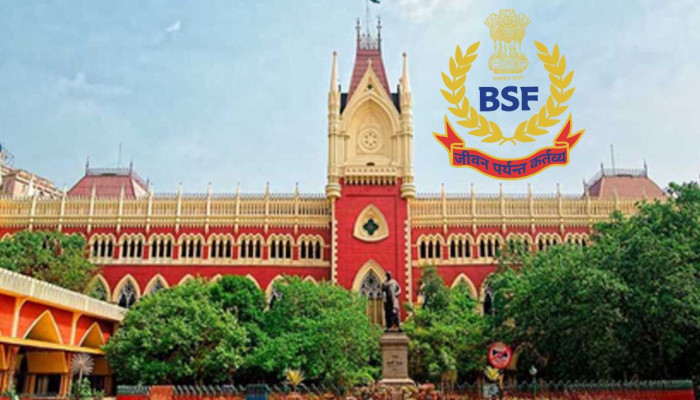
The Calcutta High Court has directed the West Bengal government to hand over land acquired along the Indo-Bangladesh border to the Border Security Force (BSF) by March 31, 2026. The Court clearly stated that matters related to national security cannot be delayed due to administrative or electoral reasons.
A Division Bench consisting of Chief Justice Sujoy Paul and Justice Partha Sarathi Sen passed the order while hearing a public interest litigation filed by a former Deputy Chief of Army Staff. The petition highlighted serious concerns about large portions of the international border in West Bengal remaining unfenced even after repeated approvals over several years.
The Court observed that issues of national security could not be stalled on administrative or electoral grounds. It emphasised that delays in handing over land for border fencing were unacceptable, especially when national safety was involved.
The petitioner pointed out that West Bengal accounts for more than half of the Indo-Bangladesh border. Despite multiple Cabinet decisions since 2016, fencing had not been completed in many areas. It was argued that the delay had led to serious vulnerabilities such as infiltration, smuggling of cattle and gold, narcotics trafficking, and circulation of counterfeit currency. Data from parliamentary responses was also presented before the Court to highlight the seriousness of the issue.
Appearing on behalf of the Union government, Additional Solicitor General Ashok Kumar Chakrabarti stated that although land acquisition falls under the State’s responsibility, once compensation is paid and approvals are granted, the State is constitutionally bound to hand over possession of the land to the BSF. He informed the Court that only about 71 kilometres of land had been handed over out of the required 235 kilometres, despite repeated communications from the Union Ministry of Home Affairs. He also referred to a letter issued by the Union Home Secretary in June 2025.
The Additional Solicitor General relied on Articles 256, 257, and 355 of the Constitution to argue that the Union government has the power to issue binding directions to States when the security of the nation and protection against external aggression are involved. He rejected the State government’s justification that the delay was due to the revision of electoral rolls and the upcoming Assembly elections. He argued that such exercises could not override concerns related to border security.
During the hearing, the Court questioned why the urgency provisions under Section 40 of the Right to Fair Compensation and Transparency in Land Acquisition, Rehabilitation and Resettlement Act, 2013, were not specifically invoked, especially when high-level discussions had taken place between the Centre and the State. The Union government argued that its communications could be treated as actions under the urgency provision. On the other hand, the State government contended that Section 40 is an exception and can be invoked only after a specific decision declaring an emergency.
The State government also defended its reliance on the Direct Purchase Policy, stating that the policy was intended to reduce litigation and excessive compensation claims. However, the Court expressed concern over the use of this policy in matters related to national defence. It noted that the Direct Purchase Policy was framed for stalled infrastructure projects and not for securing international borders.
After hearing both sides, the Court divided the issue into three categories: land already acquired and paid for but not handed over, land where acquisition or purchase proceedings were ongoing, and land where no process had started. For land already acquired, the Court held that there was no justification for further delay. It directed that possession of such land must be handed over to the BSF by March 31, 2026, and clarified that electoral exercises could not be treated as obstacles.
The Court also issued directions for completing ongoing acquisition and purchase processes within the same timeframe. At the same time, it kept the question of invoking urgency provisions open for further consideration. The matter has been scheduled for further hearing in April 2026.
The case is titled Lt. Gen. Dr. Subrata Saha v Union of India and Others. The hearing took place on January 27, 2026, before Chief Justice Sujoy Paul and Justice Partha Sarathi Sen.



 Loading...please wait
Comments