




CAG audit exposes fraud, delays, policy violations in Karnataka’s MGNREGA scheme
- In Reports
- 02:05 PM, Mar 25, 2026
- Myind Staff
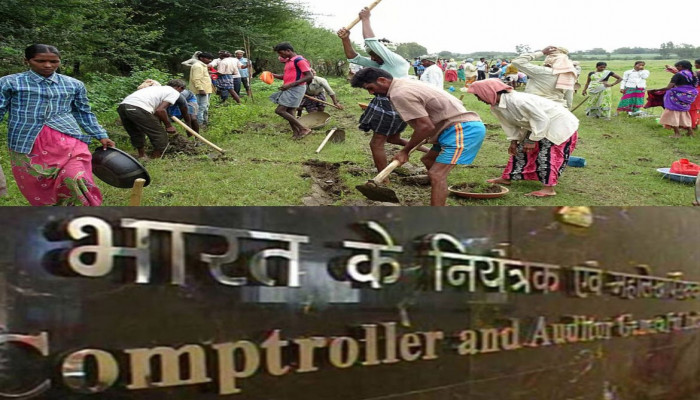
A recent audit conducted by the Comptroller and Auditor General of India has revealed serious shortcomings in the implementation of the Mahatma Gandhi National Rural Employment Guarantee Act in Karnataka. The findings point to procurement violations, delays in wage payments, irregular hiring practices and suspected fraud. The report covers the period from 2019-20 to 2023-24 and highlights deep-rooted issues that have affected access to rural employment.
The report was presented in the state legislative assembly on Tuesday. It comes amid ongoing disagreements between the Union and State governments over the scheme. The audit examined the implementation of MGNREGA at the gram panchayat level and found multiple gaps in compliance, monitoring and service delivery. The scheme is meant to guarantee up to 100 days of wage employment to rural households, but the audit shows that this promise has not been fulfilled effectively.
Access to the scheme itself remains a major concern. The audit found that 34,499 applicants were still waiting for job cards. In several districts, the job cards issued did not follow the required format. It also noted that special job cards meant for persons with disabilities were not issued at all. These shortcomings have directly affected people’s ability to access employment under the scheme.
The core objective of providing sufficient work has also not been achieved. The report states that more than 48% of families did not receive any employment under the scheme. Only 5% of households were able to get the full 100 days of work. Most families received work for just one to 30 days. “It was not possible to provide 100 days of employment,” the report stated.
Procurement practices under the scheme have raised serious concerns. The audit found repeated violations of rules under the Karnataka Transparency in Public Procurement Act. Purchases above ₹5 lakh were often made without inviting tenders. “The procurement of goods exceeding ₹5 lakh was done without inviting tenders,” the report noted. Similar irregularities were observed in outsourcing contracts, where agreements for human resource services were extended without fresh bidding processes.
Recruitment procedures were also not followed properly. The report highlighted that the hiring of contract staff did not comply with the state’s reservation policy. “Contract staff for the project were recruited without following the state’s reservation policy,” the report said. It further added that this “resulted in inadequate representation of women, SCs, STs, and persons with disabilities.”
Payment delays have added to the problems faced by workers. The audit found that arrears amounting to ₹1.28 crore have remained unpaid for several years. “Over the past seven years, the arrears of beneficiaries amounting to ₹1.28 crore have remained unpaid,” it said. The report recommended that “the responsibility for this loss should be fixed and the status of pending works should be reviewed.”
Issues related to Aadhaar have further complicated wage payments. Out of 84.98 lakh active workers, Aadhaar mapping was still pending for 3.11 lakh accounts as of March 2024. This meant that “preparation of pay slips and payment to these active workers could not be done.” The report also recorded ₹35.10 crore stuck in rejected and revived Aadhaar-based wage and material transactions.
The audit flagged discrepancies in attendance records and called for closer monitoring. It recommended “an investigation into the fraud and discrepancies in attendance while carrying out works under the scheme.” These discrepancies raise concerns about transparency and accountability in the system.
Irregularities were also found in the execution of development works. The audit documented several cases of fraudulent transactions. Payments were made for houses that were already completed. In some cases, money was given to ineligible beneficiaries. There were also instances where payments were released without any construction work being done. “Fraudulent transactions such as payment for houses already completed, payment to ineligible beneficiaries, payment without taking up construction, payments beyond the prescribed limit… have been observed under housing works,” the report stated.
Similar problems were found in projects related to solid waste management sheds, check dams and sapling cultivation under social afforestation. The audit found “fake documents and fraudulent payments” in these works as well. Physical verification showed that some assets created under the scheme either did not exist or were no longer functional.
Weak record-keeping and poor planning at the gram panchayat level have further affected implementation. Many panchayats failed to maintain proper registers. Worker demand was often recorded incorrectly. Annual work plans were not prepared in several cases. The audit also pointed out “printing of muster rolls without using NREGA software and irregular payments on such corrected muster rolls.”
Oversight mechanisms were found to be inadequate. The Social Audit Unit, which is responsible for monitoring the scheme, faced multiple challenges. It suffered from staff shortages, delays in fund release and a lack of access to necessary documents. “The Social Audit Unit is suffering from institutional weaknesses such as violation of norms in appointment of directors, shortage of staff, shortage/delay in release of funds and non-availability of documents for audit,” the report said.
Overall, the audit highlights serious systemic weaknesses in the implementation of MGNREGA in Karnataka. From access issues to financial irregularities and weak monitoring, the findings show that the scheme has not been able to deliver its intended benefits effectively.



 Loading...please wait
Comments