




Cabinet approves PM Surya Sarovar Yojana, extends Kisan Samman Yojana, revamps Khelo India
- In Reports
- 06:07 PM, Jul 31, 2026
- Myind Staff
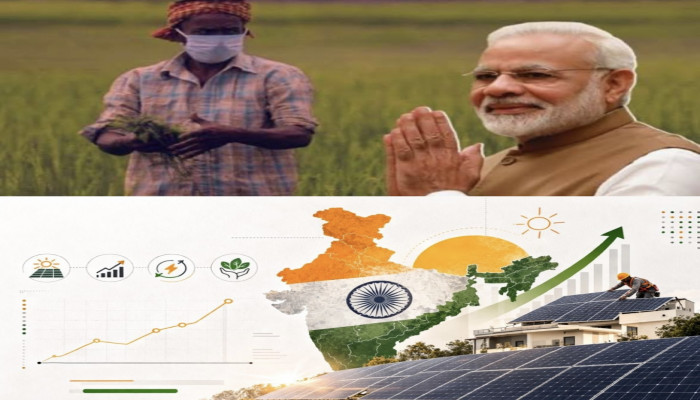
The Union Cabinet on Friday approved three major schemes aimed at strengthening clean energy, supporting farmers and improving India's sports ecosystem. The decisions include the launch of the Pradhan Mantri Surya Sarovar Yojana (PM-SSY), the extension of the PM-Kisan Samman Nidhi scheme for another five years and a revamped Khelo India programme with significantly higher funding. The government shared details of the approvals during official briefings after the Cabinet meeting.
The Cabinet approved the Pradhan Mantri Surya Sarovar Yojana to increase the country's floating solar photovoltaic (FSPV) capacity. The scheme aims to add 5,000 MW of floating solar power over the next five years. India currently has nearly 700 MW of installed floating solar capacity. The new target is expected to expand this capacity by more than seven times.
The government has allocated ₹5,070 crore for the scheme. It will provide financial support of up to ₹1 crore per MW for approved projects. All projects under the scheme must include at least a two-hour energy storage system. This requirement will create a total storage capacity of 10,000 MWh. Officials said the storage systems will help states meet electricity demand during peak hours. The government will award projects through tariff-based competitive bidding.
According to the government, the scheme is expected to reduce nearly 10 million tonnes of carbon dioxide emissions every year. It is also likely to generate around 16,000 to 17,000 full-time equivalent employment opportunities. The initiative will promote domestic manufacturing of floating platforms and strengthen the complete project value chain. This includes anchoring systems, mooring systems and energy storage equipment. The government said the scheme will support India's clean energy goals and climate commitments.
The Cabinet also approved the continuation of the Pradhan Mantri Kisan Samman Nidhi (PM-KISAN) scheme from 2026-27 to 2030-31. The government has allocated ₹3.15 lakh crore for the next five years. The scheme was launched in February 2019 to provide direct financial assistance to eligible landholding farmer families across the country.
Under PM-KISAN, eligible farmers receive ₹6,000 every year through the Direct Benefit Transfer (DBT) system. The amount reaches beneficiaries in three equal instalments directly into their bank accounts. The government said it has transferred more than ₹4.47 lakh crore to farmers through 23 instalments since the scheme began.
The government said the 23rd instalment alone benefited more than 9.49 crore farmers. It released over ₹18,984 crore under this instalment. Women farmers have also received significant support under the scheme. According to the government, women beneficiaries have received more than ₹1.06 lakh crore so far. Nearly one out of every four beneficiaries under PM-KISAN is a woman farmer.
The government also referred to an evaluation conducted by the Development Monitoring and Evaluation Office of NITI Aayog. The assessment found that more than 92 per cent of beneficiaries used the financial assistance for agricultural activities and investments. Around 85 per cent of the farmers reported an improvement in agricultural income. They also said their dependence on informal sources of credit had reduced.
The government further stated that India's agricultural performance improved during the period between 2020-21 and 2025-26. Foodgrain production increased by around 21.18 per cent. The cultivated area grew by nearly 9.65 per cent, while agricultural productivity rose by about 10.53 per cent during the same period.
The Cabinet also approved a revamped Khelo India Scheme along with enhanced Assistance to National Sports Federations (ANSFs). The combined financial outlay for both initiatives stands at ₹36,441 crore for the period from 2026-27 to 2030-31. The approved funding is nearly eight times higher than the allocation under the previous Khelo India Scheme.
The revamped programme aims to create a structured pathway for athletes from school-level sports to the Olympic stage. It seeks to integrate sports with education, fitness, technology and high-performance training. The scheme aligns with the Khelo Bharat Niti 2025 and the National Education Policy 2020. It also supports India's preparations for the 2030 Commonwealth Games and its future bid to host the Olympic and Paralympic Games.
The new framework includes an integrated network of National Centres of Excellence, Khelo India Centres of Excellence, SAI Training Centres, accredited academies and Youth Sports Companies of the Armed Forces. It also introduces two new initiatives at the school level. These include Khelo India Feeder Schools and Khelo India Utkrishta Vidyalayas. The government aims to identify talented athletes at an early stage and provide continuous support throughout their development.
The scheme also introduces the Emerging Khelo India Athletes category. The government expects this initiative to expand the organised athlete development ecosystem by nearly ten times. It will also create a clear progression pathway from grassroots competitions to the Target Olympic Podium Scheme (TOPS), which supports India's top athletes.
As part of the reforms, the government will establish a National Coach Accreditation Board to standardise coaching qualifications across the country. It will also develop a unified digital sports platform that will integrate athlete data, sports infrastructure, competitions and funding into a single system. The Assistance to National Sports Federations component will provide financial support for coaching, sports science, international exposure and participation in global competitions. It will also strengthen sports cooperation with countries in the Global South.



 Loading...please wait
Comments