




Cabinet approves ₹1.52 lakh crore mega push for agriculture, infrastructure, manufacturing
- In Reports
- 12:55 PM, May 06, 2026
- Myind Staff
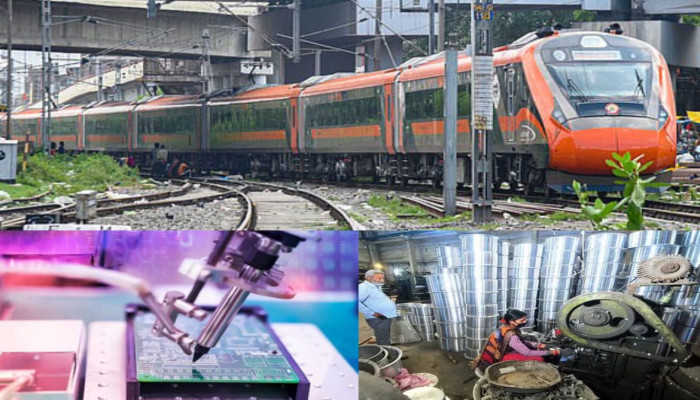
In a wide-ranging policy push, the Union Cabinet of India on Tuesday approved projects and schemes worth over Rs 1.52 lakh crore. The decisions cover key sectors such as agriculture, infrastructure, manufacturing and financial support. The move reflects the government’s focus on boosting productivity, expanding capacity and strengthening strategic industries.
A key highlight of the approvals is the Mission for Cotton Productivity – Kapas Kanti. The programme has an outlay of Rs 5,659 crore and is aimed at improving cotton yields and quality. It also seeks to strengthen India’s position in global cotton markets at a time when textile value chains are under pressure. The mission is expected to support farmers and improve overall efficiency in cotton production.
The Cabinet also approved the Fair and Remunerative Price (FRP) for sugarcane for the 2026–27 season. This decision carries an estimated financial implication of around Rs 1 lakh crore. It is expected to support farmers’ incomes and bring stability to the sugar sector. By ensuring a fixed price for sugarcane, the government aims to provide financial security to growers.
To boost credit flow in the economy, the government cleared the Emergency Credit Line Guarantee Scheme (ECLGS) 5.0 with an outlay of Rs 18,100 crore. The scheme is designed to support stressed sectors and maintain liquidity for businesses facing economic challenges. It comes at a time when several industries are dealing with global uncertainties.
Infrastructure expansion formed a major part of the Cabinet’s decisions. Approval was given for a ship repair facility at Vadinar with an investment of Rs 1,570 crore. This project is expected to strengthen India’s maritime capabilities and support related industries. It also reflects the government’s push to develop port-based infrastructure.
Railway capacity expansion projects were also approved to improve connectivity and reduce congestion. The Nagda–Mathura third and fourth line project has been cleared at a cost of Rs 16,403 crore. The Guntakal–Wadi third and fourth line project will involve an investment of Rs 4,758 crore. The Burhwal–Sitapur third and fourth line project has been approved with a cost of Rs 2,276 crore. These projects aim to improve freight movement and support industrial growth corridors across regions.
The Cabinet also decided to advance India’s semiconductor manufacturing ambitions. Two units were approved as part of this push. Crystal Matrix Ltd received approval for a project worth Rs 3,068 crore, while Suchi Semicon Pvt Ltd was cleared for a project worth Rs 868 crore. These investments are aimed at strengthening domestic electronics manufacturing and reducing dependence on imports.
In addition to these economic measures, a policy decision was also taken to strengthen the Supreme Court of India. While details were limited, the move indicates attention towards institutional strengthening alongside economic growth.
The government also announced an Emergency Credit Line Guarantee Scheme (ECLGS) with an outlay of Rs 18,100 crore to provide relief to MSMEs and airlines affected by the West Asia conflict. The scheme is expected to enable an additional credit flow of Rs 2.55 lakh crore. Out of this, Rs 5,000 crore has been earmarked for airlines.
Speaking about the decision, Information and Broadcasting Minister Ashwini Vaishnaw said the ECLGS 5.0 would support both airlines and MSMEs impacted by the crisis. "The scheme has been brought to address the stress in the MSME and airline sectors due to the West Asia conflict," he said.
The minister also explained the eligibility criteria under the scheme. Passenger airlines will be eligible for up to 100 per cent of peak credit, with a limit of Rs 1,500 crore. Other institutions can access up to 20 per cent of fund-based working capital, with a cap of Rs 100 crore. These provisions are aimed at ensuring that businesses get adequate financial support.
According to an official government release, the scheme is designed to help businesses deal with challenges arising from the West Asia conflict. "Additionally, this is expected to help businesses maintain their operations, protect jobs, and sustain supply chains. The proposed credit guarantee scheme is a major step to help businesses, particularly MSMEs and airline sector, to ensure their additional working capital needs are catered by the banks and financial institutions," it said.
The government also stated that timely liquidity under the scheme would help sustain businesses and prevent job losses. It aims to support uninterrupted domestic production and maintain the resilience of the economic ecosystem. The scheme provides credit guarantee coverage of 100 per cent for MSMEs and 90 per cent for non-MSMEs and airlines. This coverage will be extended to Member Lending Institutions by the National Credit Guarantee Trustee Company Limited for defaults under the additional credit facility.
The official release further stated, "The scheme aims to provide credit guarantee coverage of 100 per cent for MSMEs and 90 per cent for non-MSMEs as well as airline sector, to Member Lending Institutions (MLIs) by National Credit Guarantee Trustee Company Limited (NCGTC) for the amount in default under the additional credit facility extended to the eligible borrowers to tide over any short-term liquidity mismatches in view of West Asia crisis."
There are specific conditions for availing loans under the scheme. For the airline sector, the loan tenure will be seven years from the date of first disbursement, including a moratorium period of two years. For MSMEs and non-MSMEs, the tenure will be five years, including a one-year moratorium. These timelines are designed to give borrowers sufficient time to recover.
The scheme will apply to all loans sanctioned from the date of issue of guidelines by National Credit Guarantee Trustee Company Ltd (NCGTC) until March 31, 2027. This provides a clear time frame for businesses to benefit from the support.
Civil Aviation Minister K. Rammohan Naidu described the initiative as crucial for the aviation sector. "It will provide strong financial backing to safeguard jobs, sustain connectivity, and ensure resilience across the aviation ecosystem, while also supporting MSMEs," he said in a post on X.
MSMEs and airlines have been facing significant financial challenges due to the West Asia conflict, which began in February. The Cabinet’s decisions aim to address these challenges through targeted support and long-term investment.
Overall, the approvals reflect a coordinated effort by the government to strengthen key sectors of the economy. By combining agricultural reforms, infrastructure development, manufacturing growth and financial support, the Cabinet has outlined a broad strategy to sustain growth and stability.



 Loading...please wait
Comments