




Bulgarian Prime Minister resigns amid mass protests
- In Reports
- 06:39 PM, Dec 12, 2025
- Myind Staff
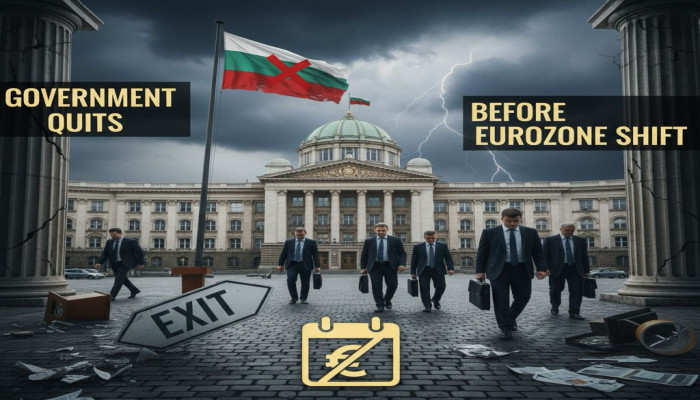
Bulgaria's Prime Minister quit on Thursday after weeks of big protests about corruption, economic plans, and people losing trust in institutions. The resignation came just before Bulgaria is set to adopt the euro on January 1, 2026. The news came hours before Parliament would vote on a no-confidence motion against the ruling coalition. In a TV speech, Prime Minister Rosen Zhelyazkov said, “Vox populi, vox Dei — the voice of the people is the voice of God.” His words show that the government knows strong public anger has changed politics recently.
The protests began after the government issued a draft 2026 budget, the first planned in euros, which proposed higher taxes and more social contributions. Although the budget was withdrawn after public fury, protests expanded and intensified as protesters also complained about chronic corruption, lack of transparency, and the influence of powerful oligarchs.
People packed streets in Sofia and more than 25 other cities, chanting slogans like "Resignation," "Mafia Out," and "For Fair Elections." Bulgarians living abroad staged protests in Brussels, Berlin, London and New York. Many protesters are irate over the enduring political influence wielded by figures such as Delyan Peevski, who faces US sanctions for corruption.
President Rumen Radev, who has quite often disagreed with the government, supported the protesters' demands. He called on lawmakers to "listen to the people," while a growing split appeared between the government and the public. Following the resignation, the President has to start forming a new government. Given that Parliament is much divided, securing a majority coalition will be difficult.
Parliament voted unanimously on Friday to accept the resignation, 127–0. Zhelyazkov’s government will remain in office in a caretaker position pending the appointment of a new administration. If parties cannot agree, analysts warn Bulgaria could face another round of early elections — the eighth in four years.
The political crisis overshadows Bulgaria's imminent accession to the eurozone, a development to which Bulgaria has been actively preparing since 2007, the year it joined the Union. According to officials, the transition to the euro will continue; however, the absence of a stable government is raising worries over preparedness and potential issues when switching. Economists say inflation, market uncertainty, and potential delays are likely if the political gap remains.
Still, many view the protests as a high moment in Bulgaria's democratic growth. The movement enjoys support across ages, jobs, and regions, with large sections of society wanting cleaner government and more accountable institutions. What follows now for Bulgaria is a period of political talks, economic preparation, and public expectations. With the country trying to form a new government and join the euro, the steps taken in the next few weeks will decide its fate.



 Loading...please wait
Comments