




Bongbong Marcos wins Philippine presidential election in a landslide
- In Reports
- 02:15 PM, May 10, 2022
- Myind Staff
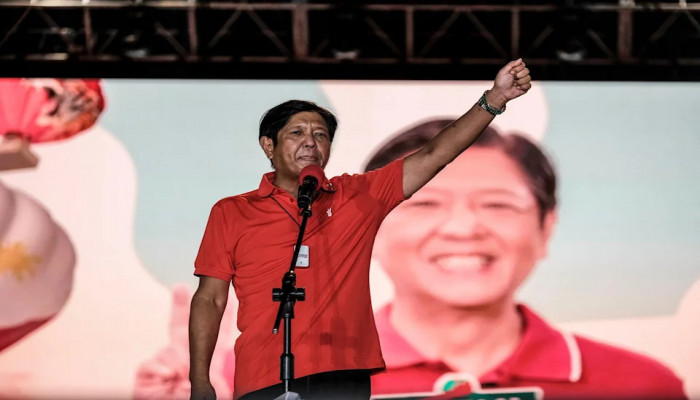
Ferdinand "Bongbong" Marcos Jr., the son and namesake of the late Philippine dictator, is set to win the country's presidency by a landslide, in a remarkable reversal of fortunes for a political dynasty that 36 years ago was ousted by the "People Power" revolution.
Marcos is on course to secure around 60% of the vote in Monday's election, giving him the strongest mandate for president since his father's rule.
As of 8:26 a.m. local time and with votes counted from 95.97% of precincts, Marcos has 30.51 million votes (58.82%), according to multiple local media outlets that cite data from the election commission late on Monday. His closest opponent, Vice President Leni Robredo, was on 14.54 million votes (28.03%).
“A lot of people are saying the fight is over, but it’s not,” Marcos Jr., known as Bongbong, said in a televised speech. “Let’s wait until the 100% of votes have been counted and the victory is very clear before we celebrate.”
Robredo didn’t concede, though she prepared her supporters for defeat in a speech in the early morning hours of Tuesday.
“The voice of the people is becoming clearer and clearer,” she said. “In the name of the Philippines that I know you also love, we need to listen to this voice because in the end we only we have one country that we share.”
Marcos' win concludes a decades long effort by his family to reclaim power after the 1986 mass uprising, which abruptly ended his father's 20-year rule and forced the Marcoses into exile in Hawaii until the early 1990s.
Marcos stopped short of declaring victory in a brief speech via video to supporters and the media at his headquarters in which he thanked "everyone who joined in our fight."
"Any endeavour as large as this does not involve one person," Marcos said. "It involves very, very many people working in very, very many different ways."
Marcos Jr. has avoided topics related to his family's legacy, including efforts by the government to recover billions of dollars of ill-gotten wealth allegedly amassed by his family. Instead, he made national unity his main message.
Marcos family's revival, analysts said, is partly driven by the public frustration over lingering poverty and inequality, as well as the lack of political reforms under the administrations that came after the People Power revolution.
Meanwhile, a massive social media drive that denied atrocities during his father's military rule and painted the Marcos era as one of prosperity and prestige has appealed to voters who were not born yet during the dictatorship.
Marcos' candidacy also received a major boost from its alliance with Davao Mayor Sara Duterte, the daughter of outgoing but still popular President Rodrigo Duterte.
Sara Duterte topped opinion polls for president last year, but eventually decided to make way for Marcos. This created a formidable alliance that consolidates the two political dynasties' bailiwicks -- the northern Philippines of the Marcoses and southern island of Mindanao of the Dutertes.
Marcos has presented himself as the candidate who would continue Duterte's key policies. These include the controversial war on drugs, albeit with a focus on big fish instead of petty peddlers, and the "Build, Build, Build" infrastructure drive. Marcos is expected to maintain Duterte's pro-China stance, while recognizing the alliance with U.S. that Duterte tried to undermine.
But on the economic front, analysts and investors said his economic agenda lacks details.
Marcos will inherit an economy on course to recover from the pandemic, but under threat by rising inflation and ballooning debt.
Image source: cfr.org



 Loading...please wait
Comments