




Bollywood and Diwali: A Festival Overlooked on Screen
- In Current Affairs
- 08:24 PM, Nov 05, 2026
- Dr. Krutagna Bhatt
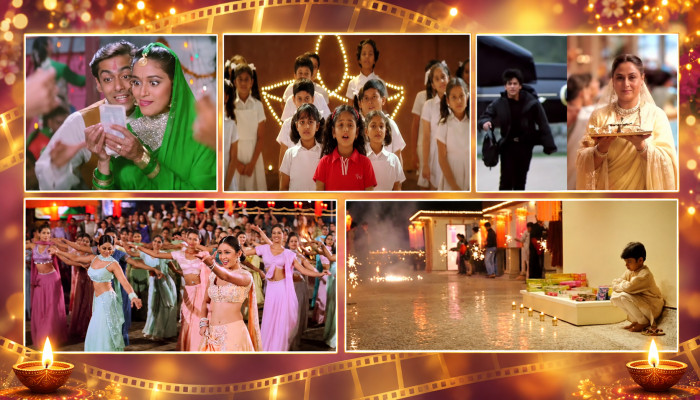
Diwali, one of the biggest festivals of Bharat, holds immense cultural, historical, and Dharmic significance. Celebrated across the entire country for centuries, the festival is observed in diverse ways across different regions of India. While some regions celebrate Bhagwan Rama’s return to Ayodhya, others worship Devi Lakshmi, Devi Kali, or Bhagwan Krishna, reflecting the diverse traditions and beliefs of Bharat. However, the limited visibility and representation of Diwali in Bollywood, an industry that produces thousands of films and generates substantial revenue every year, warrants serious attention.
Often touted as a ‘cultural ambassador of India’ and believed to be India’s ‘soft power’ globally, Bollywood has given relatively little importance to Diwali, largely limiting the festival to the background rather than exploring its deeper significance as a central theme in a film’s storyline. The portrayal of Diwali has largely remained confined to entertainment, without making the festival a noticeable element in a film’s narrative or even making an effort to portray Diwali’s religious, cultural and social significance in the civilisational landscape of Bharat. When was the last time Bollywood produced a film whose storyline revolves around Diwali? One has to scratch their head hard to recall this, right? Because, truly, Bollywood has not merely neglected but deliberately ignored ‘Diwali’ – on screen – a festival that is central to Hindu life and culture.
During the Golden Age of Hindi cinema (1950 to 1960), Diwali featured in several memorable songs, including ‘Deepawali Manai Suhani’ from Jugnu (1947) and ‘Aayi Hai Diwali’ from Sheesh Mahal (1950). These songs captured the festive spirit of Diwali, making it a charming part of Hindi film culture. However, over the last two decades, only a few Bollywood films have given Diwali any notable attention. Let’s take a look at how some Bollywood hits have portrayed the festival.
The blockbuster film ‘Kabhi Khushi Kabhie Gham’ (2001), directed by Karan Johar and starring Shah Rukh Khan and other superstars like Amitabh Bachchan and Hrithik Roshan, shows the festival in one of its famous scenes where Jaya Bachchan performs aarti on Diwali when her son Rahul (Shah Rukh Khan) returns home in a helicopter. Though the scene gained popularity later and is now a part of India’s pop culture memory (as well as meme material!), the festival of Diwali remains in the background, limited to decorative details such as lights, diyas and flowers. Thus, Diwali serves only an aesthetic purpose here, whereas the deeper spiritual and cultural meaning is absent.
In another Shah Rukh Khan starrer, ‘Mohabbatein’ (2000), Diwali appears in the song ‘Pairon Mein Bandhan Hai’. Here, the portrayal is largely confined to celebration, with characters dancing while holding diyas. However, the sequence also serves a narrative purpose: the celebration becomes a setting for the students’ rebellion against the rigid principles of the Gurukul. This presents an interesting contradiction: a Hindu festival is used as a backdrop for challenging an institution rooted in traditional Hindu educational ideals.
A few other films also incorporate Diwali as part of the cinematic narrative. Examples are -- Hum Aapke Hain Koun..!(1994), Vaastav: The Reality (1999), Chachi 420 (1997), Prem Ratan Dhan Payo (2015), Taare Zameen Par (2007). In most films, Diwali is the backdrop for either a family reunion, a romantic encounter, a glamorous song sequence, a party or a dramatic confrontation. Diyas and flowers become decorative visuals, while family gatherings are convenient plot devices. In some scenes, fireworks are used to establish a celebratory mood, and traditional clothing and elaborate sets create a festive atmosphere. However, these visual elements, despite making the celebration appear grand and culturally royal, do not necessarily communicate what Diwali is all about and why it is celebrated.
Thus, the films listed barely acknowledge Diwali in one or two scenes; but overall, the Hindi film industry has disregarded the symbolism, stories, history and ritualistic practices, lessons in Dharma, virtue and action that Diwali has to offer to Hindus in India and around the world.
However, Bollywood considers Diwali as the perfect time to release big films, with hits like Mohabbatein (2000), Dilwale Dulhania Le Jayenge (1995), Om Shanti Om (2007) and Happy New Year (2014) being released during the festive season. Yet, the festival itself has rarely taken centre stage in these cinematic celebrations, not going beyond lights, crackers and pompous family gatherings. This is concerning because through pop culture, Diwali has been reduced to partying, fun and entertainment. Yes, it is a time to celebrate, spend time with family, eat delicacies and socialise. But Diwali is not only about this! Diwali marks the home coming of Bhagwan Ram, the ‘Dharma Yuddha’ that he fought with Ravana, his sacrifices, the support he received from Laxman and Mata Sita, the devotion of Bhagwan Hanuman and his resolve to adhere to his duties. Diwali celebrates all of this, but more important is the acknowledgement it is rooted in the Sanatan tradition.
Bollywood has popularised Diwali as a secular festival which has nothing to do with Hinduism. There is no ‘puja’, no rituals, no community celebration of Diwali in Bollywood. This is referred to as ‘cultural appropriation’, when a tradition or a festival is deliberately delinked from its origins and presented as something completely different. This delinking and distance of Bollywood Diwali from Hindu Dharma is intentional and well-thought. It is part of Bollywood’s broader pattern of ‘secularisation of Hindu festivals’ – where film-makers are shy or rather ashamed or projecting anything remotely Hindu on screen (of course this has changed in the last decade, especially post-2014 when more films are openly and proudly seen embracing Hindu culture and values). The same pattern is observed with how Navratri is depicted on screen.
The same stands true for Bollywood songs. If one searches for songs dedicated to Diwali in Bollywood films released over the last two decades, the number is scant, with a few exceptions, such as ‘Happy Diwali’ from Home Delivery (2005) and ‘Aayee Hai Diwali’ from Aamdani Atthanni Kharcha Rupaiya (2001). Several other songs feature Diwali celebrations on screen, but the word ‘Diwali’ itself does not appear in their lyrics.
In contrast, Bollywood has a longer list of songs associated with Eid, such as ‘Eid Mubarak’ from Daddy (2017), ‘Mubarak Eid Mubarak’ from Tumko Na Bhool Paayenge (2002), ‘Aaj Ki Party’ from Bajrangi Bhaijaan (2015) and ‘Chand Nazar Aa Gaya’ from Hero Hindustani (1998), and many more. These songs either mention Eid directly or are closely associated with its celebration, making the festival more visible in pop culture.
Unlike Eid, Bollywood may have fewer songs dedicated to Christmas, but several films have featured the festival prominently through Christmas trees, cakes, Santa Claus, decorations, family gatherings and celebrations, making it an important part of the film's setting and atmosphere. To name a few, films like Anjaana Anjaani (2010), Ek Main Aur Ekk Tu (2012), Dilwale (2015) and Merry Christmas (2024) had Christmas celebrations or imagery prominently featured.
In Sanatan culture, Diwali is not just a one-day festival of lights and fireworks; it is a series of celebrations, each carrying its own significance across various regions. Dhanteras is associated with prosperity and the worship of Dhanvantari and Lakshmi, while Kali Chaudas has different religious and regional traditions. For example, in Gujarat, Chopda Pujan holds special importance among business communities, as new account books are worshipped to mark the beginning of a new financial year. Similarly, different parts of Bharat follow their own customs and traditions during Diwali, reflecting the country's cultural diversity. However, none of this seems worthy enough to Bollywood and its ecosystem to be presented to a larger audience. Hence, the familiarity of ‘Diwali’ tropes which also proves the industry’s cultural ineptness and bankruptcy.
Despite this richness of Diwali, Bollywood depends on the familiarity provided by diyas, crackers, sweets and family gatherings, overlooking the many traditions and stories that make Diwali unique and important. These customs offer ample scope for filmmakers to explore regional cultures, family histories, faith and changing social values. The advertising industry has its fair share of contribution in the inaccurate portrayal of Diwali. Reasons behind deliberately ignoring Diwali can be many – it can be attributed to the nature of the film industry and its roots in post-independent India where supposedly secular, liberal, communist values took the forefront and anything remotely Hindu was shunned as backward and communal.
The takeover of Bollywood by communists, left-liberals and those with affinity to Abrahamic faiths is why we see such lopsided narratives. One cannot miss the fact that other faiths and festivals are portrayed more generously on-screen whereas brickbats, criticism and sermonising is reserved for Hinduism and Hindu traditions. Another reason for sloppy portrayal is the people who control Bollywood – who are themselves culturally disconnected, religiously disenchanted and spiritually uprooted from Hindu traditions. They either love to hate on their traditions or simply employ them to grab eyeballs. Traditions merely serve a commercial purpose for these makers. When creators are themselves bereft of cultural affinity, what can one expect on-screen! That is why a Japanese film-maker could present the Ramayana on screen, in an animated form, with much more sincerity and devotion, than an Indian film-maker!
Recently, Bollywood stars are obsessed with delivering lectures on environmental safety, hazards of pollution caused due to Diwali firecrackers, harm to animals as a result of bursting crackers on Diwali. Celebrities are the loudest and most vocal on these issues as Diwali draws closer even as they maintain hypocritic silence on crackers during New Year’s Eve or even their own wedding celebrations! Seems like all the burden to save the environment rests only on Hindus! Not a word during festivals of other religions! The advertising industry in turn has tried to very smartly project Diwali as an occasion to go on a shopping spree, splurge money and indulge in endless consumption. Even the models in ads for Diwali jewellery and apparel bear no mark of Hindu traditions – ‘bindi’, ‘mangalsutra’, ‘bangles’ or ‘sindoor’. Diwali for the advertisers is simply an occasion to entice people into binge-buying their products and services. Bollywood celebs and influencers, meanwhile, have reduced Diwali to a ‘bash’ or a ‘party’ – meant to be enjoyed! The cultural and spiritual quest that Diwali represents is simply lost here!
A Diwali like this raises questions about how young minds and future generations will understand and celebrate the festival. Bollywood and the wider entertainment industry produce voluminous content every year, and it is known for its everlasting impact. The industry needs to rethink its portrayal of Diwali and create culturally rooted content that explores the festival’s diverse traditions, cultural significance and deeper meaning. Diwali is connected to Dharma. The only way to celebrate Diwali on-screen is to honour this connection. So far, Bollywood has miserably failed in this task. Bollywood’s portrayal of Diwali is in fact, a disservice to Desh and Dharma. The pop culture industry shapes young minds, sets the discourse, challenges established narratives or strengthens existing ones. It has the power to produce a deracinated generation that will simply not understand the historical and cultural significance of celebrating festivals.
It is time for Bollywood to look beyond familiarity and popular consumption patterns when it comes to on-screen Diwali. It is time to tell stories about the Dharmic significance and the heritage of Diwali. After all, keeping the true spirit of Diwali alive for future generations requires more than showing its celebrations on screen; it requires telling stories that make the festival truly worth celebrating. Bollywood has to get its act together and with a new generation of culturally conscious filmmakers and storytellers on the rise, hopefully it should be possible sooner than later.
References
ETimes.in. (2023, November 13). Salman Khan's Hum Aapke Hain Koun glamourised the portrayal of Diwali in films: Throwback. The Times of India. https://timesofindia.indiatimes.com/entertainment/hindi/bollywood/news/salman-khans-hum-aapke-hain-koun-glamourized-the-portrayal-of-diwali-in-films-throwback/articleshow/105171442.cms
Gaekwad, M. (2015, November 12). In search of the definitive Diwali film song. Scroll.in. https://scroll.in/article/1498/in-search-of-the-definitive-diwali-film-song
Ghosh, A. (2009, October 18). Diwali ditties. The Times of India. https://timesofindia.indiatimes.com/entertainment/hindi/bollywood/news/diwali-ditties/articleshow/5136762.cms
Jha, A. M. (2023, November 11). How Bollywood has depicted the festival of Diwali over the years. Retrieved from The Hindu: https://www.thehindu.com/entertainment/movies/column-how-bollywood-has-depicted-the-festival-of-diwali-over-the-years/article67503885.ece/amp/
Press Trust of India. (2024, October 30). Popular Diwali songs that celebrate the spirit of festival. The Week. https://www.theweek.in/wire-updates/entertainment/2024/10/30/ent8-diwali-bollywood-songs.amp.html
Sharma, S. G. (2021, November 2). The Missing ‘Diwali’ From Bollywood’s Repertoire Of Festive Films And Songs. Retrieved from Swarajya: https://swarajyamag.com/culture/the-missing-diwali-from-bollywoods-repertoire-of-festive-films-and-songs
Disclaimer: The opinions expressed within this article are the personal opinions of the author. MyIndMakers is not responsible for the accuracy, completeness, suitability, or validity of any information on this article. All information is provided on an as-is basis. The information, facts or opinions appearing in the article do not reflect the views of MyindMakers and it does not assume any responsibility or liability for the same.



 Loading...please wait
Comments