




Blueprint and Verdict: The Radhakrishnan Committee’s Reforms and Parliament’s Assessment of Their Implementation Part 4
- In Current Affairs
- 12:42 PM, Aug 01, 2026
- YagnaSri
Constitution and Mandate
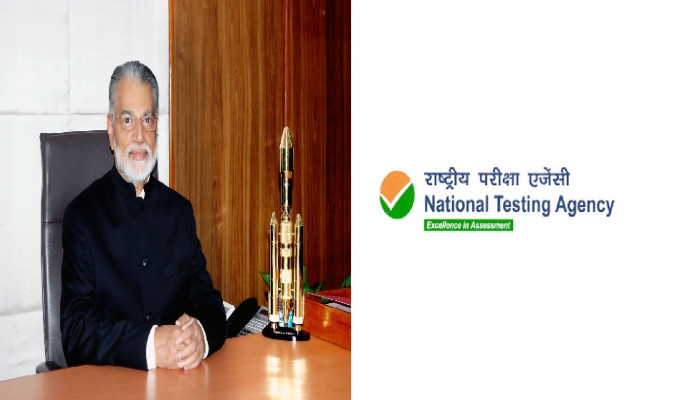
Following the twin controversies surrounding NEET-UG and UGC-NET in mid-2024, the Ministry of Education, on 22 June 2024, constituted a seven-member High-Level Committee of Experts headed by Dr Koppillil Radhakrishnan, former Chairman of the Indian Space Research Organisation (ISRO) and Secretary to the Department of Space (November 2009–December 2014), under whose leadership ISRO executed the Mars Orbiter Mission of 2013. Dr Radhakrishnan holds an electrical engineering degree from Kerala University (1970), a postgraduate diploma in management from IIM Bangalore (1976), and a PhD from IIT Kharagpur (2000), and was awarded the Padma Bhushan in 2014. The committee’s remit, as set out by the Ministry in its constituting order and reiterated in Parliament, was to recommend reforms to the examination process, improvements to data-security protocols, and changes to the structure and functioning of the NTA.
The committee undertook 23 full-day sittings and, through the MyGov portal, received and reviewed 37,144 public responses from students, parents, teachers and academicians before submitting its report — titled “The Reformation of National Common Entrance Testing in India” — to the Ministry of Education on 21 October 2024.
The 101 Recommendations
The report set out 101 recommendations, organised across short-, medium- and long-term horizons and grouped into 46 major action points across six broad areas. Their substance can be summarised under five heads.
Technological and format reform. The centrepiece proposal was Computer-Assisted Secure Pen-and-Paper Testing (CPPT), transmitting encrypted question papers digitally to secure servers at each test centre only minutes before the examination, with high-speed encrypted printers generating physical copies on-site, thereby preserving the pen-and-paper format (considered important for equitable access) while eliminating the physical transit and vault-custody stages at which papers have historically been compromised. Alongside this, the committee recommended moving away from NEET-UG’s single-day, single-shift design toward either a two-stage format (a Prelims-and-Mains structure) or multi-session delivery with transparent statistical normalisation, and, over the longer term, a gradual transition to full Computer-Based Testing (CBT) and eventually Computer-Adaptive Testing.
Institutional restructuring of the NTA. The committee proposed recasting NTA’s governing structure into an empowered apex body led by a Director General of at least Additional Secretary rank; creating ten specialised in-house functional verticals including Information Security, Test Development, Nationwide Centre Infrastructure, and Vigilance and Forensics to build domain expertise internally rather than through outsourcing; a drastic reduction in reliance on private contractors for core operational stages, in favour of permanent, directly recruited domain specialists; and confining NTA’s mandate exclusively to higher-education entrance examinations, with recruitment and employment testing handed back to other bodies.
Infrastructure and centre security. The committee recommended establishing at least 1,000 permanent, government-owned “secure testing centres” inside reputed government institutions IITs, NITs, Kendriya Vidyalayas and Navodaya Vidyalayas — to replace reliance on unvetted private venues; bringing District Collectors and state administrations directly into examination logistics management, on a model resembling election administration, with venues sealed and unsealed only in the presence of police and local administrative officials; and deploying mobile testing units equipped with servers for remote and underserved regions.
Candidate authentication. The committee proposed a continuous, multi-stage digital identity framework described as “DIGI-EXAM” and modelled conceptually on the DigiYatra system used in civil aviation using Aadhaar-linked biometrics and facial recognition at application, venue entry, seating and final admission stages, together with AI-driven analytics to detect suspicious registration or seat-clustering patterns associated with organised malpractice networks.
Student welfare. Recommendations here included a dedicated mental-health cell and tele-counselling services within NTA, a central regulatory mechanism for private coaching institutes, and an AI-assisted, multilingual grievance-redressal system.
A permanent High-Powered Steering Committee, chaired by Dr Radhakrishnan himself, was constituted by the Ministry on 14 November 2024 specifically to monitor phase-wise implementation and prevent the report from remaining, in the words used in subsequent parliamentary proceedings, “on paper.”
What Parliament's Own Review Found
Independently of the Radhakrishnan committee, the Department-related Parliamentary Standing Committee on Education, Women, Children, Youth and Sports, chaired by Rajya Sabha MP Digvijaya Singh, conducted its own scrutiny of the NTA’s functioning, producing findings that both predated and, in substantial part, corroborated the expert committee’s diagnosis.
Its 371st Report, “Review of Autonomous Bodies and Institutions,” tabled in Parliament on 8 December 2025, examined the NTA’s operational record in detail. It found that of 14 major national-level examinations conducted by the agency in a single academic cycle, at least five had encountered serious disruption, including alleged paper leaks and single-day vulnerability concerns around NEET-UG, abrupt cancellations or postponements of UGC-NET, CSIR-NET and NEET-PG, severe CUET result-publication delays, and the withdrawal of faulty questions from JEE (Main) answer keys. The Committee documented the financial paradox described in the previous article of this series: a ₹448 crore unspent surplus alongside acute operational capacity gaps—and a staffing deficit of 24 filled permanent posts (all on deputation) against 39 sanctioned, with core operations dependent on 73 contractual and 124 outsourced personnel. It also flagged the absence of a centralised vendor-blacklisting mechanism, allowing firms penalised by one state or body to secure NTA contracts elsewhere; a persistent failure to table detailed Annual Reports before Parliament; and infrequent meetings of NTA’s own Governing Body. Notably, on the specific question of examination format, the 371st Report’s own inclination was toward strengthening pen-and-paper testing rather than rushing toward digitisation, pointing to the long, largely leak-free track records of CBSE’s board examinations and UPSC’s examinations as evidence that a well-administered paper-based model, properly secured, could itself be made robust.
The Committee’s later 381st Report, an Action-Taken Report on the government’s response to its 364th Report on Demands for Grants, was tabled on 16 June 2026 after the NEET-UG 2026 cancellation. Reviewing the Ministry’s formal responses on implementation, it expressed dissatisfaction that examination disruptions had continued despite assurances, directed the Ministry to publish a public, time-bound roadmap for both short- and long-term reform phases, reiterated its call for a nationwide vendor blacklist, and in the aftermath of the 2026 cancellation went further than its own 2025 position by recommending that the NTA be elevated from a registered society into a full statutory body, comparable to UPSC, through an Act of Parliament, to secure institutional autonomy, direct parliamentary accountability and fixed leadership tenure.
The Implementation Record as of May 2026
Piecing together the Ministry’s own submissions to Parliament and to the Supreme Court, the implementation record as of the eve of the NEET-UG 2026 examination can be summarised as uneven. Short-term, Phase-I security measures were substantially rolled out: State-Level and District-Level Coordination Committees were established under District Collectors; over 99.5 per cent of NEET-UG examination venues were shifted from private institutions to Kendriya Vidyalayas, Navodaya Vidyalayas and other government campuses; multi-stage Aadhaar and biometric verification, including repeat checks after washroom breaks, was introduced; and uniform security SOPs, GPS-tracked transit boxes, CCTV coverage and 5G jammers were put in place.
The longer-term, Phase-II structural reforms, by contrast, remained substantially incomplete. CPPT, the digital transmission system specifically designed to eliminate the physical-transit vulnerability, had not been deployed for NEET-UG. The unified DIGI-EXAM authentication architecture was operating only in pilot form across three states. The shift to a two-stage or multi-session NEET-UG format had been publicly discussed but not implemented, the Ministry’s stated reasoning being that changing the examination format on short notice risked disruption for candidates already preparing under the existing pattern. The 1,000 permanent secure testing centres remained at an early infrastructure-planning stage, with the 99.5 per cent venue shift to government campuses achieved instead through ad hoc annual hiring of existing government-institution premises rather than through dedicated, purpose-built facilities. The sanctioned permanent-cadre recruitment drive and the ten specialised functional verticals remained in early or incomplete stages of staffing.
This gap between diagnosis and execution a broad Phase-I security rollout achieved at the venue level, alongside a stalled Phase-II structural overhaul of the agency’s workforce and its physical and digital supply chain — is the immediate administrative context in which the NEET-UG 2026 paper-leak controversy, examined in the next article of this series, occurred.
Disclaimer: The opinions expressed within this article are the personal opinions of the author. MyIndMakers is not responsible for the accuracy, completeness, suitability, or validity of any information on this article. All information is provided on an as-is basis. The information, facts or opinions appearing in the article do not reflect the views of MyindMakers and it does not assume any responsibility or liability for the same.



 Loading...please wait
Comments