




BJP moves Substantive Motion against Rahul Gandhi in Lok Sabha, seeks life-long ban
- In Reports
- 08:48 PM, Feb 13, 2026
- Myind Staff
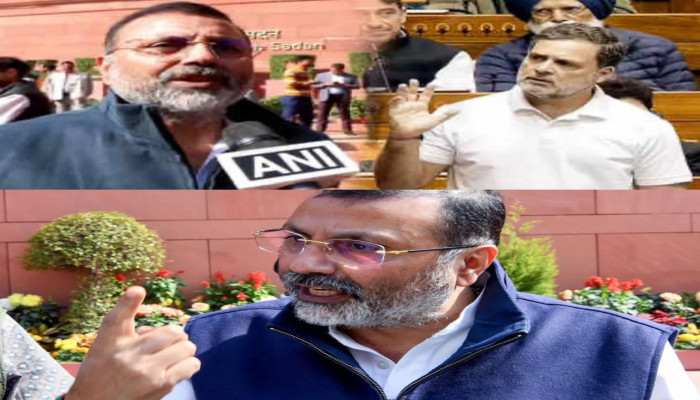
The Bharatiya Janata Party (BJP) on Thursday initiated a substantive motion against Leader of Opposition Rahul Gandhi in the Lok Sabha, a day after his sharp criticism of the government over the trade deal with the United States. The Congress, however, dismissed the move as a “self-defence strategy” by the BJP to divert attention from the issues raised by Gandhi.
A motion in parliamentary terms is an official suggestion made by a member of the House requesting that the House take a specific action, implement an order, or express an opinion on a particular issue. It is crafted to reflect a decision that the House can adopt. A substantive motion is an independent proposal submitted to the House for approval, structured to communicate a decision effectively. Examples include resolutions and motions for the appointment of the Deputy Chairman in the Rajya Sabha, as well as the Motion of Thanks regarding the President’s Address. Discussions about the conduct of individuals in high positions must also be initiated through appropriate substantive motions.
BJP MP Nishikant Dubey submitted a notice for the substantive motion, alleging that Rahul Gandhi has engaged with foreign organisations, including the Soros Foundation, the Ford Foundation, and USAID. Dubey further claimed that Gandhi has travelled to countries such as Thailand, Cambodia, Vietnam, and the US, accusing him of being involved in “anti-India activities.”
In his notice, Dubey alleged that Gandhi, with support from foreign organisations, has “very cleverly able to capture the most pious dais of Parliament to foment public sentiments, levelling unsubstantiated allegations not only against the Election Commission of India but even our Honourable Supreme Court of India, lowering the dignity of the Government without any substantive evidence and putting various others Institutions in bad light.”
Dubey further alleged that Gandhi had entered into “the world of unethical conduct” and had become a major part of a “‘Thuggery Gang to destabilise India from within’.” He said Gandhi’s “relentless and well-choreographed actions, within and outside Parliament, are inimical to our country, a serious aspect of discussion in the entire nook and corner of the country”.
In the notice, Dubey said, “If I, as a responsible public representative – even with a small zone of influence and a humble background – also fail to bring this to your kind notice, I would not be doing justice to my constitutional duty of upholding the unity, integrity and sovereignty of our country. In view of this, I wish to bring to your kind notice the following four serious misdemeanours,” he said in his notice.
Speaking to reporters outside Parliament, Dubey demanded strict action against the Congress leader. “He should be debarred from contesting the election for life time,” Dubey said. He also said he wanted the cancellation of Gandhi’s membership, stating that he demanded the cancellation of Rahul Gandhi’s membership.
Dubey clarified that he has not moved a privilege motion against Gandhi but has given notice for a substantive motion.
Meanwhile, government sources said there is no decision yet on moving a privilege motion against Rahul Gandhi. However, the government will seek the removal of more words and lines from Gandhi’s speech that he has not authenticated so far, from the official records.
On the reference made to Union Minister Hardeep Puri during Gandhi’s speech, sources said that the minister himself will respond.
Reacting to the BJP’s move, the Congress said it was an attempt to distract the public from the points raised by Rahul Gandhi about the government.
Congress leader K C Venugopal said, “The country has seen it and is convinced. If there was any response to that, it should have been a reply from the government. What Nishikant Dubey is doing is diverting attention, and it’s the self-defence for the BJP.”
The report also noted that substantive motions have rarely been used by the Opposition in the Lok Sabha. In March 1997, then Lok Sabha Speaker P A Sangma admitted a substantive motion moved by the BJP regarding the political situation in Uttar Pradesh and the role of then Governor Romesh Bhandari. That motion had sought the recall of the Governor.
The motion, if accepted and moved, involves a debate and then a compulsory vote in the House.
Rahul Gandhi had made his remarks during the Budget discussion on Wednesday, accusing the government of surrendering key national interests in the trade deal with the US. He alleged that India had “buckled on tariffs, handed over our data, given up control over digital trade rules”. He further said, “(There is) no data localisation, (there is) free data flow to the US, no source code disclosure, and a 20-year tax holiday. The most valuable asset of ours has been handed over,” he added.
The BJP’s move comes as a direct response to Gandhi’s statements, escalating the political confrontation inside Parliament.



 Loading...please wait
Comments