




BJP lashes out at Hamid Ansari over ‘Indian looters’ remarks of Mahmud of Ghazni and Lodhi Dynasty
- In Reports
- 06:10 PM, Jan 30, 2026
- Myind Staff
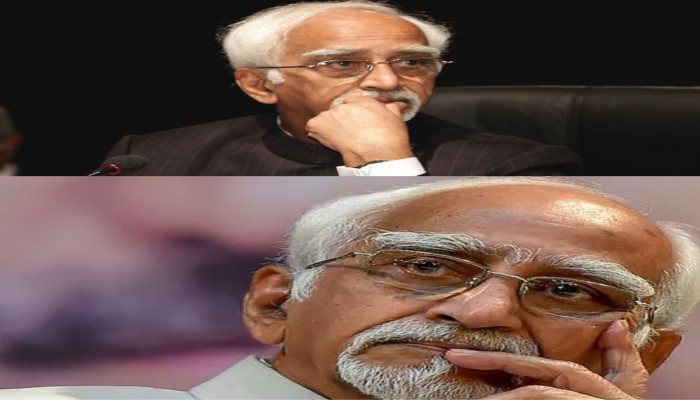
BJP lashes out at Hamid Ansari over ‘Indian looters’ remarks of Mahmud of Ghazni and Lodhi Dynasty
The Bharatiya Janata Party (BJP) has strongly criticised former Vice President Hamid Ansari and what it called the “Congress ecosystem” over his recent remarks about medieval rulers Mahmud of Ghazni and the Lodhi dynasty. The party accused the Opposition of trying to reinterpret history and downplay violence against Hindu religious symbols.
BJP spokesperson Shehzad Poonawalla said that Ansari’s comments were not isolated but part of a larger pattern. He argued that such statements reflect an attempt to sanitise certain episodes from India’s medieval past. According to him, these remarks are aimed at reshaping historical narratives for political purposes.
Poonawalla said, “After referring to Sharjeel Imam and Umar Khalid as ‘yuva neta’, the Congress ecosystem and Hamid Ansari are now eulogising Mahmud of Ghazni — the ruler who destroyed and desecrated the Somnath Mandir.” He further alleged that the Congress has repeatedly tried to reinterpret medieval history in ways that suit present-day political narratives.
He also stated, “The Congress ecosystem eulogises Ghazni, opposes the Somnath Swabhiman Parv, and whitewashes the crimes of Aurangzeb and others who committed atrocities against Hindus.” Through these remarks, the BJP sought to highlight what it sees as a consistent approach by the Congress and its supporters toward historical interpretation.
The BJP’s reaction came after comments made by Hamid Ansari during a recent interaction. Ansari had said, “Lodhi and Ghazni were Indian looters and had not come from outside. They were not foreigners. It might be politically convenient to call them foreigners, but they were not.” His statement triggered a sharp political response and reignited debates over how medieval rulers should be viewed in Indian history.
Historical records present a different picture of Mahmud of Ghazni and the Lodhi dynasty. Mahmud of Ghazni was the ruler of the Ghaznavid Empire, based in present-day Afghanistan. He led several military expeditions into the Indian subcontinent between the late 10th and early 11th centuries. Historians widely describe these campaigns as raids aimed at plunder and territorial expansion. Historical accounts also record the destruction of several temples during these incursions, with the Somnath temple in present-day Gujarat being the most prominent example. Mahmud did not establish a permanent kingdom in India, and his political base remained outside the subcontinent.
The Lodhi dynasty ruled Delhi from 1451 to 1526 and was the last ruling house of the Delhi Sultanate. Founded by Bahlul Lodhi, the dynasty was of Afghan origin, with rulers tracing their lineage to Pashtun tribes from regions that are now part of Afghanistan and Pakistan. Although the Lodhi rulers governed large parts of northern India for several decades and became deeply involved in the region’s political and administrative systems, historians generally classify them as rulers of foreign origin who established their authority through conquest.
The controversy over Ansari’s remarks has once again brought the issue of historical interpretation into the political spotlight. While the BJP has accused the Congress ecosystem of distorting history, the debate continues over how medieval rulers should be understood and represented in India’s historical narrative.



 Loading...please wait
Comments