



BJP bets big on UCC in Bengal, Amit Shah promises rollout within six months
- In Reports
- 07:02 PM, Apr 10, 2026
- Myind Staff
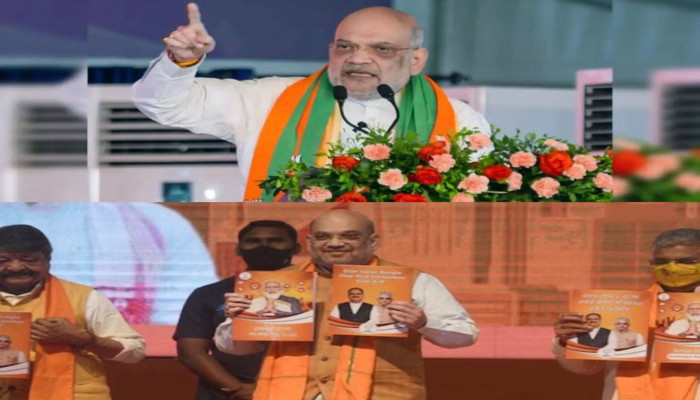
Union Home Minister Amit Shah on Friday unveiled the manifesto of the Bharatiya Janata Party for the upcoming West Bengal Assembly elections, placing the implementation of the Uniform Civil Code (UCC) at the centre of the party’s agenda. The announcement signals a strong push by the party to bring a common legal framework for personal laws if it comes to power in the state.
The manifesto highlights the BJP’s commitment to introducing the UCC within six months of forming the government in West Bengal. This promise is positioned as a major reform aimed at ensuring equality and uniformity in personal laws across different communities. The move is also being projected as a step towards strengthening national integration and simplifying legal processes related to marriage, divorce, inheritance, and succession.
Amit Shah, while presenting the party’s vision document, stressed that the implementation of the UCC would be carried out swiftly and effectively. The promise reflects the BJP’s long-standing ideological position on the issue, which it has repeatedly raised in various election campaigns across the country. By setting a six-month deadline, the party is attempting to convey urgency and determination in fulfilling this key promise.
The UCC has been one of the most debated and sensitive issues in Indian politics. The BJP has consistently argued that a uniform set of laws for all citizens will ensure fairness and eliminate discrimination based on religion or community. In the context of West Bengal, the party is using this proposal as a major electoral plank to appeal to voters who support legal uniformity and reform.
Apart from the UCC, the manifesto includes several other promises aimed at governance, development, and social welfare. The BJP has sought to present itself as an alternative to the current administration by focusing on issues such as corruption, law and order, and economic growth. The party has also reiterated its commitment to taking strict action against corruption and ensuring accountability in governance.
The release of the manifesto comes at a time when political activity in West Bengal is intensifying ahead of the 2026 Assembly elections. The BJP is making a strong effort to expand its base in the state and position itself as a viable challenger. By including high-impact promises like the UCC, the party is attempting to create a clear distinction between its vision and that of its rivals.
The emphasis on the UCC also aligns with the BJP’s broader national narrative, where it has repeatedly advocated for uniform laws across the country. The party believes that such a move will promote equality and reduce complexities in the legal system. In the Bengal manifesto, this idea has been presented as both a governance reform and a measure to strengthen unity.
The manifesto’s release also reflects the BJP’s strategy to combine ideological commitments with governance promises. While the UCC remains a central highlight, the party has also focused on addressing everyday concerns of citizens, including economic opportunities and administrative transparency. This combination is aimed at appealing to a wide range of voters.
Amit Shah’s announcement is expected to influence the political discourse in the state, as other parties may respond to the proposal and present their own positions on the issue. The debate around the UCC is likely to become a key topic during the election campaign, shaping voter discussions and political narratives.
Overall, the BJP’s manifesto for West Bengal places significant emphasis on legal reform through the Uniform Civil Code, backed by a clear timeline for implementation. With this promise, the party is attempting to project itself as decisive and reform-oriented, while also reinforcing its ideological stance. As the elections approach, the impact of this announcement on voters and the broader political landscape will become clearer.



 Loading...please wait
Comments