




Bihar teacher aspirants end 10-day hunger strike after government accepts all key demands
- In Reports
- 03:26 PM, Aug 28, 2026
- Myind Staff
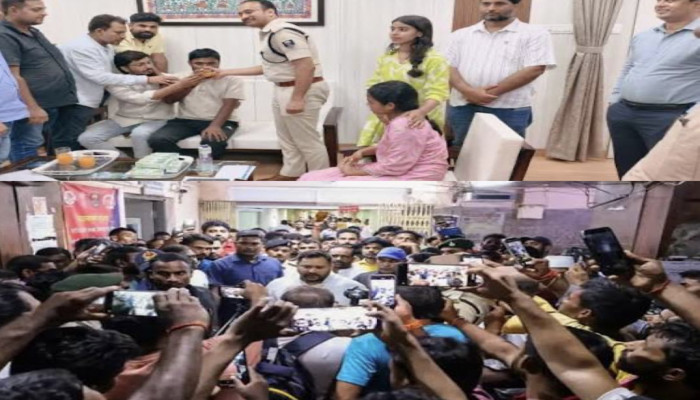
Bihar teacher aspirants on Thursday called off their 10-day hunger strike in Patna after the state government accepted several of their key demands. The biggest decision was to conduct the Teacher Recruitment Examination (TRE-4) in a single phase. The government has also scrapped the Preliminary Test (PT) and Mains stages for TRE-4 and accepted the demand for “One Candidate, One Result”.
The decision brought an end to the agitation at Gardanibagh, where teacher aspirants had been protesting for 10 days. Education department secretary Rajiv Raushan was present when aspirants Aman Yadav and Jahnavi Kumari ended their hunger strike. They were offered juice to mark the conclusion of the protest.
The aspirants ended their agitation after reaching an agreement with the state government on several demands linked to recruitment exams, transparency and reforms in the selection process. Senior officials from the education department, the Patna district magistrate, the senior superintendent of police, the deputy inspector general of the Economic Offences Unit (EOU) and representatives of the teacher aspirants attended the meeting chaired by Raushan.
Following the meeting, Bihar Chief Minister Samrat Choudhary announced the decisions on X. "The government has been serious about the students' demands from the very beginning. Now, a decision has been taken regarding the students' demands that this year's TRE-4 examination will be conducted in a single phase. Along with this, 9 other important decisions have also been made," Choudhary posted, as cited by The Times of India.
As part of the decisions, the Bihar government will form a special expert committee to suggest reforms in the examination system. The committee will be headed by a Patna High Court judge. It will examine issues linked to various examinations and also hear complaints related to the examination process.
The government has also introduced a “Student Assistance Portal” and “Student Assistance Camps”. These platforms will allow students to raise complaints and seek help. The government has said that complaints will be addressed within 30 days through these channels.
Several other issues raised by the aspirants were also taken up during the discussions. These included demands for greater transparency in the 70th Bihar Public Service Commission (BPSC) examination. The recruitment process for 1,799 Bihar Police sub-inspector posts was also discussed. Concerns related to the Bihar Eligibility Test (BET), conducted ahead of assistant professor recruitment, were also included.
The government said complaints and suggestions related to examination reforms would be sent to the High Court judge-led committee. Further action will be taken based on the committee’s recommendations. The recruitment process for the sub-inspector posts will begin after the committee submits its report.
The BPSC will also publish a recruitment calendar and conduct examinations at the earliest. The move is aimed at making the recruitment process more predictable for candidates and ensuring that examinations are held within the planned schedule.
The state government also agreed to consider the filling of vacant posts through promotions. This includes vacant librarian posts. The discussions also covered separate eligibility criteria and weightage for contractual employees. Other issues included a possible cap on the domicile quota in Bihar recruitment processes and the maximum age limit for candidates appearing in recruitment examinations.
The aspirants had also demanded timely publication of recruitment calendars and strict adherence to them. The government agreed to place proposals before the expert committee to improve transparency in examinations conducted on the BPSC model. These proposals will cover the handling and publication of question papers, OMR sheets and answer keys.
The government’s decision to hold TRE-4 in a single phase was a major demand of the protesting teacher aspirants. The scrapping of the PT and Mains stages is expected to simplify the recruitment examination process. The acceptance of the “One Candidate, One Result” demand was another key part of the agreement.
After the government accepted the demands and the two sides reached an agreement, the teacher aspirants unanimously decided to end their agitation. The conclusion of the 10-day hunger strike temporarily resolved their demands over recruitment exams, transparency and changes to the examination system.



 Loading...please wait
Comments