




Bengal transfers 120 acres of land in Siliguri corridor to Centre to fast-track infrastructure, security projects
- In Reports
- 05:41 PM, May 19, 2026
- Myind Staff
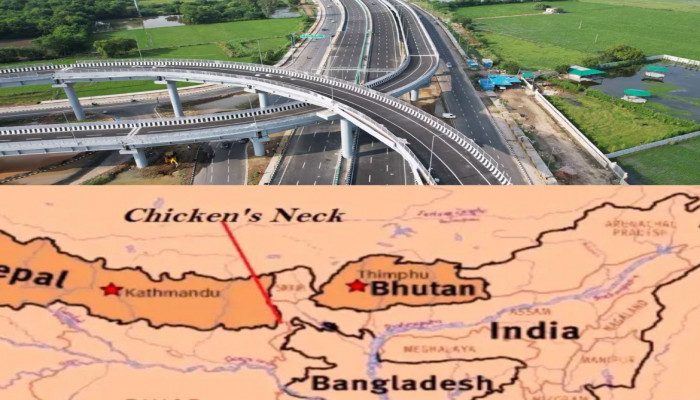
The West Bengal government, led by Chief Minister Suvendu Adhikari, has decided to transfer seven stretches of national highways to the National Highways Authority of India (NHAI) and the National Highways & Infrastructure Development Corporation Limited (NHIDCL). With Nabanna giving in-principle approval, a long-standing delay surrounding several highway projects has finally been cleared.
Under the new arrangement, important roads such as NH-31, NH-33 and NH-312 will now come under the control of NHAI. At the same time, NHIDCL will take charge of projects including the Sevok–Coronation Bridge stretch, the Hasimara–Jaigaon route and the Changrabandha corridor. These projects had reportedly been waiting for approval from the state government for almost a year. Following the latest clearance, central agencies are now expected to speed up construction and development work in the region.
The move is being seen as a major step towards improving connectivity across North Bengal. It will also strengthen transport links near the Bangladesh and Bhutan borders. According to the state government, the decision is expected to improve road infrastructure in the Darjeeling hills, Dooars and other important border areas. The Chief Secretary has already issued an official directive regarding the transfer.
The development has gained even more importance because of the strategic location of the Siliguri Corridor, commonly known as the “Chicken’s Neck.” This narrow strip of land in northern West Bengal is only around 22 kilometres wide at its narrowest point. Located near Siliguri, it connects mainland India to the eight northeastern states. The corridor is one of India’s most sensitive geographical zones because any disruption in this stretch could isolate nearly 50 million people living in the Northeast and severely affect military movement and supply chains.
The corridor is also surrounded by multiple international borders, making it strategically critical. Nepal lies to the west, Bhutan to the north and Bangladesh to the south. It is also situated close to China’s Chumbi Valley, which adds to its importance from a defence perspective.
The transfer of nearly 120 acres of land in the corridor to the Central Government is expected to help speed up several large-scale infrastructure and security projects. One of the biggest plans involves a major railway expansion project in the region. The Centre aims to upgrade the existing double-track railway line into a six-track system. As part of this project, two new railway tracks will run through a 40-kilometre underground tunnel between Teen Mile Haat and Rangapani stations. The tunnel is planned at a depth of around 20 to 24 metres below the surface.
Officials believe that shifting railway lines underground will help protect India’s military and supply logistics from threats such as air strikes, heavy artillery attacks and drone warfare. The underground network is expected to provide safer and more secure transportation for both civilian and defence operations in the future.
The Centre’s direct control over land and highways in the region is also expected to strengthen border security and defence preparedness. Since the Siliguri Corridor acts as the only land connection between mainland India and the Northeast, it is considered highly vulnerable during any conflict or blockade situation. By handing over land to central agencies, authorities such as the Indian Armed Forces, Border Security Force (BSF) and the Ministry of Railways will be able to carry out defence projects without delays caused by administrative hurdles or political disagreements.
The infrastructure push is also expected to improve development and connectivity in the northeastern states. Upgraded highways and expanded railway capacity will allow faster movement of goods, passengers and military supplies towards states such as Assam and Arunachal Pradesh. Officials have highlighted that one freight train can carry cargo equal to nearly 300 trucks, making railway expansion crucial for efficient transport.
The region frequently faces problems such as landslides and flooding, especially during the monsoon season. Central agencies are expected to build stronger and climate-resilient infrastructure to ensure uninterrupted connectivity with the Northeast throughout the year. The latest decision is therefore being viewed not just as a transport upgrade, but also as a significant strategic and national security move for the country.



 Loading...please wait
Comments