



Bengal: Seven judicial officers held hostage, Supreme Court orders investigation
- In Reports
- 06:24 PM, Apr 02, 2026
- Myind Staff
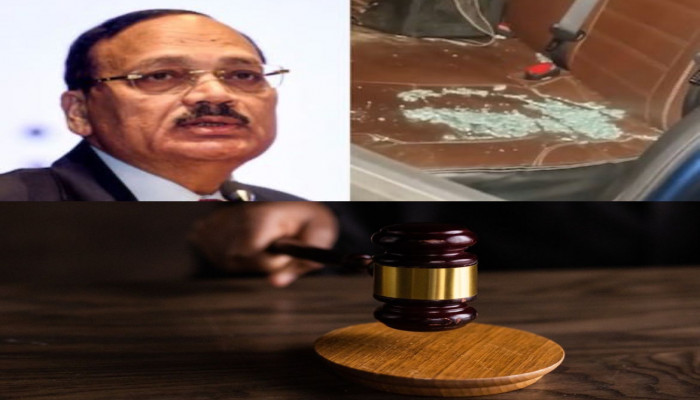
The Supreme Court strongly criticised the West Bengal government after a shocking incident in Malda, where seven judicial officers were held hostage for more than nine hours by a group of people. The protesters were reportedly angry because their names had been removed from the voter list during an ongoing revision process. The court described the situation as serious and not a routine law-and-order issue, raising concerns about the safety and authority of judicial officers.
Chief Justice of India Surya Kant expressed deep concern over the incident and said it appeared to be a deliberate attempt to challenge the authority of the judiciary. The court also remarked that West Bengal is the “most polarised state,” highlighting the tense political environment in which the incident took place. The Chief Justice made it clear that such acts cannot be tolerated, especially when they target officials performing duties assigned by the court.
The Supreme Court directed the Election Commission of India to have the matter investigated by either the Central Bureau of Investigation (CBI) or the National Investigation Agency (NIA). It also stated that the court itself would monitor the investigation to ensure accountability. The judicial officers, including three women, were conducting hearings related to objections raised during the Special Intensive Revision of the voter list when they were surrounded and detained by the crowd.
The officers were gheraoed around 3:30 pm and were only rescued after midnight. A large number of police and paramilitary personnel were deployed to safely evacuate them. However, even during the rescue operation, there were attempts to attack the vehicles. Visual evidence showed broken car windows and protesters throwing stones at the convoy transporting the officers. The situation remained tense until the officers were finally moved to safety around 1 am.
Justice Joymalya Bagchi also spoke during the hearing and stressed that political leaders must come together to condemn such actions. He said, “We are here to protect the special officers. Their orders are deemed to be orders of our court.” He further added that the Election Commission must “get forces from anywhere and ensure the security of judicial officers,” underlining the seriousness of the threat faced by those involved in the process.
The Chief Justice pointed out that the Chief Justice of the Calcutta High Court had to personally intervene by contacting the Director General of Police and the Home Secretary to ensure help reached the officers. Describing the events, he said, “When they were released after midnight, and they were going to their places, there was stone pelting on their vehicles and attacks by sticks, etc.” This highlighted not only the delay in response but also the continued risk even after their release.
Calling the incident a direct attack on the judiciary, the Chief Justice stated, “This incident is a brazen attempt not only to browbeat judicial officers but also to challenge the authority of this court. It was not a routine incident, but appears to be a calculated, motivated move to demoralise the judicial officers and stop the ongoing process of adjudicating objections in the left-out cases.” He made it clear that such actions are unacceptable and cannot be ignored.
He further warned against any attempts to intimidate judicial officers, saying, “We will not allow anyone to interfere and take the law into their hands to create a psychological attack on the minds of judicial officers. This is also an abdication of duty by the West Bengal government and the officers need to furnish reasons why, even after being informed, they did not ensure safe evacuation of the officers.” The court emphasised that the state administration must take responsibility for the lapse.
The Supreme Court issued clear instructions to both the Election Commission and the state government to ensure the safety of all judicial officers involved in the process. It directed that strict crowd control measures be followed during hearings. “Home secretary, DGP, district magistrate and all police officials are directed to ensure that not more than two or three persons shall be allowed to enter to file objections or when the hearing takes place, and not more than five people shall be allowed to assemble,” the court said.
The court also reiterated its direction for an independent investigation. “We also direct ECI to entrust the enquiry into yesterday's incident to either the CBI or NIA. The compliance report shall be submitted to this court. The agency shall be obligated to submit a preliminary enquiry report directly to this court,” the Chief Justice said.
During the hearing, West Bengal’s Advocate General Kishore Dutta argued that the Election Commission should not act as an adversary since the model code of conduct was in force. Responding to this, the Chief Justice made a strong remark, “Unfortunately, in your state, each one speaks a political language and this is the most polarised state. You are forcing us to make observations. Do you think we are not aware of who the miscreants are? I was monitoring everything till 2 am. Very, very unfortunate.”
The incident has raised serious questions about governance, law enforcement, and the safety of officials carrying out court-mandated duties. The Supreme Court’s strong response signals that such acts will be dealt with firmly and that accountability will be ensured through a monitored investigation.



 Loading...please wait
Comments