



Behind Enemy Lines: U.S. Special Forces mission rescues downed airman in Iran
- In Reports
- 12:51 PM, Apr 06, 2026
- Myind Staff
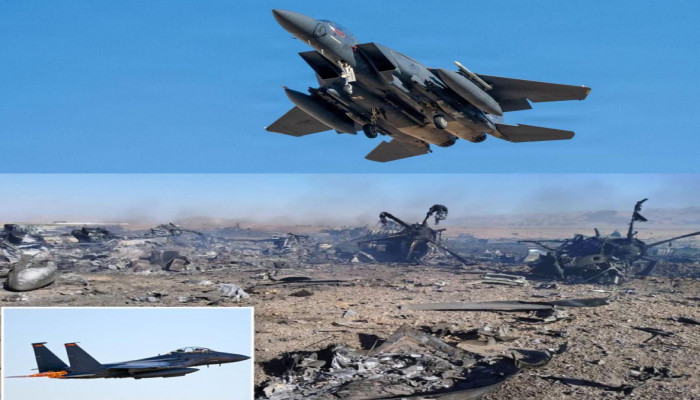
An Air Force officer whose F-15E Strike Eagle was shot down inside Iran was rescued in a high-risk overnight mission by U.S. Special Operations forces. The operation took place late Saturday and involved deep penetration into hostile territory. President Donald Trump confirmed the rescue early Sunday through a social media post. The officer had spent more than a day alone in enemy territory with only a pistol for protection.
The rescue followed an intense two-day effort by U.S. forces racing against Iranian troops to locate the missing airman. The officer, a weapons systems operator, had been stranded since Friday after ejecting from the aircraft. While the pilot was rescued quickly, the second crew member remained unaccounted for, triggering a large-scale search mission. According to U.S. officials, Navy SEAL Team 6 commandos carried out the final extraction with support from hundreds of personnel.
There were no casualties among the American rescue team. President Trump highlighted the success of the mission in his statement, saying, “WE GOT HIM!,” and added, “This brave Warrior was behind enemy lines in the treacherous mountains of Iran, being hunted down by our enemies, who were getting closer and closer by the hour.” He also confirmed that the officer had suffered injuries, but reassured that “he will be just fine.” After the rescue, the injured airman was flown to Kuwait for medical treatment.
The aircraft was shot down during ongoing conflict operations that began on February 28. Both crew members ejected safely, but the weapons officer landed in a remote and dangerous area. He managed to hide in a mountain crevice, making it difficult for both U.S. and Iranian forces to locate him initially. His survival depended on remaining undetected while coordinating carefully with rescuers.
The U.S. military made locating the missing officer its top priority. Intelligence efforts played a key role in the mission. The CIA launched a deception strategy to mislead Iranian forces. They spread false information suggesting the airman had already been rescued and was being transported out of the country. This tactic helped reduce pressure on the actual search area. Eventually, intelligence teams identified the officer’s location and shared it with the Pentagon, allowing the rescue mission to move forward.
At the same time, tensions between the United States and Iran remained high. Just hours before the rescue, President Trump had issued a warning to Iran, threatening strikes on its power infrastructure if shipping routes were not reopened. He wrote, “Time is running out - 48 hours before all Hell will reign down on them.” This added urgency to the already critical situation.
The downing of the F-15E, along with the crash of another U.S. aircraft, an A-10 Warthog, raised concerns about Iran’s remaining military strength. However, President Trump used the successful rescue to emphasise U.S. dominance. He stated, “The fact that we were able to pull off both of these operations, without a SINGLE American killed, or even wounded, just proves once again, that we have achieved overwhelming Air Dominance and Superiority over the Iranian skies.”
The rescue operation itself was highly complex. It involved dozens of aircraft, helicopters, and advanced intelligence systems, including cyber and space capabilities. The stranded officer had to survive harsh terrain and avoid detection. At one point, he climbed a 7,000-foot ridge to stay hidden. U.S. aircraft provided support by targeting Iranian convoys approaching the area. This helped create a safer path for the rescue team.
As commandos moved in, they used controlled fire to keep Iranian forces at a distance. There was no direct firefight, but the situation remained extremely tense. The officer carried a beacon and a secure communication device, but he used them sparingly. Activating the beacon too often could have exposed his location to enemy forces.
Military officials described the mission as one of the most difficult in the history of U.S. special operations. The combination of rough terrain, the officer’s injuries, and the presence of Iranian troops made the rescue especially challenging. Despite these obstacles, coordination between intelligence and military units ensured success.
After the officer was secured, another unexpected problem occurred. Two transport planes meant to evacuate the team became stuck at a remote base inside Iran. To avoid leaving equipment behind, commanders made a quick decision. They sent three additional aircraft to complete the extraction. The disabled planes were destroyed to prevent them from falling into Iranian hands.
The region where the aircraft went down reportedly has some opposition to the Iranian government. This may have worked in the officer’s favour. It is possible that local civilians provided him with limited support or shelter during his time in hiding. Meanwhile, Iranian forces actively searched for him and even offered rewards to locals for information leading to his capture.
The CIA is known to assist in such situations through a method called “unconventional assisted recovery.” This involves building connections with civilians who may help protect or guide stranded personnel. While details remain limited, such support can be crucial in survival scenarios like this.
The mission stands out as a rare and high-stakes rescue deep inside enemy territory. It highlights the coordination between intelligence agencies and military forces under extreme pressure. The safe return of the officer, despite the risks, marks a significant moment in the ongoing conflict.



 Loading...please wait
Comments