




Bangladesh’s Freedom Fighters Bill identifies Jamaat as war collaborator of Pakistani forces
- In Reports
- 07:55 PM, Apr 11, 2026
- Myind Staff
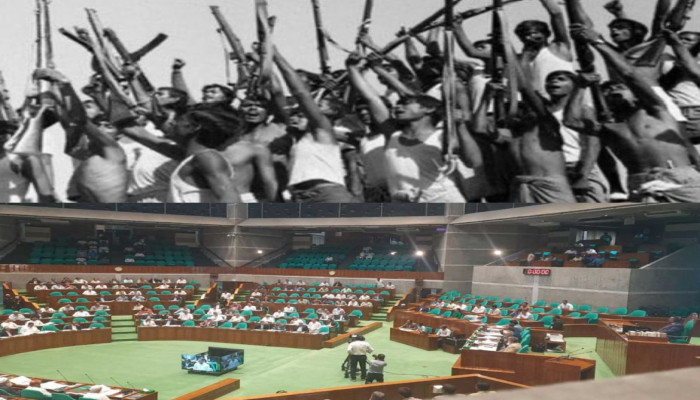
The Parliament of Bangladesh has passed the Jatiya Muktijoddha Council (Amendment) Bill, 2026, reaffirming that parties like Jamaat-e-Islami were collaborators of Pakistani forces during the 1971 Liberation War. The bill was approved on Thursday, April 9, during a parliamentary session, keeping intact references to political groups that opposed the country’s independence movement.
The amended law continues to identify the then Muslim League, Jamaat-e-Islami, and Nezam-e-Islam as forces that stood against the freedom fighters during the 1971 war. This move has revived historical and political debates around the role of such parties during the struggle for independence from Pakistan.
The bill was introduced in Parliament by Liberation War Affairs Minister Ahmed Aazam Khan. It was later passed despite objections raised by members of the opposition. The legislation focuses on defining and recognising the contributions of those who actively took part in the Liberation War, while also naming groups that collaborated with the occupying Pakistani forces.
Under the revised law, the term "Bir Muktijoddha" refers to individuals who actively participated in the Liberation War between March 26 and December 16, 1971. These individuals fought against Pakistani forces and their local collaborators, including Razakar, Al-Badr, Al-Shams, political parties, and peace committees. The definition also includes members of the armed forces, East Pakistan Rifles, police, Mukti Bahini, the Mujibnagar government, naval commandos, and Ansar personnel who contributed to the war effort.
Opposition to the bill came from Jamaat Ameer and Leader of the Opposition Shafiqur Rahman, who strongly objected to the inclusion of his party’s name in the list of collaborators. He demanded that Jamaat-e-Islami be removed from the definition outlined in the law.
"The names of the then Muslim League, Jamaat-e-Islami and Nezam-e-Islam were not included in the definition by the rulers after independence," he told the House, adding that past governments had also not incorporated them.
He further argued that previous administrations had not formally recognised these parties as collaborators in legal definitions. "Late President Ziaur Rahman did not include them. A three-time honourable prime minister also did not include them," he said.
Despite these objections, the government proceeded with the bill and maintained its position. The inclusion of these parties reflects a continued effort to formally document and acknowledge the historical narrative of the Bangladesh Liberation War. The decision indicates the government’s stance on recognising both the contributions of freedom fighters and the roles played by those who opposed independence.
Meanwhile, the National Citizen Party (NCP), an ally of Jamaat-e-Islami, took a different position on the matter. The party submitted a written note to the Speaker of Parliament stating that it had no objection to the bill. This response showed a contrast within allied political groups regarding the issue.
The passage of this bill is significant in shaping how the events of 1971 are officially remembered and recorded in Bangladesh. By retaining the names of these political parties in the law, the government has reinforced its interpretation of historical accountability during the war. At the same time, the opposition’s response highlights that disagreements over this history continue to exist in the country’s political landscape.
This development may influence future political discourse, especially around issues of national identity and historical memory. It also underlines how the legacy of the Liberation War remains a sensitive and important topic in Bangladesh’s governance and public life.



 Loading...please wait
Comments