




Bangladesh: Road to the Red Sea — Saudi-led MMDC
- In Current Affairs
- 11:17 PM, Aug 26, 2026
- MeowMarx
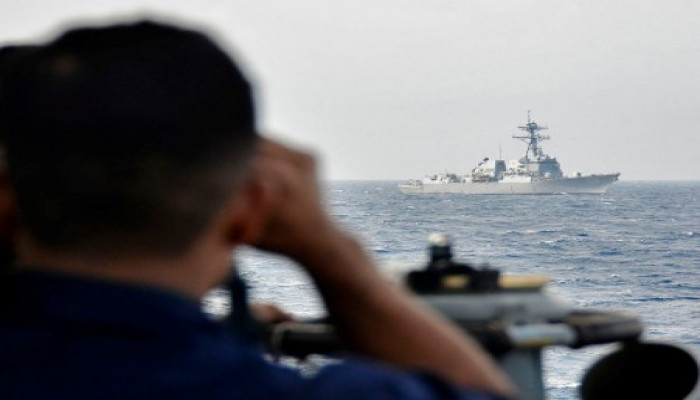
What is Multinational Maritime Defence Coalition (MMDC)?
After the 2026 Iran War involving the United States, Israel, and Iran, the Gulf countries bore the brunt of Iranian aggression and the resulting disruption to trade, energy and regional economies.
The crisis was compounded by the severe disruption of the Strait of Hormuz during the conflict, followed by the subsequent US naval blockade, which caused traffic through the Strait to plummet to just 31% of its pre-conflict average by early August. With the primary artery for Gulf energy exports effectively choked off, securing an alternative route through the Red Sea and the Bab el-Mandeb Strait became an existential economic necessity for Saudi Arabia and global commerce.
This was the primary trigger for Saudi Arabia to establish the Multinational Maritime Defence Coalition (MMDC), also known as the Multinational Maritime Defence Alliance. Formed on July 30, 2026, and headquartered in Riyadh, Saudi Arabia, the 14-nation military alliance (now expanding to 15 signatories) aims to protect freedom of navigation and secure vital trade and energy routes across the Red Sea, Gulf of Aden, and Bab el-Mandeb Strait. Its primary objective is to ensure that these waterways remain open to international traffic amid security threats emanating from Houthi-controlled Yemen. It comprises Bahrain, Bangladesh, the Comoros, Djibouti, Egypt, Jordan, Kuwait, Pakistan, Qatar, Saudi Arabia, Somalia, Sudan, Türkiye, the Yemeni government and a very new addition, the Maldives.
Most importantly, however, the 14-nation alliance, which signed its founding declaration in July 2026, has yet to agree on a concrete framework outlining the specific formula for how the member nations will divide the actual operational costs and fund the alliance remains undefined and relies on ongoing negotiations.
Bangladesh: Implications of the MMDC and Its Relationship with Saudi Arabia
Bangladesh is one of the 14 founding members of the Multinational Maritime Defence Coalition (MMDC). State Minister for Foreign Affairs Shama Obaed Islam said that Bangladesh supports the alliance, which aims to ensure the safe and secure movement of vessels through the Red Sea and surrounding waterways. “We want stability in this region; we want peace,” she said.
Bangladesh and Saudi Arabia have maintained close relations for nearly five decades, with their religious ties historically shaped by Saudi Arabia’s efforts to expand Wahhabi influence in Bangladesh. Saudi financial support was channelled not only toward the political activities of Jamaat-e-Islami but also toward the erection of Islamic infrastructure, like mosques, madrassas, and Islamic centres. Although Saudi Arabia continues to fund religious infrastructure in Bangladesh, both the methods and objectives of this engagement have changed significantly after Crown Prince Mohammed bin Salman (MBS) took charge. Instead of channelling unregulated cash to private NGOs or hardline madrasas to spread Wahhabism, Riyadh now partners strictly with the Bangladeshi government to fund state-controlled religious infrastructure designed to counter extremism.
However, Wahhabism may be a later consideration in this context, as Saudi Arabia has long served as one of the largest employment markets for Bangladeshis. Oil wealth since the 1970s fuelled a boom in construction and real estate. This inevitably created a growing demand for labour and attracted workers from developing countries, including Bangladesh.
Formal labour migration began in 1976. In 2025, Bangladesh sent a record-breaking 750,967 workers to Saudi Arabia, which accounts for over two-thirds of the country’s total overseas deployment. This represents a 16% increase from the 628,000 workers deployed in 2024. As of 2026, an estimated 3.5 million Bangladeshis live and work in the Kingdom, making up its largest expatriate community.
This provides Saudi Arabia with strategic leverage in bilateral negotiations, giving it an upper hand in shaping outcomes and advancing its interests.
More Workers = More Remittances.
In the 2025–26 fiscal year alone, Saudi Arabia was Bangladesh’s largest source of foreign exchange, sending nearly US$5.85 billion, which accounted for approximately 16% of total remittances during the first eleven months of FY2025–26. These remittances support food, education, healthcare, debt repayment, and household consumption across millions of Bangladeshi families.
Apart from being the largest employment market, Saudi Arabia has also provided Bangladesh with financial assistance and grants since 1977 for development projects and other forms of aid. By 2025, it had financed 16 projects and programmes through concessional loans exceeding US$494.7 million, alongside more than US$106 million in grants for cyclone recovery and projects in water, energy, healthcare, and transport.
It becomes clearer from the above-stated facts that it is more likely a compulsion/obligation for Bangladesh to sign and take part in the MMDC. Ignoring Saudi Arabia in such a matter could amount to jeopardising the long-standing benefits and mutual gains derived from the bilateral relationship.
The Suez Canal Factor: Lifeline for Bangladesh
Bangladesh is the world’s second-largest apparel exporter, and its export economy relies heavily on a single sector and caters to Western markets. This naturally makes the Suez Canal an economic lifeline for Bangladesh.
Bangladesh primarily exports Ready-Made Garments (RMG), finished clothing and apparel. This RMG sector accounts for 80% to 85% of Bangladesh’s total annual export earnings, worth $40- 45 billion annually. In FY2025–26, RMG exports were $38.70 billion, equivalent to 80.62% of the country’s total exports of $48 billion.
About 70% of Bangladesh’s ready-made garment (RMG) exports destined for Europe and North America travel through the Red Sea and the Suez Canal. The European Union (EU) is the single largest destination, absorbing over 50% of Bangladesh’s total exports, followed by the U.S. and Britain.
The Cost of Disruption: the Suez Canal and Red Sea
When the Suez Canal is compromised, whether we have seen it happen due to geopolitical reasons, blockades, or Houthi militant attacks in the Red Sea, Bangladesh faces severe economic brunt and multilayered shocks.
If the Suez Canal or Red Sea is choked, ships have to take a detour and reroute around the southern tip of Africa, which means the Cape of Good Hope. That adds roughly 3,500 km and 10 to 15 days of extra transit time and exponential freight costs. During recent Red Sea crises, freight costs for a standard 40-foot container from Bangladesh to Europe surged from roughly $1,500 to over $4,000–$5,000. Rerouting vessels around the Cape of Good Hope increases fuel costs, lengthens voyages, and reduces the availability of shipping containers in global markets.
The cost of disruption to Bangladesh’s exports is the single driving case for Bangladesh to align itself with the Coalition and join its efforts to secure these critical trade routes, as the security of the Red Sea and the Suez route is directly tied to the country’s ability to sustain its trade with Europe.
A Strategic Contradiction for Bangladesh
Bangladesh has a significant interest in keeping the Red Sea and Suez Canal open and operational for its trade with European markets. However, its individual stake remains relatively small compared with those of larger economies and major players such as the U.S., China, Japan, South Korea, India, Singapore, Taiwan, the EU, etc. These countries have far greater economic and strategic interests in ensuring the continued operation and security of the Suez Canal and Red Sea than Bangladesh does. This relatively smaller stake, in fact, is a blessing in disguise for Bangladesh.
It does not need to commit substantial resources of its own to securing the Suez Canal and the Red Sea against the Houthis and other threats, but can enjoy the security umbrella provided by other nations that have a strong interest in ensuring the continued functioning of the Suez Canal and the Red Sea for their own benefit. This is a financial blessing for Bangladesh.
As a matter of fact, Singapore, Malaysia, and Taiwan play a relatively minimal role in securing the Suez Canal, the Red Sea, and the Gulf of Aden, even though they are large economies. Whereas both China and India operate independently, strictly escorting their own national vessels. South Korea acts similarly to this model but on a much smaller, single-ship scale. The key stakeholders in securing these waterways include Egypt, the United States, Italy, France, Japan, and other countries with significant maritime and strategic interests in the region. They do the heavy lifting. The United States and France, in particular, maintain military facilities in Djibouti, alongside bases operated by China and Japan.
That brings me back to my previous point: it is more likely a compulsion or obligation from Bangladesh’s end to sign and take part in the MMDC than a matter of choice. Ignoring Saudi Arabia in such a matter could amount to jeopardising the long-standing benefits and mutual gains derived from the bilateral relationship.
Saudi’s Vision 2030: Bangladesh’s Golden Opportunity
On October 6, 2025, Bangladesh signed a bilateral agreement with Saudi Arabia in Riyadh. It represented a landmark framework for general recruitment in the 50-year history of labour relations between the two countries. The agreement aimed to open new employment opportunities in construction, manufacturing, logistics, healthcare, and hospitality around major Saudi Vision 2030 mega-projects, to create up to 300,000 jobs for Bangladeshi workers.
Furthermore, extending these opportunities through the upcoming 2034 FIFA World Cup may create additional demand in construction, transport, healthcare, hospitality, and technical employment.
Bangladesh is clearly seeking to capitalise on these opportunities, which further strengthens the case for its alignment with the MMDC. Consequently, participation in the MMDC can be viewed as a continuation of the long-standing benefits and mutual gains derived from its bilateral relationship with Saudi Arabia.
Over 3.5 million Bangladeshis working in Saudi Arabia give Bangladeshi policymakers significant leverage to negotiate better protections and working conditions. If used strategically, Bangladesh could leverage this position to push for employer-funded recruitment, enforceable employment contracts, regular salary payments, valid residence permits, insurance coverage, compensation mechanisms, and effective channels for resolving labour complaints.
A win-win situation for both countries: Bangladesh would benefit from increased remittance inflows, and Saudi Arabia would gain access to a large pool of cost-competitive labour.
MMDC Strategic Response to Bangladesh’s Crises
If Bangladesh aligns with Saudi Arabia and plays its cards right, it can be a gateway for Dhaka’s widespread job problem. Annually, 2.2 million new entrants join the labour force. With a persistent job deficit, securing future employment opportunities abroad has become a necessity. Nearly 2 million young people enter Bangladesh’s labour force every year, while the unemployment rate among university graduates stands at an alarming 13.5%, despite national unemployment remaining below 4%.
According to the World Bank, between 2016 and 2022, 14 million young people reached working age, but the economy created only 8.7 million jobs. Therefore, it needs to create 2 million jobs annually to meet the demand of the labour market, while also addressing the existing backlog of unemployed and underemployed workers. That makes this MMDC a strategic agreement with Saudi Arabia that could ease the burden on Bangladesh’s job market. This provides a viable avenue for exporting trained and skilled labour via formalised channels, not just construction labour, moving beyond sending low-skilled and manual workers.
Bangladesh could strengthen its competitive position against countries such as India, Nepal, and Sri Lanka by making a more attractive offer to Saudi Arabia, negotiating better terms, and securing favourable recruitment quotas, including the number of workers to be deployed.
In Saudi’s labour market, Bangladesh competes with countries such as India, a major supplier of both blue-collar tradespeople and highly skilled white-collar professionals (IT, engineering, finance, etc). A certified Indian electrician, for instance, may compete directly with a newly certified Bangladeshi or Nepali electrician for the same Saudi Vision 2030 contract.
Not just that, being a contributor to the MMDC provides Bangladesh with immense diplomatic goodwill and visibility, which can be used in its favour to negotiate employment opportunities with other Gulf nations.
Qatar’s labour market, for instance, has gradually shifted from civil construction toward energy infrastructure. The massive North Field Expansion aims to increase Qatar’s LNG production by the early 2030s. In May 2026, Qatar’s Labour Minister explicitly requested skilled Bangladeshi to support this expansion, highlighting the need for electricians, plumbers, AC technicians, and ASME-coded welders.
Oman has recently received more than 163,000 Bangladeshis, although the labour market is tightening. Future demand is expected to centre on the Duqm Port and SEZ, creating opportunities for manufacturing and maritime logistics workers.
Kuwait absorbed more than 42,000 Bangladeshis in 2025. Future prospects are linked to mega-projects such as the Mubarak Al-Kabeer Port and the expansion of healthcare infrastructure, with potential demand for heavy-equipment operators, medical support staff, and civil engineers.
Bangladesh Navy: What Role, What Capability, What Cost?
As of now, there is a concrete operational and legal framework for the MMDC. The member states have adopted the Charter of the Multinational Maritime Defence Alliance, which establishes a structured organisational framework comprising a Joint Command, a Command and Control Centre, a Combined Maritime Operations Centre, and a General Secretariat, all permanently headquartered in Riyadh, Saudi Arabia.
However, there is not yet a concrete financial framework. While the military command structure has been outlined, the specific formula for dividing operational costs and financing the alliance among its 14 member states remains undefined and is still subject to negotiation. The core operational assistance and infrastructure are currently provided by the host nation, Saudi Arabia, through the Western Fleet Command in Jeddah and the alliance headquarters in Riyadh.
Its planned activities include intelligence and information sharing, operational planning, joint exercises, training, capacity building and joint maritime operations.
Bangladesh Navy: An Overview
Bangladesh Navy commands a fleet of over 100 surface combatants, submarines, and auxiliary vessels. The force is commanded from Naval Headquarters in Dhaka, with five major bases located in Dhaka, Chittagong, Khulna, Kaptai, and Mongla.
Size & Strength: Two Type 035G (Ming-class) attack submarines, BNS Nabajatra and BNS Joyjatra, seven frigates, including South Korean-built Ulsan-class vessels and Chinese-built guided-missile frigates, and six guided-missile corvettes, including the customised C-13B Shadhinota-class stealth corvettes. These are supported by dozens of offshore patrol vessels, large patrol craft, and rapid-response boats, alongside a growing naval aviation wing operating Dornier 228NG maritime patrol aircraft and helicopters.
Roles & Responsibilities: Maritime defence and deterrence; they include deterring external threats, securing offshore resources and energy assets within its Exclusive Economic Zone, providing humanitarian assistance during natural disasters, and contributing personnel and medical teams to UN Peacekeeping Operations worldwide since 1993.
Bangladesh Navy’s recent and ongoing endeavours
In November 2025, the Bangladesh Navy concluded a major five-day fleet exercise in the Bay of Bengal involving frigates, corvettes, offshore patrol vessels (OPVs), and special forces. The exercise culminated in live anti-ship missile launches, surface-to-air missile firing, and unmanned aerial vehicle (UAV) operations. The Navy also participated in the fifth edition of the bilateral Bongosagar exercise with the Indian Navy, focusing on anti-submarine warfare, surface-combat drills, and search-and-rescue interoperability.
In early 2025, it deployed vessels across 16 coastal districts for anti-poaching operations, seizing illegal fishing nets worth more than Tk 132 crore and protecting juvenile Hilsa (jatka). Naval patrols have also continued to intercept smuggling vessels and illegal cargo near Bangladesh’s maritime borders, particularly along the maritime boundary with Myanmar’s Rakhine State.
In late 2025, the Directorate General of Defence Purchase (DGDP) issued tenders for four new Large Patrol Crafts (LPCs), while in February 2026 the Navy formally acquired the decommissioned HMS Enterprise, an Echo-class hydrographic survey vessel, from the United Kingdom. The vessel is expected to strengthen hydrographic surveying and oceanographic data collection, including support for monitoring offshore energy resources.
Bangladesh has also pursued the acquisition of maritime patrol aircraft and surveillance drones to improve over-the-horizon surveillance, targeting, and maritime domain awareness.
What Does It Take to Secure the Red Sea, Gulf of Aden, and Bab el-Mandeb?
The Bab el-Mandeb connects the Red Sea to the Gulf of Aden. At its narrowest point, the strait is only about 30 km wide. Because the waterway is so narrow, commercial ships are forced to sail within visual range of the Yemeni coast. The navies passing through the Strait can be easily detected, while the reaction time for a warship’s air-defence systems can drop from minutes down to seconds.
What Kind of Threats Are There to Defend Against?
This region faces a range of maritime threats, including anti-ship ballistic missiles (ASBMs) and cruise missiles fired from Yemen’s mountainous terrain. Loitering munitions (kamikaze drones), as demonstrated by the use of Shahed drones during the US-Iran war and by Russia in Ukraine. Other threats include unmanned surface vessels (USVs), including explosive-laden drone boats, sea mines, and fast-attack speedboats, similar to those seen during Iran’s blockade of the Strait of Hormuz. In addition, although the risk is relatively minimal, the possibility of piracy and smuggling originating from the Horn of Africa, Somalia, and Houthis.
What Measures Are Being Taken to Keep the Corridor Open?
Multinational Naval Coalitions: No single country has the resources to patrol and secure the entire corridor alone, making multinational naval cooperation and coordinated escorts essential. Such coalitions can deploy destroyers, cruisers, and aircraft-carrier strike groups to the Red Sea to protect commercial shipping and intercept incoming drones and anti-ship ballistic missiles. Occasionally, forces may also conduct strikes against Houthis in Yemen.
ISR (Intelligence, Surveillance, and Reconnaissance): Airborne early-warning aircraft, high-altitude drones, and satellites monitor the Yemeni coastline and surrounding waters. These capabilities help identify potential missile launches, drone activity, and other threats before they can endanger commercial vessels.
Naval Escort and Air Defence: Warships can operate with commercial vessels, protecting against aerial and maritime threats. Advanced combat-management and air-defence systems, including the Aegis Combat System, enable warships to detect, track, and respond to multiple threats. Together, ISR, naval escorts, and layered air defence create a protective security architecture for commercial shipping transiting the corridor.
Now, Bangladesh has to consider what it can realistically contribute to the MMDC and which capabilities would best serve its interests. The country has been one of the most consistent contributors to United Nations Peacekeeping Operations (UNPKOs), with its deployment dating back to 1988, during the Iran-Iraq ceasefire. They have served in some of the UN’s most complex and volatile missions, including MONUSCO in the DR Congo, MINUSCA in the Central African Republic, UNMISS in South Sudan, and missions in Haiti. Over the past three decades, Bangladesh has deployed nearly 200,000 personnel to more than 50 UN missions across 25 countries.
Being a part of UN peacekeeping forces, Bangladeshi personnel have gained expertise in maritime security and rescue operations.
Is Bangladesh Ready for the MMDC?
Bangladesh is going to operate far beyond the Bay of Bengal, which raises a couple of important points. Dhaka must ask itself: What exactly is the cost of this opportunity? How many of these warships, aircraft, or personnel Bangladesh will commit to the operation, we still don’t know fully. Who is going to pay for these operations? Unless the coalition bears these costs, Bangladeshi taxpayers could end up financing an operation far from the country’s immediate maritime theatre. For now, the financial terms remain muddy. A naval vessel deployed in the Red Sea also cannot simultaneously patrol Bangladesh’s Exclusive Economic Zone.
Additional Questions: What Remains Unanswered?
How will the fleet be sustained at sea for 6–12 months? How will it fare against massed drone attacks? Even the Royal Navy and the U.S. Navy have faced significant challenges in countering large-scale drone attacks, which can rapidly deplete air-defence missile magazines. To what extent has the Bangladesh Navy exercised with the navies of other countries? How technically compatible are their systems? Without adequate interoperability, coordination, and communication, there is a risk of operational confusion or Will they end up sinking each others vessels?
The cost of operations in the Red Sea and sustenance of naval strike groups is financially demanding. Hence, defence analysts are debating Bangladesh’s physical deployment to Red Sea, the Bab el-Mandeb Strait, and the Gulf of Aden. Its role might be limited to sharing personnel, stationing liaison officers in Riyadh, sharing joint maritime intelligence and analysis, contributing to periodic patrols and offering political legitimacy to the alliance, rather than taking on heavy financial or kinetic combat roles.
This minimalist asset contribution, as per defence analysts, would give Bangladesh’s naval liaison officers opportunities for training, capacity building, joint maritime operations, and high-level intelligence sharing alongside major regional powers such as Saudi Arabia and Türkiye.
Special mention to doyenfall from Twitter, @oxtail101, for suggesting and contributing the additional questions.
At the time of writing, news reports suggest a possibility of Bangladesh joining the Mecca Pact. It is a pact that establishes a framework for collective deterrence and stipulates that an armed attack on any one of the three countries, Saudi Arabia, Pakistan, and Türkiye, would be considered an attack on all three, replicating NATO of the Gulf.
“Bangladesh maintains a positive approach towards the possibility of joining an economic or defence framework involving Saudi Arabia, Pakistan and Türkiye, taking into account its own interests and the changing dynamics of the global economy and trade,” said Foreign Affairs Adviser Humayun Kabir.
Conclusion
We cannot yet determine or reliably foresee the eventual outcome of this Saudi-led coalition. At this stage, any assessment remains largely speculative. Saudi-led attempts to construct regional security architectures have both faltered and succeeded at different times. Previous initiatives faltered due to shifting geopolitical rivalries, limited institutional depth, divergent national interests, and an overreliance on political declarations rather than integrated military command structures.
The MMDC’s full operational deployment and readiness are being tested, and participation in military operations ultimately remains a sovereign decision for each member state. Saudi Arabia has to manage any friction between participating members. Member states will have to answer their domestic constituencies and justify their participation in the coalition, particularly if that participation eventually involves financial commitments, military deployments, or combat operations.
For Tarique Rahman, this is a test of his ability to negotiate and translate Bangladesh’s participation in the coalition into tangible benefits for the Bangladeshi people.
Image provided by the author.
Disclaimer: The opinions expressed within this article are the personal opinions of the author. MyIndMakers is not responsible for the accuracy, completeness, suitability, or validity of any information on this article. All information is provided on an as-is basis. The information, facts or opinions appearing in the article do not reflect the views of MyindMakers and it does not assume any responsibility or liability for the same.



 Loading...please wait
Comments