




Bangladesh President Shahabuddin resigns midterm, cites health reasons
- In Reports
- 07:12 PM, Jul 24, 2026
- Myind Staff
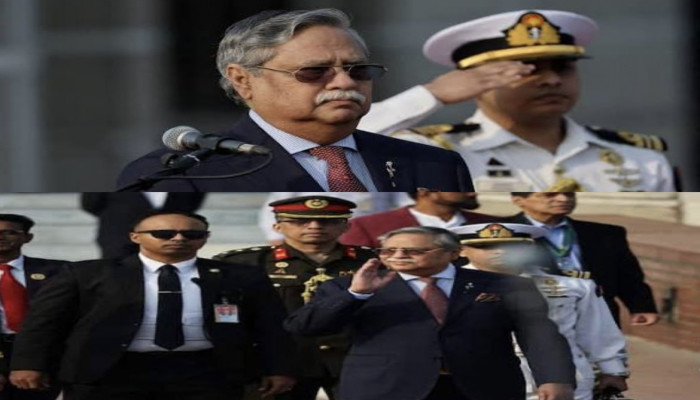
Bangladesh President Mohammed Shahabuddin resigned from office on Friday, ending his tenure nearly halfway through his five-year term. He submitted his resignation letter to the Speaker of Parliament under Article 50(3) of the Constitution. His term was scheduled to continue until April 2028. The move marks a major political development as the country prepares for the election of a new president.
In the Bengali-language resignation letter issued on Bangabhaban letterhead, the 76-year-old president said several serious health conditions had made it impossible for him to continue carrying out his constitutional responsibilities. He listed heart disease, hypertension, diabetes, kidney complications, a previous bypass surgery and a recent diagnosis of autonomic neuropathy. He said the neurological condition had caused repeated episodes of unconsciousness. Shahabuddin stated that his prolonged medical treatment had affected his ability to perform the duties of the office.
The outgoing president also defended his time in office. In his letter, he said he had helped guide Bangladesh through the constitutional crisis that followed the August 2024 uprising. He highlighted his role during a period of political uncertainty and said he worked to ensure constitutional stability during the transition.
Earlier, Shahabuddin's press secretary, Sarwar Alam, confirmed that the president had decided to step down after his health worsened. Alam said Shahabuddin was no longer in a position to fulfil his constitutional duties and needed treatment and rest. The official stated that the president's medical condition had reached a stage where continuing in office was no longer possible.
Reports also suggested that political developments played a role in the resignation. According to these reports, the Tarique Rahman-led government had urged Shahabuddin to leave office due to his long-standing association with former Prime Minister Sheikh Hasina. The development comes ahead of Hasina's announced plan to return to Bangladesh in December and surrender after her conviction by a war crimes court. Hasina is currently living in exile in India. She has denied the charges against her.
Shahabuddin remained one of the few senior figures linked to Hasina's administration who continued in office after her government lost power during the student-led uprising in August 2024. He stayed on as president throughout the political transition and oversaw the constitutional process that eventually led to the general election held in February 2026. The election brought Tarique Rahman to power as Bangladesh's prime minister.
His resignation removes one of Sheikh Hasina's last remaining allies from a key constitutional position. The development comes at a politically sensitive time, with Hasina preparing for her planned return to Bangladesh. Since her removal from power, authorities have banned the Awami League. Many of the party's leaders and workers are either in jail or remain in hiding.
Under Bangladesh's Constitution, the Speaker of Parliament will immediately assume the role of acting president. The Speaker will continue to perform the duties of the office until Parliament elects a new president. The constitutional arrangement is expected to ensure continuity in the functioning of the presidency during the transition.
Shahabuddin's departure closes an important chapter in Bangladesh's recent political history. He remained in office during one of the country's most turbulent periods and witnessed a major shift in political leadership. His resignation now opens the way for the selection of a new head of state while the current government continues to reshape the country's political landscape.



 Loading...please wait
Comments