




Bangladesh-Pakistan intelligence sharing agreement signals major shift in regional ties
- In Reports
- 01:32 PM, May 11, 2026
- Myind Staff
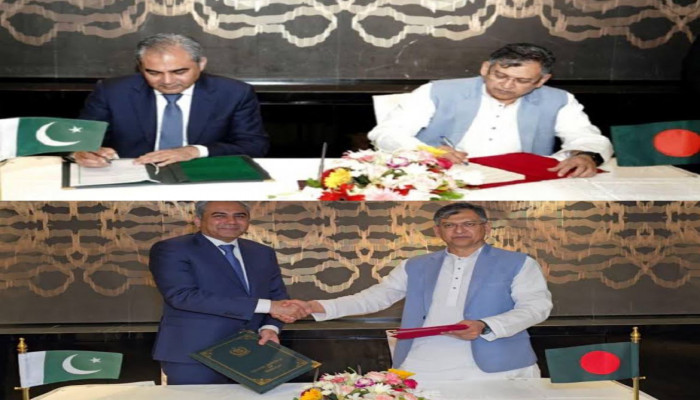
Bangladesh and Pakistan have signed a major Memorandum of Understanding that expands cooperation far beyond anti-narcotics efforts. The agreement creates a framework for intelligence-sharing, joint operations, and confidential exchanges between the two countries. The move is being seen as an important shift in relations between Dhaka and Islamabad after Bangladesh’s political transition in 2024.
The agreement was signed in Dhaka by Bangladesh Home Minister Salahuddin Ahmed and Pakistan Interior Minister Syed Mohsin Raza Naqvi. Officially, the MoU has been described as an anti-narcotics and anti-trafficking agreement. However, the scope of the pact is much wider and includes several sensitive areas related to security and intelligence cooperation.
Under the agreement, both countries will work together on intelligence-sharing, confidential information exchange, operational coordination, secure communication systems, and joint investigations. Bangladesh’s Department of Narcotics Control and Pakistan’s Anti-Narcotics Force will serve as the main agencies handling this cooperation.
The MoU focuses on trafficking networks, smuggling routes, organised crime groups, and operational methods used by criminal organisations. It also includes provisions for controlled delivery operations, technical support, training coordination, and confidential communication mechanisms. The two sides will exchange intelligence related to suspected individuals, new smuggling techniques, and international criminal organisations operating across borders.
The agreement also gives importance to capacity-building and skill development. Both countries will cooperate in training personnel and sharing best practices in anti-narcotics operations. The use of modern technology, including detection equipment and sniffer dogs, is also part of the framework. These measures are aimed at improving coordination and strengthening enforcement capabilities on both sides.
The pact will remain valid for ten years and can be extended if both countries agree. A secretary-level joint working group will also be created between the interior ministries of Bangladesh and Pakistan. This group will monitor the implementation of the agreement and ensure regular coordination between the two governments.
One of the key features of the MoU is the confidentiality clause. Information shared under the agreement cannot be disclosed to third parties. This highlights the sensitive nature of the cooperation and shows the level of trust both countries are attempting to build through this arrangement.
The development marks a major change in Dhaka-Islamabad relations. Since the removal of Sheikh Hasina in August 2024, Bangladesh has witnessed a political transition that has opened the door for new regional alignments. The agreement indicates that Dhaka is now more willing to engage with Islamabad in areas that were previously approached with caution, especially intelligence and security cooperation.
The pact also reflects Pakistan’s broader regional strategy. Islamabad appears interested in expanding partnerships beyond its traditional allies and using anti-narcotics cooperation as a platform for wider security engagement. The agreement, therefore, carries significance not only for law enforcement but also for regional diplomacy and strategic cooperation.
Discussions between the two countries were not limited to narcotics control alone. Talks also covered issues such as counterterrorism, cybercrime, organised crime, and financial fraud. This suggests that the MoU may eventually develop into a broader security framework covering multiple areas of internal and regional security.
Pakistan also offered support for Bangladesh’s Safe City Project. In addition, both countries showed interest in increasing cooperation in internal security matters, training of civil armed forces, and efforts to combat human smuggling. These areas of discussion further indicate that the agreement could expand well beyond its current anti-narcotics focus.
The timing of the agreement is also important. Bangladesh’s new government is trying to diversify its foreign partnerships and strengthen its strategic options in the region. Pakistan, on the other hand, is looking to reinforce its regional role at a time when it is facing domestic political and economic challenges. The MoU, therefore, reflects both political necessity and changing regional calculations.
For Bangladesh, closer cooperation with Pakistan provides another channel for handling regional security concerns and balancing diplomatic relationships. For Pakistan, the agreement offers an opportunity to improve ties with a neighbouring country that has historically remained cautious in its engagement with Islamabad.
The MoU represents more than a standard anti-trafficking arrangement. It signals a broader political and strategic shift in relations between Bangladesh and Pakistan. The agreement could reshape cooperation between the two countries in intelligence, security, and regional affairs in the coming years.



 Loading...please wait
Comments