



Bangladesh not invited to ECI’s Global Democracy Conference in Delhi over political and security concerns
- In Reports
- 06:49 PM, Jan 21, 2026
- Myind Staff
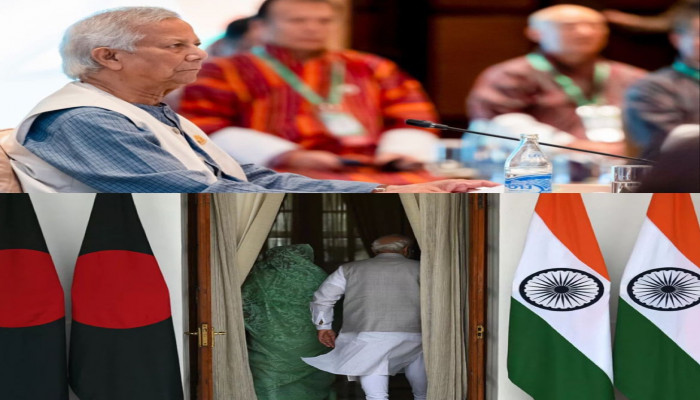
Bangladesh has not been invited to take part in the Election Commission of India’s flagship global event on democracy and election management, citing political instability, security concerns, and issues related to the democratic processes in the country. The decision has drawn attention as it comes at a sensitive time, just weeks before Bangladesh is scheduled to hold its national elections on February 12.
The international event, officially called the India International Conference on Democracy and Election Management (IICDEM) 2026, is being held in New Delhi at Bharat Mandapam. The three-day conference, which will begin on January 22, is being presented as a major global platform for discussions on democratic governance, election management, and best practices from around the world.
While Bangladesh has been left out, neighbouring countries such as Sri Lanka and Nepal are among those participating. In total, representatives from around 70 countries are attending the conference.
The conference is jointly organised by the Election Commission of India (ECI) and the India International Institute of Democracy and Election Management (IIIDEM), in collaboration with the International Institute for Democracy and Electoral Assistance (International IDEA).
Speaking to news agency ANI, IIIDEM Director General Rakesh Verma said that all arrangements for the conference have been completed and that there is wide international participation. He said, “More than 40 election management bodies are participating, and in addition, about 30 ambassadors and high commissioners from different countries will also attend.”
Verma further explained that the event includes participation from various Indian institutions as well. “Chief Electoral Officers and representatives from national institutions, including IITs, IIMs, National Law Universities and other reputed universities, are also part of the event,” he said. According to him, the total number of delegates attending the conference is around 100.
Giving more details about the structure of the event, Verma said that the three-day conference will have 43 sessions in total. “There is a global thematic session that includes many cross-cutting areas and subjects,” he said. He added, “In addition, we are developing model standards for the electoral process, and 11 sessions are being held on that. There are also about 25 sessions on best practices in electoral management and innovation.”
Verma said the discussions will cover a wide range of topics. “The conference will deliberate on all kinds of subjects related to election management and the future of democracy,” he stated.
Bangladesh’s absence from the conference comes as India continues to closely monitor the political and security situation in the neighbouring country. The decision not to invite Bangladesh is linked to ongoing instability, concerns over law and order, and recent developments affecting democratic processes.
Sources told ANI that, in light of the situation, India has advised dependents of officials posted at Indian Missions and Posts in Bangladesh to return home as a precautionary step. However, the sources also clarified that the Indian Mission and all Posts in Bangladesh remain open and fully operational.
Indian missions in Bangladesh have been facing security concerns, especially after the killing of Islamist youth leader Sharif Osman Hadi in December 2025. Tensions increased after rumours spread that the shooters had fled to India. Later, one of the accused released a video claiming that he was in a Gulf country.
India has also raised concerns regarding the safety of minorities in Bangladesh, particularly the Hindu community, following the formation of an interim government led by Muhammad Yunus. The interim government came to power after the collapse of the Sheikh Hasina government in August 2024, which followed student-led protests.
On January 9, India urged Bangladesh to take firm action against communal incidents. External Affairs Ministry spokesperson Randhir Jaiswal said, “We continue to witness a disturbing pattern of recurring attacks on minorities as well as their homes and businesses by extremists.”
Data shared by the Bangladesh Hindu Buddhist Christian Unity Council shows that there were 51 reported cases of communal violence in December 2025 alone, including 10 murders. The council also stated that at least seven members of the Hindu community have been killed since December.
The interim government in Bangladesh, however, has presented a broader assessment of the situation. A year-long review of police records from January to December 2025, shared by Muhammad Yunus on social media, documented 645 incidents involving members of minority communities across the country.
According to this review, 71 incidents were identified as having communal elements, while 574 were assessed as non-communal in nature. These non-communal incidents mainly involved vandalism or desecration of religious sites and idols.
Against this backdrop of political uncertainty, security concerns, and communal tensions, Bangladesh’s exclusion from the IICDEM 2026 reflects India’s cautious approach as it engages with regional and global partners on issues related to democracy and election management.



 Loading...please wait
Comments