




Bangladesh and China sign MoU to boost investment and infrastructure development
- In Reports
- 07:19 PM, Nov 05, 2026
- Myind Staff
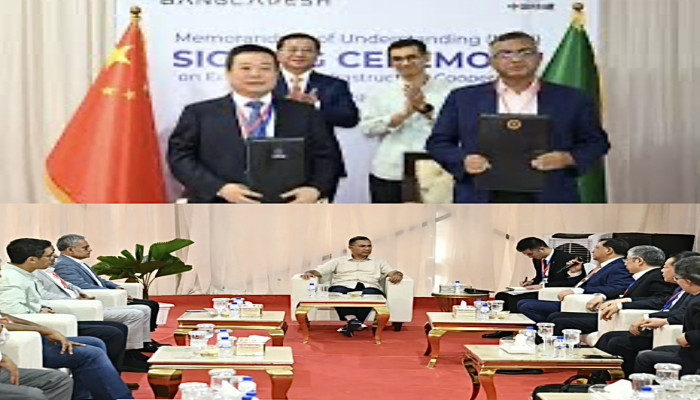
Bangladesh and China have signed a Memorandum of Understanding (MoU) to strengthen economic and infrastructure cooperation. The agreement was signed in Mongla, Bagerhat, on Thursday morning in the presence of Prime Minister Tarique Rahman.
Invest Bangladesh and China Railway Construction Corporation (CRCC) signed the agreement. Saleh Ahmed, Member of the Industrial Zone Division at Invest Bangladesh, represented Bangladesh, while Li Chongyang, Chairman of China Civil Engineering Construction Corporation, signed on behalf of China.
Ashik Chowdhury, Chairman of Invest Bangladesh, and Dai Hegen, Chairman of CRCC, attended the ceremony.
The MoU aims to expand investment and economic cooperation across several sectors, including infrastructure, transport, logistics, industry, energy, environment and skill development.
Following the signing, Prime Minister Tarique Rahman held discussions with the Chinese delegation. He stressed the need to attract more Chinese investment into Bangladesh and strengthen bilateral cooperation.
The Prime Minister said the government would take steps to establish more industrial factories in Mongla. He also highlighted plans to accelerate infrastructure development to ensure adequate power and gas supplies. These measures aim to boost economic activities from Mongla to the country's northern region.
Tarique Rahman also thanked the Chinese delegation for providing employment opportunities to Bangladeshi workers in Chinese enterprises across the Middle East. Describing the occasion as an important and joyful day, he appreciated Chinese investors for their contribution to building a strong economic foundation for Bangladesh.
Earlier, the Prime Minister arrived in Mongla, Bagerhat, by helicopter at 9:50 am local time.
His itinerary also includes laying the foundation stone for two container jetties under the Mongla Port Expansion and Modernisation Project. The project also covers the development of related infrastructure.



 Loading...please wait
Comments