




Bangladesh allows Chinese envoy to visit Teesta project site close to strategic Chicken’s Neck
- In Reports
- 01:44 PM, Jan 20, 2026
- Myind Staff
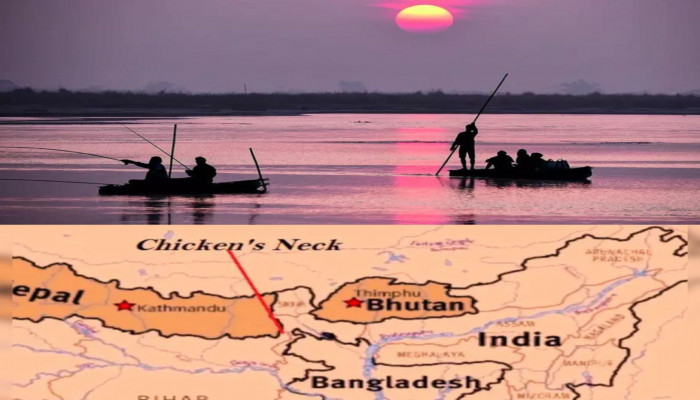
Bangladesh has permitted the Chinese ambassador to visit a site close to the strategic Siliguri corridor, also called the Chicken’s Neck, a narrow 22-kilometre land strip that links India’s mainland with its Northeastern states. This visit by the Chinese envoy took place at a time when relations between New Delhi and Dhaka were already strained.
On Monday, the Chinese ambassador to Bangladesh, Yao Wen, went to the Teesta project area located near the Chicken’s Neck. The purpose of the visit was linked to a technical assessment being conducted under the Teesta River Comprehensive Management and Restoration Project, according to the interim government led by Muhammad Yunus.
Officials say that the visit was part of ongoing work associated with the Teesta Master Plan (TMP). Syeda Rizwana Hasan, a water resources adviser who accompanied Yao to the project area in Rangpur’s Tepamadhupur Taluk Shahbazpur, said that China is eager to start the implementation of the Teesta Master Plan as soon as possible. She added that both Bangladesh and China are committed to implementing the TMP.
Hasan also explained that although both countries intend to begin work on the plan, the project’s scrutiny process has not yet been completed, and therefore, it is not possible to start work at this time.
The Teesta River is very important for Bangladesh as it supports agriculture and livelihoods in the country’s northern districts. For India, particularly West Bengal, the Teesta River is also critical. Over the years, Bangladesh and India have been trying to reach a water-sharing agreement on the river, but a final deal has not been reached yet, largely due to concerns from the West Bengal government.
The Chinese ambassador’s visit followed a meeting held on Sunday between Yao and Bangladesh’s National Security Adviser, Khalilur Rahman. After this meeting, the press wing of Chief Adviser Yunus posted on X (formerly Twitter) that “Both sides exchanged views on issues of mutual interest, reaffirming longstanding friendship and development cooperation between Bangladesh and China.”
The post also said that “Discussions included the Teesta River Comprehensive Management and Restoration Project and the proposed Bangladesh–China Friendship Hospital.” It further added that the Chinese ambassador informed that he would visit the Teesta project area, and reiterated China’s commitment to completing the ongoing technical assessment expeditiously.”
In addition to these discussions, the press wing noted that the Chinese ambassador “reaffirmed his government’s continued support for Bangladesh’s ongoing democratic transition and conveyed best wishes for the successful conduct of the forthcoming national elections.”
Muhammad Yunus, who became chief adviser in 2024, had earlier made comments during a 2025 interview in China. At that time, he had urged China to build a strong economic infrastructure in Bangladesh by using the country’s strategic position as “the only guardian of the ocean” in the region.
The visit of the Chinese envoy to an area near the Chicken’s Neck garnered attention due to the strategic importance of the narrow corridor. The Chicken’s Neck is a critical geographical stretch that connects India’s Northeastern states to the rest of the country, and its security and access are sensitive issues in regional geopolitics.
The decision by Bangladesh to allow this visit comes at a time when diplomatic relations with India are under stress. Although the Teesta project and related technical assessments are being described as cooperative and developmental in nature, some observers believe that high-level interactions involving third countries in areas close to such strategic corridors can have wider implications for regional relationships.



 Loading...please wait
Comments