




Bandar Abbas Port and the Strait of Hormuz: Economic Risks, Energy Security, and Geopolitical Challenges
- In Economics
- 12:29 PM, Jul 30, 2026
- Dhiresh Kulshrestha
Introduction
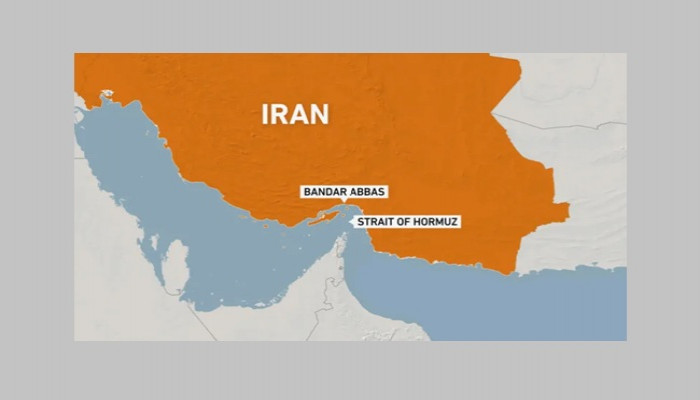
Located in the north of the Persian Gulf, Bandar Abbas is the biggest commercial and naval port in Iran. Additionally, it is the main entry point for containerised cargo and a primary trade route for imports and exports.
The Strait of Hormuz, on the other hand, is a vital maritime passageway linking the Persian Gulf with the Gulf of Oman and the Arabian Sea. Regardless of Bandar Abbas being one port, the Strait of Hormuz is a competitive international shipping centre, and any disturbances here will have a significant impact on world macroeconomics.
|
Indicator |
Bandar Abbas Port |
Strait of Hormuz |
|
Geographic Role |
Iran's largest commercial port |
Global maritime chokepoint |
|
Primary Function |
Cargo handling, container trade, Iranian exports |
Transit of crude oil, LNG and global trade |
|
Economic Impact |
Primarily national (Iran) |
Global energy and financial markets |
|
Strategic Importance |
Trade logistics |
Global energy security |
|
Main Stakeholders |
Iran |
GCC countries, Asia, Europe, global economy |

The port of Bandar Abbas is critical to containerised trade in Iran, making it of major importance for customs duties, distribution chains, and non-oil exports. The disruption or destruction at the port can negatively impact the Iranian economy, as the amount of trade decreases, logistics costs rise, customs revenues drop, and supply chain problems arise. Still, overall it is possible to redirect a great deal of the world trade that is taking place now through other regional ports and to minimise the negative consequences for the global economy.

Approximately one-fifth to one-fourth of maritime oil trade and significant propane exports go through the Strait of Hormuz, which constitutes the most important maritime energy choke point globally. This leads to a situation in which even a slight disruption to operations causes an immediate rise of oil and gas prices, an increase in shipping rates and insurance, growth of inflation, a decrease in manufacturing, and a slowdown in the world economy. As per estimates made by the IMF and the World Bank, any sort of prolonged disruption can lead to a drastic reduction of GDP as well as worsening inflation and food insecurity via increased energy and fertiliser pricing.
|
Economic Variable |
Bandar Abbas Disruption |
Strait of Hormuz Disruption |
|
Iran's GDP |
High impact |
Very High impact |
|
Global Oil Prices |
Limited |
Extremely High |
|
LNG Supply |
Minimal |
Severe |
|
Global Inflation |
Low |
High |
|
Shipping Costs |
Regional |
Global |
|
Financial Markets |
Limited |
Significant volatility |
|
Food Prices |
Minor |
Higher through energy and fertiliser costs |
In terms of the economy, Bandar Abbas is very important for Iran. When the port of Bandar Abbas is disrupted, this will only affect commerce and logistics for Iranians. However, disruption in the Strait of Hormuz sends shocks to other parts of the world through the energy market, inflation, shipping, financial markets, and growth.
Financial Institutions such as the IMF and World Bank have concluded that continued disruptions in Hormuz could lead to one of the biggest energy supply shocks in modern history.
References
- International Energy Agency (2026) Oil Market Report 2026 International Energy Agency https://www.iea.org/reports/oil-market-report
- International Monetary Fund (2026, March 30) How the war in the Middle East is affecting energy, trade, and finance. IMF Blog. https://www.imf.org/en/blogs/articles/2026/03/30/how-the-war-in-the-middle-east-is-affecting-energy-trade-and-finance
- International Monetary Fund (2026, April 13) Joint statement by the Heads of the International Energy Agency, International Monetary Fund, and World Bank Group (Press Release No. 26/117) https://www.imf.org/en/news/articles/2026/04/13/pr26117-joint-statement-by-the-heads-iea-imf-wbg
- United Nations Conference on Trade and Development (2026) Strait of Hormuz disruptions: Implications for global trade and development United Nations https://unctad.org/publication/strait-hormuz-disruptions-implications-global-trade-and-development
- World Bank (2026) Commodity Markets Outlook (April 2026) World Bank Group. https://www.worldbank.org/en/news/press-release/2026/04/28/commodity-markets-outlook-april-2026-press-release
- World Bank. (2026, March 26) World Bank Group statement on the conflict in the Middle East World Bank Group https://www.worldbank.org/en/news/statement/2026/03/26/world-bank-group-statement-on-the-conflict-in-the-middle-east
- World Bank. (2026) World Development Indicators. World Bank Open Data https://data.worldbank.org/
Disclaimer: The opinions expressed within this article are the personal opinions of the author. MyIndMakers is not responsible for the accuracy, completeness, suitability, or validity of any information on this article. All information is provided on an as-is basis. The information, facts or opinions appearing in the article do not reflect the views of MyindMakers and it does not assume any responsibility or liability for the same.



 Loading...please wait
Comments