



Baloch leader warns of possible Chinese troop deployment, writes to EAM S Jaishankar
- In Reports
- 06:38 PM, Jan 02, 2026
- Myind Staff
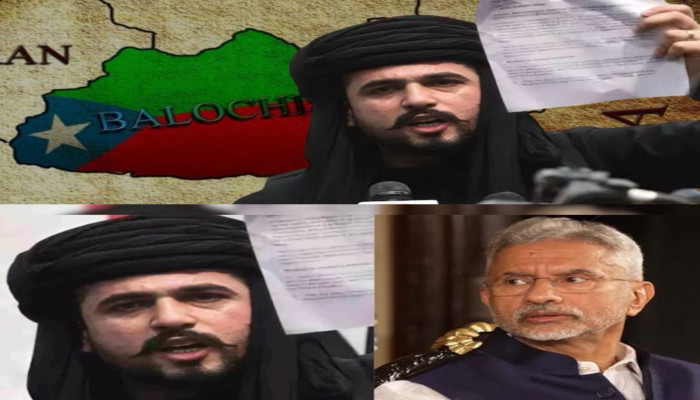
A Baloch leader has warned that China could deploy its military forces in Balochistan in the coming months, calling it a serious and immediate threat to regional stability and India’s security. The warning was issued through an open letter written to India’s External Affairs Minister S Jaishankar.
The letter, dated January 1, 2026, was written by Mir Yar Baloch, who described himself as a Baloch representative of the Republic of Balochistan. In the letter, he cautioned that the situation in Balochistan is becoming increasingly dangerous due to growing cooperation between Pakistan and China. He warned that if Balochistan’s “defence and freedom forces” continue to be ignored, China may move forward with a direct military presence in the region.
Mir Yar Baloch described such a development as a grave threat not only to Balochistan but also to India. He stressed that the presence of Chinese troops in the region would be unacceptable to the local population and could have serious long-term consequences.
In the letter, he wrote, “Should the capabilities of Balochistan's defence and freedom forces not be further bolstered and if they continue to be overlooked as per longstanding patterns, it is conceivable that China could deploy its military forces in Balochistan within a few months.”
He further warned about the consequences of such a move, stating, “The presence of Chinese boots on Balochistani soil without the will of the 60 million Baloch people would pose an unimaginable threat and challenge to the futures of both Bharat and Balochistan.”
Raising concerns about the China-Pakistan Economic Corridor (CPEC), Mir Yar Baloch said the project has now reached what he described as its final stages. According to him, this has made the situation in the region even more sensitive and dangerous. He argued that the strategic partnership between Pakistan and China is strengthening rapidly, increasing the risk of military involvement by China in Balochistan.
He called on India to consider closer cooperation with Balochistan, saying the threats faced by both sides are real and immediate. He urged for what he described as “tangible, reciprocal cooperation” between Bharat and Balochistan to address shared security concerns.
Mir Yar Baloch also spoke about the historical and cultural ties between India and Balochistan. He said these connections go back centuries and reflect a shared heritage. To support his point, he mentioned religious and cultural sites that symbolise this bond, including the Hinglaj Mata Temple, also known as the Nani Mandir, which is located in Balochistan and is considered sacred by many.
The letter also praised the Indian government’s recent actions against terrorism. Mir Yar Baloch specifically referred to Operation Sindoor, commending the Modi government for what he described as its strong response to terrorism. He said the operation targeted “terrorism hubs facilitated by Pakistan” and reflected India’s commitment to justice and regional peace.
He further wrote that the operation showed “exemplary courage and a steadfast commitment to regional security and justice”, especially in response to the Pahalgam terror attack.
According to Mir Yar Baloch, such actions demonstrate India’s resolve to counter threats that affect not just its own security but also the stability of the wider region.
The letter concluded on a hopeful note, with Mir Yar Baloch expressing optimism about future cooperation. He said he hopes for stronger ties and collaboration between what he described as “our two great nations.”
Through the open letter, the Baloch leader sought to draw attention to what he believes is an urgent and developing security challenge. By warning about a possible Chinese military presence in Balochistan, he called on India to recognise the seriousness of the situation and consider deeper engagement in the region.
The letter reflects growing concerns over regional geopolitics and highlights the fears of Baloch leaders regarding increasing foreign involvement in their land without the consent of the local population.



 Loading...please wait
Comments