




‘Bail is the rule and jail is the exception’, says Supreme Court even in UAPA cases
- In Reports
- 06:16 PM, May 18, 2026
- Myind Staff
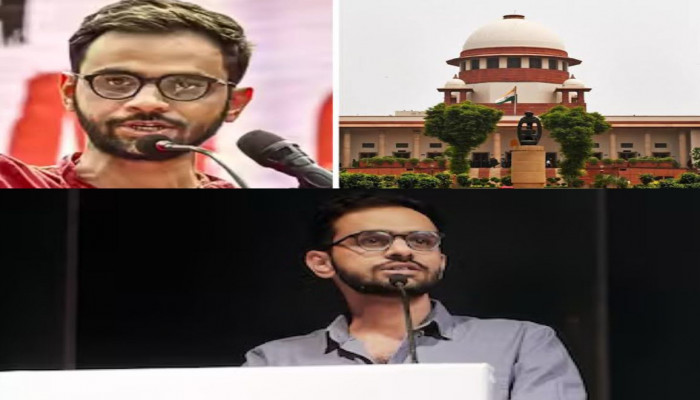
The Supreme Court on Monday made significant observations on bail in cases under the Unlawful Activities (Prevention) Act (UAPA). The court said the principle that “bail is the rule and jail is the exception” continues to apply even in cases under the stringent anti-terror law. While hearing a separate UAPA matter, the court also raised concerns over its earlier decision refusing bail to former JNU student leader Umar Khalid in the 2020 Delhi riots conspiracy case.
A bench of Justice BV Nagarathna and Justice Bhuyan said that strict bail conditions under Section 43D (5) of the UAPA cannot override the constitutional right to personal liberty guaranteed under Article 21. The court stressed that denial of bail should not become automatic simply because the accused has been booked under the UAPA.
“Therefore, we have no manner of doubt in stating that even under the UAPA, bail is the rule and jail is the exception,” the court held.
The observations came while the Supreme Court granted bail to Syed Iftikhar Andrabi, who has spent more than six years in jail in a UAPA case related to alleged terror funding through narcotics supply. During the hearing, the bench referred to the January 2026 judgment in which bail was denied to Umar Khalid and activist Sharjeel Imam. The court said it found it “difficult to accept” the approach adopted in that decision.
Umar Khalid has remained in custody since September 2020. His bail plea was rejected by the Supreme Court in January this year, and his review petition was dismissed in April. The latest observations by the court indicate that the earlier ruling may not have properly followed the legal principles laid down by a larger bench of the Supreme Court in 2021.
The bench referred to the landmark 2021 judgment in Union of India vs KA Najeeb. In that ruling, the Supreme Court had held that a violation of the right to a speedy trial can be a valid ground for granting bail in UAPA cases, even with the law’s strict bail provisions. The judges noted that this binding precedent was not properly applied while rejecting Khalid’s bail plea.
Justice Bhuyan underlined the importance of judicial discipline and following precedents set by larger benches of the Supreme Court.
“A judgment rendered by a bench of lesser strength is bound by the law declared by the bench of greater strength. Judicial discipline mandates that such a binding precedent must either be followed or, in case of doubt, be referred to a larger bench. A smaller bench cannot dilute, circumvent or disregard the ratio of a larger bench,” Justice Bhuyan said.
The court also referred to another UAPA judgment involving Gurwinder Singh. Justice Bhuyan said the interpretation adopted in both the Umar Khalid and Gurwinder Singh cases appeared different from the principles laid down in the 2021 KA Najeeb ruling.
The bench specifically objected to the “two-prong test” applied in the Gurwinder Singh case. Under that approach, bail could be granted only if the accused was able to show at the initial stage that the prosecution’s case lacked merit. The court warned that such a standard could make prolonged pre-trial detention effectively punitive.
“If this test is accepted, the State needs to only satisfy a low prima facie threshold while the trial may continue for years, with the result that pre-trial incarceration begins to acquire a post-trial punitive character. And even then, no court will ever grant bail, no matter the length of period of such incarceration, because the case is prima facie true,” the court said further.
The bench emphasised that the 2021 KA Najeeb judgment clearly recognised prolonged incarceration and delay in trial as valid reasons for granting bail in UAPA matters. It indicated that constitutional courts cannot ignore the right to liberty merely because serious charges have been framed under anti-terror laws.
The ruling is expected to have wider implications for several pending bail pleas in UAPA cases across the country. It could particularly impact cases linked to the 2020 Delhi riots conspiracy investigation, where many accused persons have remained in custody for years while trials are yet to conclude.
Umar Khalid, a former student leader from Jawaharlal Nehru University, was arrested in September 2020 in connection with the alleged larger conspiracy behind the February 2020 Delhi riots. Delhi Police accused him of delivering provocative speeches during the anti-CAA protests and alleged that he was part of a planned conspiracy that led to the violence. He was charged under the UAPA along with several provisions of the Indian Penal Code.
Khalid has denied all allegations against him. He has maintained that he was not present in Delhi when the riots took place.
In January 2026, the Supreme Court denied bail to both Umar Khalid and Sharjeel Imam while granting bail to five other accused persons in the same case, including Gulfisha Fatima and Meeran Haider. At the time, the court had observed that Khalid and Imam stood on a “qualitatively different footing” from the other accused. It said the allegations against them were “prima facie true” under the UAPA’s stringent bail provisions.
The earlier bench had described them as key conspirators in the case, while the other accused received bail mainly because of prolonged incarceration and delays in the trial process. However, the latest observations by the Supreme Court now place renewed focus on whether courts should give greater weight to personal liberty and delay in trial while deciding bail pleas under the UAPA.



 Loading...please wait
Comments