




AUKUS unveils armed underwater drone fleet to challenge China's growing naval presence
- In Reports
- 06:17 PM, Jun 01, 2026
- Myind Staff
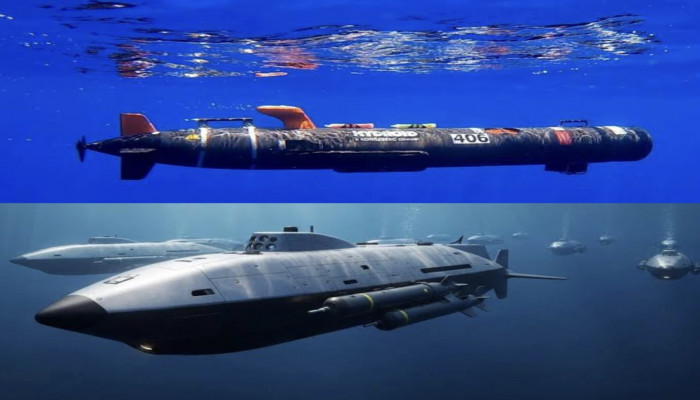
The AUKUS security partnership, comprising the United States, the United Kingdom, and Australia, has launched a major new defence initiative focused on strengthening underwater security in the Indo-Pacific. Under the alliance's Pillar Two framework, the three countries will jointly develop a fleet of advanced armed autonomous underwater vehicles (AUVs). The Aquaman tech is aimed at countering China's rapidly expanding naval capabilities and growing submarine operations in the South China Sea.
The project represents a significant shift in modern naval strategy. Instead of relying only on expensive crewed platforms such as submarines and aircraft carriers, AUKUS is investing in a network of autonomous underwater drones. These unmanned systems can be deployed at important maritime choke points and are designed to operate for extended periods without human intervention. Their role will be to monitor disputed waters, track hostile activity, and protect critical underwater infrastructure that supports global communications and trade.
The initiative comes as China continues to expand the capabilities of the People's Liberation Army Navy (PLAN). Over the past several years, Beijing has invested heavily in naval modernisation, underwater mapping programmes, and the deployment of advanced diesel-electric submarines known for their stealth. These developments have strengthened China's influence across the South China Sea and increased concerns among Western allies about regional security.
To address these challenges, the AUKUS partners are incorporating artificial intelligence and long-endurance underwater systems into their defence planning. The armed drones are expected to operate in contested waters where sending high-value assets such as future Australian nuclear-powered submarines or US aircraft carriers may involve greater risks. Their deployment is intended to improve deterrence and strengthen the military position of the alliance in the region.
One of the most important functions of the underwater drone fleet will be persistent surveillance. China’s submarine force depends on deep-water routes and underwater passages to move into the broader Western Pacific. AUKUS drones can be positioned in these strategic locations and remain underwater for months at a time. Operating quietly and with minimal detection risk, they will monitor submarine activity and gather intelligence on movements beneath the surface.
The drones are also expected to carry weapons such as torpedoes or sea mines. This capability allows them to act as autonomous defensive platforms capable of intercepting threats if required. Their presence could create a powerful underwater barrier that makes it much harder for Chinese submarines to move through key maritime corridors without being detected. Chinese naval commanders may face greater challenges when planning covert underwater operations.
Beyond their offensive and defensive capabilities, the drones will serve as a force multiplier for allied naval operations. They will collect acoustic information, environmental data, and other intelligence while submerged. When they approach the surface, the systems can securely transmit this information through satellite networks to allied command centres. This process will help create a more detailed and accurate picture of underwater activities across the region.
The enhanced situational awareness provided by the drone network could significantly reduce the stealth advantages traditionally enjoyed by submarines. China has invested heavily in next-generation ballistic missile submarines and attack submarines. However, a widespread network of autonomous underwater sensors and armed platforms could make it increasingly difficult for these vessels to operate undetected. This would strengthen the ability of AUKUS nations to monitor and respond to potential threats beneath the ocean surface.
Apart from military applications, the project also focuses on protecting vital underwater infrastructure. Strategic planners in Washington, London, and Canberra have long expressed concerns about the vulnerability of subsea assets during periods of tension or conflict. The South China Sea contains a vast network of undersea communication cables and energy pipelines that are essential to regional economies and global connectivity.
Security experts have repeatedly warned that these systems could become targets during a crisis. Concerns have been raised about the possibility of sabotage conducted through grey-zone tactics involving maritime militias or specialised naval units. Damage to these networks could disrupt communications, affect financial systems, and interrupt energy supplies across multiple countries.
The new fleet of underwater drones is expected to provide continuous monitoring and protection for these critical assets. By maintaining a constant presence near important subsea routes, the autonomous systems can act as a strong deterrent against potential acts of sabotage. Their ability to remain deployed for long periods gives the alliance a persistent security capability that traditional naval vessels cannot easily provide.
Another major advantage of the programme is cost efficiency. Unlike large warships or submarines, these drones can be produced in greater numbers and are considered expendable if lost during operations. This allows AUKUS nations to maintain a high operational tempo without putting military personnel at risk. The approach also reduces dependence on costly crewed platforms while expanding the alliance’s overall reach.
As competition beneath the oceans continues to intensify, the AUKUS initiative highlights the growing importance of autonomous technology in modern warfare. By combining artificial intelligence, long-endurance underwater systems, and armed capabilities, the alliance aims to strengthen deterrence and maintain security across key Indo-Pacific waterways. The project reflects a broader effort to ensure that critical sea lanes, communication networks, and underwater infrastructure remain protected amid rising regional tensions and China's expanding naval presence.



 Loading...please wait
Comments