




Astronaut Shubhanshu Shukla unveils BHEEM concept of future homes on Moon, Mars
- In Reports
- 12:52 PM, Sep 02, 2026
- Myind Staff
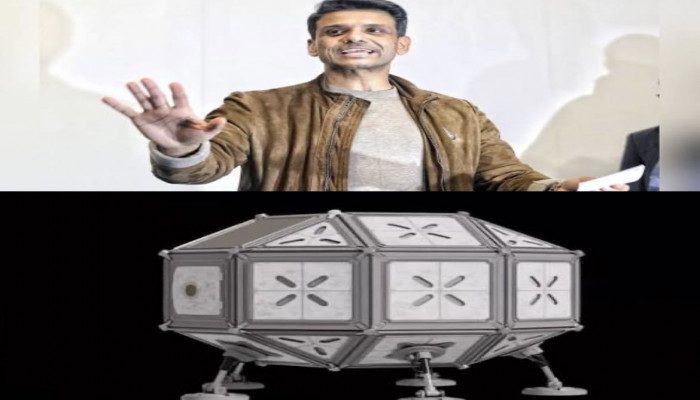
Indian astronaut Group Captain Shubhanshu Shukla has taken India’s human-spaceflight ambitions beyond rockets and spacecraft by exploring a question that future astronauts will face after landing: where will they live? Shukla has unveiled details of an academic research project that proposes a possible habitat for humans living beyond Earth. The concept is called Bharatiya Habitable Expandable Extraterrestrial Habitat, or B.H.E.E.M.
The habitat idea took shape during the Indian phase of Shukla’s astronaut training after he returned from Russia. His training focused on India’s launch vehicle and orbital module, along with physical conditioning and extensive preparation for spaceflight. At the same time, astronauts were encouraged to take up academic research linked to the future of human space exploration.
Shukla chose to look beyond the spacecraft he was preparing to fly. His research examined how humans could live and work after reaching other worlds. “I decided to look beyond the spacecraft we were training to fly in and think about where humans might live after we land,” Shukla said while sharing details of his research.
His study focused on extraterrestrial habitats and the technologies that could make long-term human activity possible on destinations such as the Moon and Mars. The research later led to the development of B.H.E.E.M. The concept was developed at the Aloke Lab at the Indian Institute of Science in Bengaluru.
B.H.E.E.M. focuses on one of the key challenges that will emerge as human space exploration moves further from Earth. Reaching another world is only one part of the challenge. Humans will also need safe and practical places to live once they arrive. A long-term presence on the Moon or Mars will require habitats that can protect astronauts from harsh conditions while supporting their daily activities.
Future habitats will need to shield astronauts from intense space radiation and extreme temperatures. They will also have to operate in environments that could pose several other risks. Reliable life-support systems will be essential for providing breathable air and other basic needs. Habitats will also need dependable energy generation and storage systems.
Construction will present another major challenge. Future explorers may need practical ways to build, expand and maintain living spaces far from Earth. These habitats will have to support human life for extended periods while working with limited resources and difficult conditions.
For Shukla, the challenge can be summed up by a basic question. “The simple question of where do we live?” remains one of the fundamental challenges of future exploration, Shukla said.
The astronaut also stressed that research into extraterrestrial living cannot wait until humans are ready to establish permanent settlements. Such technologies will require years of development, testing and improvement. Scientists and engineers need to start working on them well before the first long-term missions take place.
“If we want humans to live beyond Earth 20 years from now, the work cannot begin 20 years from now. It has to begin today,” he said.
India has been steadily expanding its human-spaceflight and deep-space ambitions. The Gaganyaan programme is expected to provide an important foundation for future missions involving Indian astronauts in low-Earth orbit. The country also aims to build capabilities that can eventually support human missions beyond low-Earth orbit.
Shukla’s B.H.E.E.M. research fits into this broader vision. It highlights the need to develop technologies not only for sending astronauts into space but also for supporting them once they reach other worlds. Such research could become increasingly important as countries plan more ambitious missions to the Moon and Mars.
The project also reflects the growing role of academic research in preparing for future space exploration. Concepts for extraterrestrial habitats can help scientists and engineers examine the practical problems involved in sustaining human life away from Earth. Research carried out today could help shape the systems used by astronauts decades from now.
Shukla believes imagining these future habitats is itself an important starting point. “The first step towards building a habitat on another world may not be laying its first brick,” Shukla said. “It may simply be daring to imagine what that habitat could look like.”
As countries look towards establishing a stronger human presence on the Moon and eventually exploring Mars, the focus is slowly shifting from simply reaching other worlds to finding ways to live there. Shukla’s B.H.E.E.M. concept places India in that conversation, bringing the idea of future extraterrestrial homes into research laboratories even before humans begin building them on another planet.



 Loading...please wait
Comments