




Assam’s UCC bill makes marriage registration mandatory, bans polygamy
- In Reports
- 06:23 PM, May 25, 2026
- Myind Staff
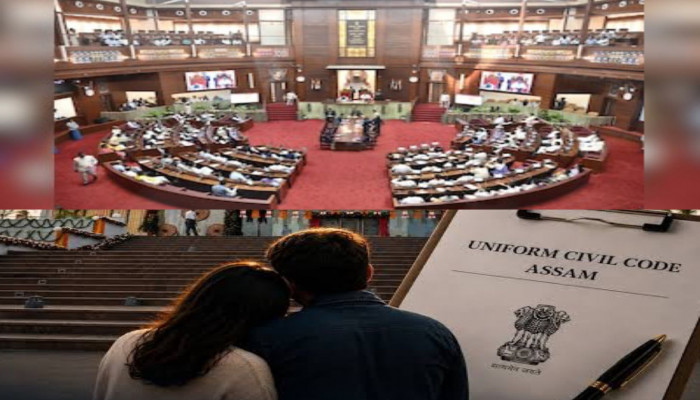
The Assam government on Monday introduced the Uniform Civil Code Bill, Assam, 2026, in the state Assembly. The proposed legislation seeks to bring uniform rules related to marriage, divorce, inheritance and live-in relationships. It also proposes a ban on polygamy and makes the registration of marriages and divorces compulsory across the state. The Bill was tabled by Atul Bora during the first session of the newly elected Assam Legislative Assembly, held weeks after the NDA government returned to power in the state.
The introduction of the Bill sparked criticism from opposition parties, including the Congress, Raijor Dal and Trinamool Congress. The parties questioned the government’s decision to table such important legislation without wider public consultation. They demanded that discussions with different communities and stakeholders should take place before the Bill is taken up further in the Assembly.
According to the statement of objects and reasons attached to the Bill, the proposed law aims to establish common standards for marriage in Assam. It fixes the minimum marriageable age at 21 years for men and 18 years for women. The legislation also seeks to prohibit polygamy in the state. At the same time, the government has said the Bill will continue to respect Assam’s religious and cultural diversity.
The statement says, “Importantly, it protects Assam’s cultural diversity by allowing marriages to be performed according to existing religious and customary rights.” Through this provision, the government has tried to assure different communities that traditional marriage customs and religious practices will not be removed under the proposed law.
Another major feature of the Bill is compulsory registration of all marriages and divorces. The government has said this move is aimed at creating legal clarity and ensuring proper documentation of marital relationships. The Bill also introduces a legal framework for live-in relationships, a proposal that has attracted significant public attention.
Explaining the reason behind this provision, the statement says, “By requiring registration, the law ensures that the rights of partners – and any children born from such unions – are formally recognised and protected.” The proposed legislation aims to give legal protection to people living together without marriage and to safeguard the rights of children born from such relationships.
The Bill also proposes uniform inheritance rules for all residents covered under the legislation. According to the government, this is intended to ensure fairness in matters related to property and transfer of assets. The statement attached to the Bill says the proposed rules are aimed at “ensuring that the transfer of assets is handled justly for all residents of the state.” The government believes a common framework for inheritance will help reduce legal complications and discrimination.
The legislation will apply across Assam and will also cover residents of the state who live outside its territorial boundaries. However, the Bill clearly states that it will not apply to members of Scheduled Tribes. Tribal communities in Assam have often expressed concerns over the implementation of a Uniform Civil Code because of the protection given to their customs and traditional practices under the Constitution.
The exemption for Scheduled Tribes is in line with the BJP’s election promise made before the Assembly polls. In its manifesto, the party had promised implementation of the Uniform Civil Code while keeping tribal communities and areas protected under the Sixth Schedule of the Constitution outside its scope. The BJP had presented the UCC as one of its major commitments during the election campaign.
The Bill is expected to come up for detailed discussion in the Assembly later this week. The debate is likely to witness strong political reactions from both the ruling alliance and opposition parties. While the government has described the Bill as a step towards legal uniformity and protection of rights, opposition parties continue to raise concerns over the timing of the legislation and the lack of broader consultation before its introduction.



 Loading...please wait
Comments