




Asim Munir plans to split Pakistan’s four provinces into smaller administrative units
- In Reports
- 05:20 PM, Oct 09, 2026
- Myind Staff
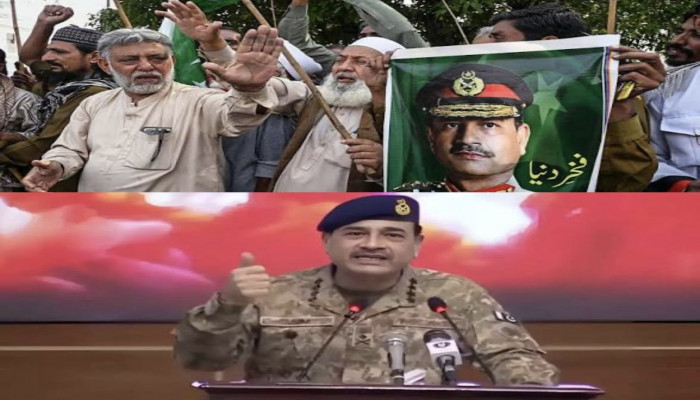
Pakistan’s army chief, Field Marshal Asim Munir, is reportedly considering a major restructuring of the country’s political map by dividing its four provinces into smaller administrative units. According to The Economist, the proposal could create 12 to 15 new provinces or as many as 160 smaller territories. The move could reshape Pakistan’s power structure and strengthen the military establishment’s influence over regional governments.
Pakistan currently has four provinces: Punjab, Sindh, Khyber Pakhtunkhwa and Balochistan. Munir has argued that their size makes effective governance difficult. However, dividing them could also weaken powerful regional political bases and increase the federal government’s control over local administrations.
Punjab, with around 128 million people, accounts for more than half of Pakistan’s population. Balochistan, the country’s largest province by area, has only around 15 million residents. Managing Punjab’s vast population has created significant administrative challenges. In rural areas, people often travel for hours to access government services. Fewer than a quarter of Punjabis have reliable access to safe drinking water at home, according to the report.
Pakistan continues to struggle with weak economic growth, high inflation and high debt-servicing costs. However, the country’s problems extend beyond its administrative structure.
Pakistan’s military has directly ruled the country for more than two-fifths of its history. Elected governments have frequently operated under its influence. The Economist noted that the military itself contributes to several problems that Munir’s proposal seeks to address, including its control over valuable land and businesses and its substantial share of state resources.
Smaller provinces could bring government services closer to citizens. However, weaker regional administrations could also become more dependent on the federal government, allowing the military establishment to expand its influence.
Punjab has traditionally been a stronghold of the Pakistan Muslim League-Nawaz (PML-N), while Sindh remains the main base of the Pakistan Peoples’ Party (PPP). Both provinces have served as important centres of political power, including during periods of military rule.
Dividing these provinces could reduce their political and electoral influence, weakening their ability to counter the central government. The proposal therefore raises questions about whether administrative reform could also serve as a tool for consolidating power.
The idea is not new. Planning Minister Ahsan Iqbal has previously supported creating more provinces and smaller administrative units, including a proposal for 12 to 15 provinces and up to 160 districts.
Munir has strengthened his position through cooperation with the PML-N and PPP. Meanwhile, jailed former prime minister Imran Khan, who leads Pakistan’s third major political force, remains a key opponent. His supporters have protested his imprisonment, while authorities have cracked down on his movement.
The debate comes amid fresh tensions in Khyber Pakhtunkhwa, governed by Khan’s Pakistan Tehreek-e-Insaf (PTI). Thousands of supporters began marching towards Islamabad after talks between the party and the government failed. Authorities deployed heavy security around the capital and vowed to stop protesters from entering. The unrest has further strained relations between the federal government and the PTI-led provincial administration, which is also battling militancy.
Balochistan presents another challenge. The province has faced years of separatist violence linked to independence demands, resource disputes and Islamabad’s role in local affairs. Dividing it could intensify sensitive questions over territory and political representation.
Pakistan-occupied Kashmir has also witnessed periodic protests over governance, taxation, rising prices and economic hardship. These tensions add to the political challenges surrounding any attempt to redraw Pakistan’s internal boundaries.



 Loading...please wait
Comments