




Army used AI to predict and stop Chinese move along LAC in Arunachal: Top Officer
- In Reports
- 12:48 PM, Feb 19, 2026
- Myind Staff
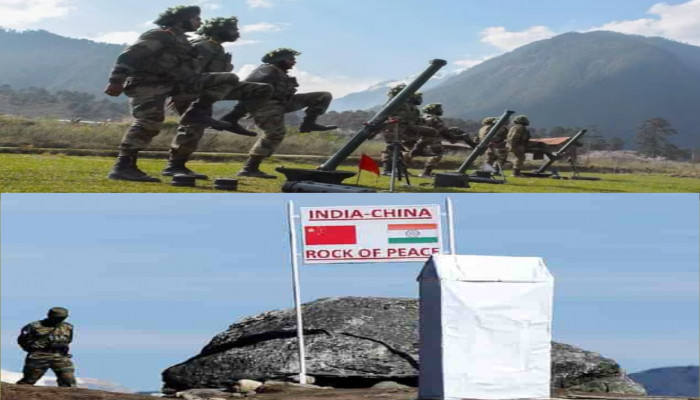
India’s armed forces successfully used Artificial Intelligence (AI) based prediction tools to anticipate and stop an unusual Chinese move along the Line of Actual Control (LAC) in Arunachal Pradesh, a senior Indian Army officer revealed at the India AI Impact Summit 2026.
Lt Gen Dinesh Singh Rana, Commander-in-Chief of the Strategic Forces Command, said that AI is no longer just a developing technology but has already started playing a major role in modern warfare and national security planning. He explained that during his time as a Corps Commander responsible for security along the LAC in Arunachal Pradesh, the Indian Army used a locally developed, low-cost AI system that helped detect early signs of Chinese military activity in a disputed region.
According to Lt. Gen. Rana, the AI system identified warning signals that something unusual was happening on the other side of the border. These indicators suggested that Chinese forces were quietly building up strength in the area. He said the AI-based tools allowed Indian forces to understand the situation earlier than usual and gave them enough time to act.
“We could see through some AI systems that something was building up. Finally, we were able to predict the timing of their move,” the officer stated while speaking at the summit.
He described the Chinese action as “unprecedented,” meaning it was not a routine or expected type of military movement. However, because the AI tools helped predict the timing of the move, the Indian Army was able to prepare in advance.
Lt Gen Rana said this early prediction helped Indian forces in many ways. It allowed them to position troops properly and plan for evacuation if needed. Most importantly, he said, it ensured that India faced no casualties during the incident. This showed how AI can play a major role in saving lives and strengthening defence preparedness.
During his speech, Lt. Gen. Rana stressed that AI is transforming the way wars are fought. He said AI is not a futuristic idea anymore, but something that is shaping military strategies across the world right now.
He pointed out that countries like the United States and China are investing heavily in AI, calling it part of a global “AI race.” According to him, the competition for AI leadership is not just about technology but about power, influence, and future security.
He explained that AI is not limited to software tools. It affects many areas such as military workforce training, building strong infrastructure, and redesigning command systems. Major global powers are already using AI to upgrade their command-and-control systems, making decision-making faster and more efficient.
He also stated that many nations are now using AI for multiple defence tasks, including autonomous weapons, precision strikes, identifying targets, improving military logistics, predictive maintenance, tracking activities in maritime regions, electronic warfare, cyber defence, and fighting misinformation.
Lt Gen Rana also explained that AI plays an important role in the cyber domain. AI-powered systems can be used for both offensive and defensive operations. On the one hand, it can help carry out complex cyberattacks. On the other hand, it can strengthen defence systems by quickly finding weak points and fixing them before they can be exploited.
“In the cyber domain, AI-powered systems can both conduct sophisticated offensive operations and strengthen defensive capabilities by identifying vulnerabilities and plugging gaps,” he said.
While highlighting the benefits, Lt. Gen. Rana also warned about future dangers linked to advanced AI. He said that the world is currently using narrow AI, which is designed for specific tasks. But in the future, AI could move towards Artificial Superintelligence (ASI), which would be far more powerful and capable than today’s systems.
He explained that if ASI is achieved, it could create huge opportunities but also serious risks. Since AI is a dual-use technology, it can be used for both peaceful purposes and harmful purposes. Lt. Gen. Rana warned that such advanced AI could be misused by rogue actors, extremist groups, or hostile states.
He compared this risk to the Cold War period, when nuclear weapons were used as tools of deterrence and strategic pressure. He said AI could become a similar tool for strategic coercion.
However, he also noted that controlling the spread of AI would be much more difficult than nuclear technology. Nuclear weapons require physical materials and facilities, but AI is digital and can spread quickly through software systems. This makes regulation and control much harder.
Lt. Gen. Rana said India must take AI security planning seriously. He referred to lessons from the Russia-Ukraine conflict, stating that modern wars show the importance of scalable and affordable battlefield technologies.
He said that instead of depending only on expensive high-end systems, India must focus on building low-cost AI tools and autonomous systems, such as drones that can be used widely during conflicts.
He strongly urged India to develop a complete AI security doctrine. According to him, this doctrine should bring together inputs from the economy, cyber security, space technology, and the military. This would help the leadership understand the long-term impact of major strategic decisions, including second- and third-order effects.
He concluded by saying that as India moves towards becoming a global superpower, it must also act responsibly in the field of AI, just like it has done with nuclear capabilities.
“As we aspire to become a superpower, we must also become a responsible AI power – just as we are a responsible nuclear power,” he said.
He also added that India would use advanced AI responsibly once it develops and gains such capabilities.



 Loading...please wait
Comments