




Army raises dedicated drone battalion Baaz to strengthen surveillance along western front
- In Reports
- 02:48 PM, Aug 24, 2026
- Myind Staff
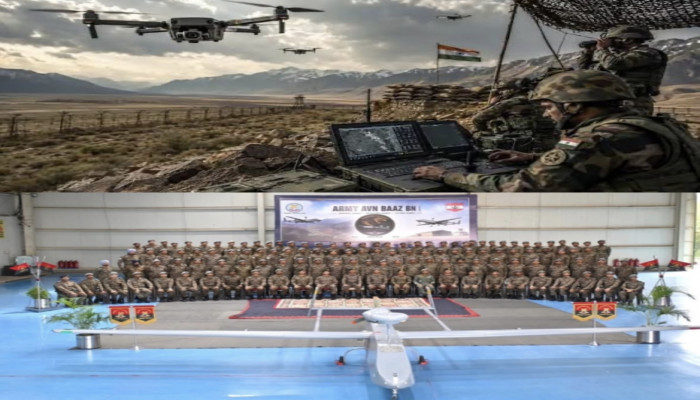
The Indian Army has raised its first dedicated drone battalion along the western front with Pakistan. The move marks a major step in the Army’s ongoing transformation after Operation Sindoor. The newly formed Baaz Battalion will operate under the Jalandhar-based 11 Corps, also known as the Vajra Corps. The corps oversees sensitive stretches of the India-Pakistan border in northern Punjab.
The Army has chosen the name Baaz, which means hawk in Hindi, to reflect the unit’s focus on sharp surveillance, long-range tracking and accurate target identification. The battalion has been raised in Jalandhar and will monitor large stretches of the northern Punjab frontier. The region has seen intense fighting during the wars of 1965 and 1971.
The Army is now working to induct and integrate more drones at different levels of its formations. These drones will support both combat and combat-support operations. Infantry battalions will receive Ashni platoons. These platoons will use quadcopter-style drones for reconnaissance and offensive missions.
The Artillery will also expand its drone capabilities. Artillery regiments are set to receive Divyastra batteries and raise Shaktiban regiments. These formations will operate longer-range drones to detect targets deep inside hostile territory. They will also use loitering munitions with different ranges. These systems can strike targets deep behind enemy lines.
The Armoured Corps is also testing Shaurya squadrons. These squadrons will help armoured units use aerial assets to reconnoitre areas more effectively. The capability will strengthen both defensive and offensive operations.
The Baaz Battalion will operate on a much larger scale than the small drone platoons attached to infantry units. It will use larger platforms such as the Searcher and serve as a central hub for the Army’s growing drone network. The battalion will handle flight operations, data exploitation, maintenance, software updates and coordination with ground forces.
The unit will also be capable of operating a wide range of drone platforms. These will include long-endurance unmanned aerial vehicles such as the American MQ-9B and Israeli Heron and Hermes systems. These platforms will give frontline commanders persistent surveillance and deep-penetration reconnaissance capabilities. They will also provide real-time information on border areas and locations deeper inside enemy territory.
The new capability will help commanders build a clearer picture of enemy forces. It will track their order of battle and monitor how those forces move across time and space. This will be especially important during rapidly changing battle situations. The Baaz Battalion will work alongside existing drone capabilities and bring them under a more standardised command structure.
The Army also wants to maintain a higher operational tempo while handling the large amount of information produced by its expanding drone fleet. Processing this data quickly will be critical for commanders on the ground. AI-based battlefield decision-support systems will help sort and prioritise information. These systems are expected to support operational planning and help shape battlefield decisions.
The decision to expand drone capabilities comes from lessons learned during recent military operations. The prolonged border standoff with China along the Line of Actual Control highlighted the growing importance of drones and surveillance systems. The tactical outcomes of Operation Sindoor against Pakistan in May last year further showed how these technologies can influence battlefield decisions.
The Army has not yet finalised the number of Baaz Battalions it plans to raise. However, officials expect the model to be adopted across other field formations over time. This would allow the Army to build a wider and more integrated drone network across its operational areas.
Jalandhar also hosts an Army Aviation Squadron that operates Cheetah and Chetak helicopters. Apart from its operational duties, the squadron has played an active role in Humanitarian Assistance and Disaster Relief operations across Punjab. The creation of the Baaz Battalion in the same city adds another major aerial capability to the Army’s presence in the region.



 Loading...please wait
Comments