




Appeals Court halts Trump’s $400 million White House ballroom construction
- In Reports
- 03:50 PM, Aug 08, 2026
- Myind Staff
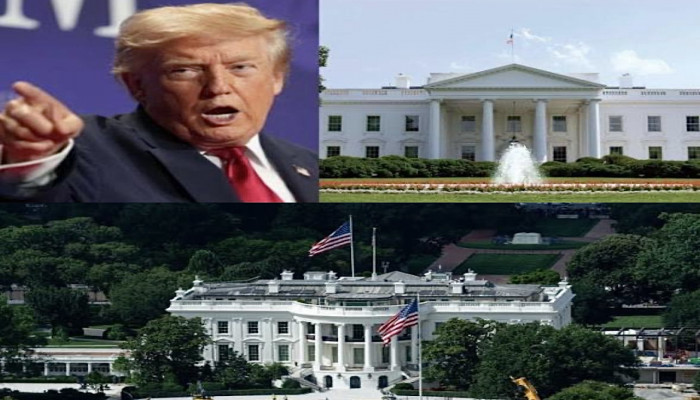
A U.S. federal appeals court has ordered the Donald Trump administration to stop above-ground construction of a $400 million ballroom planned on the site of the White House’s demolished East Wing. The ruling is a major setback for Trump and puts his presidential authority at the centre of a legal battle over changes to the White House complex.
The Washington-based U.S. Court of Appeals for the District of Columbia Circuit ruled 2-1 on Friday that the administration cannot proceed with the project without congressional approval. The court upheld a preliminary injunction secured by the National Trust for Historic Preservation. The group sued after the administration demolished the East Wing and started work on a 90,000-square-foot (8,360-square-meter) ballroom without seeking congressional approval.
“Each President is a temporary tenant, not the owner, of the White House,” the court’s majority said. It added that a president cannot fundamentally reshape the building without congressional approval. “Whether or not a massive ballroom should be constructed is for Congress to decide and is not a matter for Executive self-help,” the panel's majority wrote.
The appeals court has put its ruling on hold for 14 days. The pause gives the Trump administration time to appeal the decision to the U.S. Supreme Court. Trump has already said his administration will take the case to the highest court.
Trump has increasingly presented the ballroom as a national security requirement. In a post on Truth Social on Friday, he referred to the planned structure as a “military centre”. He called the appeals court decision “horrendous” and politically motivated. Trump said the ruling could leave him, other White House officials and visitors vulnerable to attacks.
“This unjust decision must be overturned by the Supreme Court in its entirety,” Trump wrote. He said the ballroom plan includes bomb shelters, medical facilities, protection from drones and missiles, along with other security measures. He described these features as “all tied together as one big, expensive, and very complex unit.”
National Trust President Brent Leggs welcomed the court’s decision. He said the ruling was “a great day for our country and for the American people's right to voice their opinions about the historic places they cherish, including the White House.”
The latest ruling follows two decisions by U.S. District Judge Richard Leon, who had already blocked above-ground construction at the site. Leon, who was appointed by Republican former President George W. Bush, allowed underground work to continue. Trump appealed those decisions, leading to the latest review by the appeals court.
The administration has described the ballroom as necessary for hosting large formal events and improving security at the White House. The project is part of several efforts by Trump to reshape central Washington’s government buildings and national monuments. The ballroom is among the most significant of these plans.
Trump is also facing a separate legal dispute involving the Kennedy Centre performing arts venue. A judge recently ruled that Trump’s name had been illegally added to the exterior of the building and ordered that it be removed.
During arguments before the D.C. Circuit on June 5, Justice Department attorney Yaakov Roth argued that federal courts should not interfere with the privately funded ballroom project. He said the National Trust’s “architectural preference” should not outweigh national security concerns. Roth pointed to evidence that the former East Wing had left the president and others inside the White House exposed to possible attacks.
The appeals court’s majority rejected the argument. Democratic-appointed Circuit Judges Patricia Millett and Brad Garcia said their decision does not permanently prevent the construction of a ballroom. Instead, it stops above-ground work while the lawsuit continues and until the White House obtains approval from Congress.
“National security arguments “are not an automatic get-out-of-law-free card,” the opinion said.
The judges also strongly criticised the administration’s position on presidential power. “The bold assertion that the Executive can act with utter lawlessness, destroying treasured national landmarks and harming the interests of individuals, and that no court can stop it flouts our constitutional order,” the judges wrote.
Circuit Judge Neomi Rao, who was appointed by Trump during his first term, disagreed with the majority. In her dissent, she said the lower court had gone beyond the proper role of federal judges by blocking the project. She argued that construction should be allowed to continue.
“The district court seized supervision of construction at the White House, and my colleagues affirm this judicial overreach,” Rao wrote.
The legal fight also comes as the cost of the ballroom has risen sharply. Trump has defended the project’s price, which has doubled from its initial estimate. In a Truth Social post in May, Trump said the higher cost was linked to the larger size and improved quality of the project. He said, “it is approximately twice the size, and a far higher quality, than the original proposal” and promised, “it will be magnificent, safe, and secure!”
The appeals court’s decision now leaves the project on hold above ground while the administration prepares its next legal challenge. The Supreme Court will ultimately decide whether Trump can continue the project without first securing congressional approval.



 Loading...please wait
Comments