



America’s road rules relaxed compared to other nations
- In Reports
- 07:35 PM, Oct 25, 2023
- James McCay
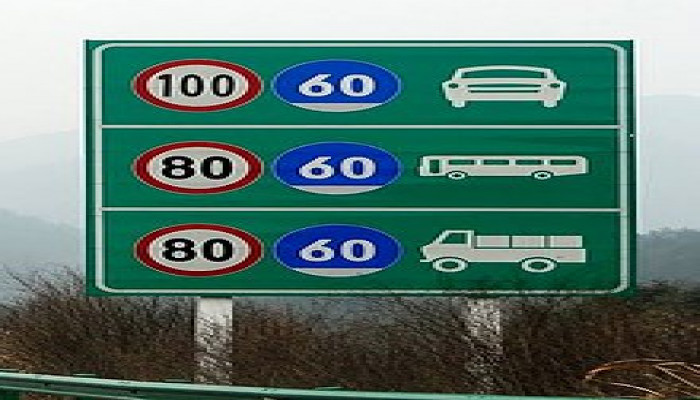
Road rules are designed to help keep people safe as they travel around, while also ensuring a steady and organised flow of traffic. However, not all countries implement such road rules equally.
Research from Compare the Market AU analysed six different metrics from 17 countries, including blood alcohol limits, speed limits, mobile phone restrictions and seatbelt requirements, in order to determine which country has the strictest road rules.
America was ranked second-least strict, with an index score of 3.54 out of 10, coming in behind South Africa, which was ranked as the least strict in the index (3.13/10).
The United States was ranked so low due to having the highest BAC limit of 0.08 (the same amount as the UK and Mexico), and some high-speed limits for highways and country roads. South Africa and Chile were less strict than the USA despite having lower alcohol limits because there were more exemptions for seatbelt wearing and higher residential area speed limits.
Norway was ranked as the strictest country on the list (7.09/10). France was second on the index (5.94/10), largely thanks to having the strictest rules regarding mobile phones. No driver is allowed to use their mobile phone, even with a hands-free setting.
Tied in third place were Colombia and Denmark, both with a score of 5.84/10.
The table below shows the data and indexed score for all 17 countries.
Strict road rules index
|
Country |
Blood alcohol limit (BAC) |
Highway speed limit (km/h) |
Residential speed limit (km/h) |
Rural speed limit (km/h) |
Hands-free mobile phone use allowed? |
Seatbelt requirements |
Index score |
|
Norway |
0.02 |
110 |
30 |
80 |
Yes |
Mandatory |
7.09 |
|
France |
0.05 |
130 |
50 |
80 |
No |
Mandatory (with exemptions) |
5.94 |
|
Colombia |
0.02 |
100 |
50 |
80 |
Yes |
Required but not enforced |
5.84 |
|
Denmark |
0.05 |
130 |
50 |
80 |
Yes with restrictions |
Mandatory (with exemptions) |
5.84 |
|
Mexico |
0.08 |
110 |
40 |
70 |
Yes |
Mandatory |
5.73 |
|
New Zealand |
0.05 |
100 |
50 |
100 |
Yes |
Mandatory |
5.63 |
|
Australia |
0.05 |
110 |
50 |
100 |
Yes |
Mandatory |
5.32 |
|
Germany |
0.05 |
100 |
50 |
100 |
Yes |
Mandatory (with exemptions) |
4.79 |
|
Canada |
0.04 |
120 |
30 |
100 |
Yes |
Mandatory (with exemptions) |
4.69 |
|
Italy |
0.05 |
130 |
50 |
90 |
Yes |
Mandatory |
4.59 |
|
UK |
0.08 |
112 |
48 |
96 |
Yes |
Mandatory |
4.48 |
|
Brazil |
0.00 |
120 |
60 |
80 |
Yes |
Required but not enforced |
4.38 |
|
Hungary |
0.00 |
130 |
50 |
90 |
Yes |
Mandatory (with exemptions) |
4.38 |
|
Spain |
0.05 |
120 |
50 |
100 |
Yes |
Mandatory (with exemptions) |
4.07 |
|
Chile |
0.03 |
120 |
60 |
100 |
Yes |
Mandatory |
4.06 |
|
USA |
0.08 |
120 |
48 |
120 |
Yes |
Mandatory |
3.54 |
|
South Africa |
0.05 |
120 |
60 |
100 |
Yes |
Mandatory (with exemptions) |
3.13 |
Compare the Market’s General Manager of General Insurance, Adrian Taylor, notes that drivers who don’t follow their country’s road rules can find that their car insurance could increase in price.
“Not only do you risk getting fined, losing points on your licence or seriously hurting yourself and others, you may find that your car insurance policy becomes more expensive if you break the rules or engage in dangerous driving habits,” Taylor says.
“Car insurance companies take a number of factors into account when pricing policies, and your driving history is one of them. A history of traffic violations may cause your insurer to increase your premiums, or they may decide to not to renew your policy.”



 Loading...please wait
Comments